What is Trade Test?
The Key to Overseas Jobs
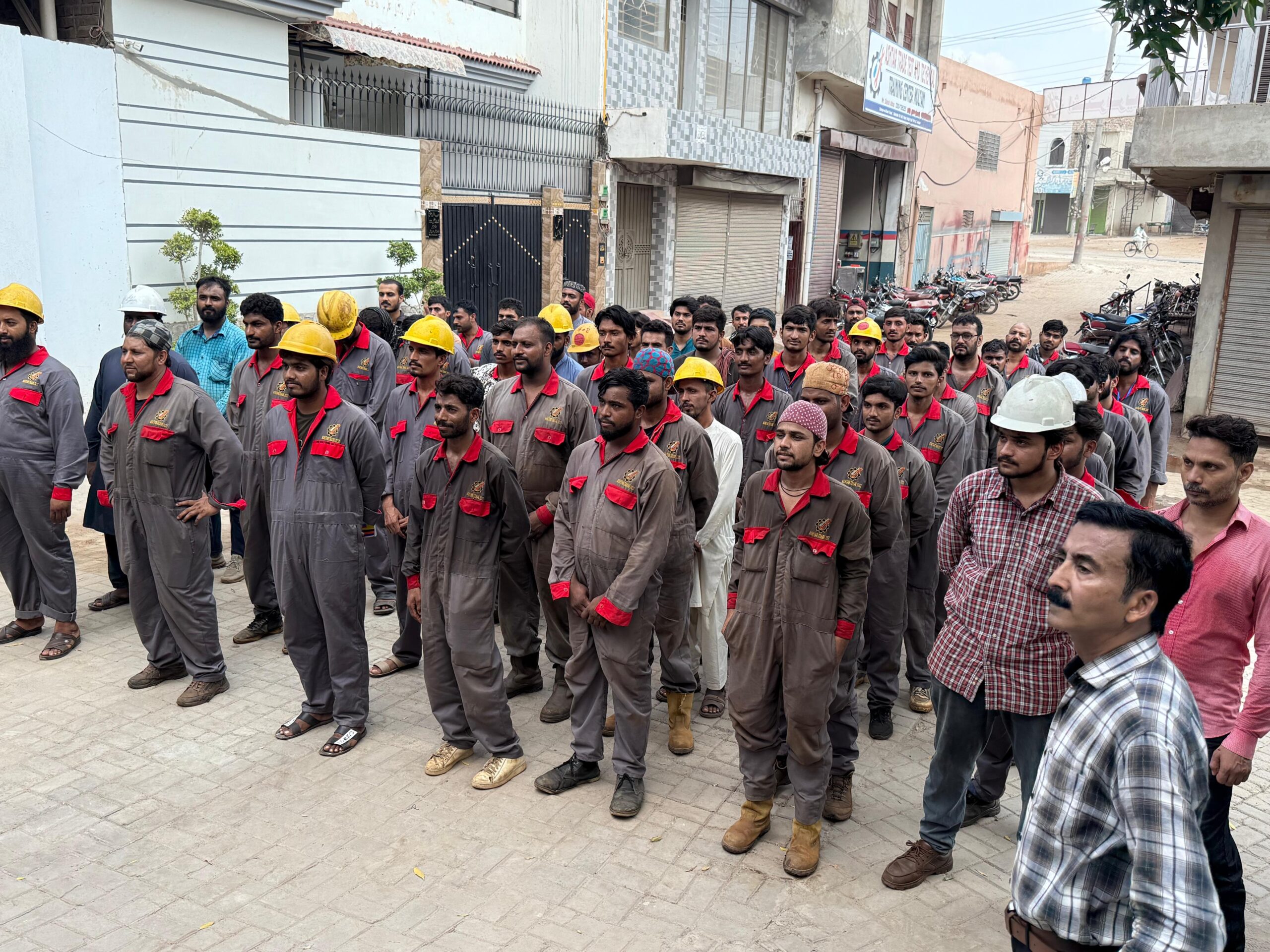
A Trade Test is the ultimate technical evaluation required by international employers (especially in Saudi Arabia, Qatar, UAE, and Oman) to verify your practical skills. Without passing a rigorous trade test, securing a high-paying job abroad is virtually impossible.
100% Guaranteed
Authentic Evaluation
What exactly is a Trade Test?
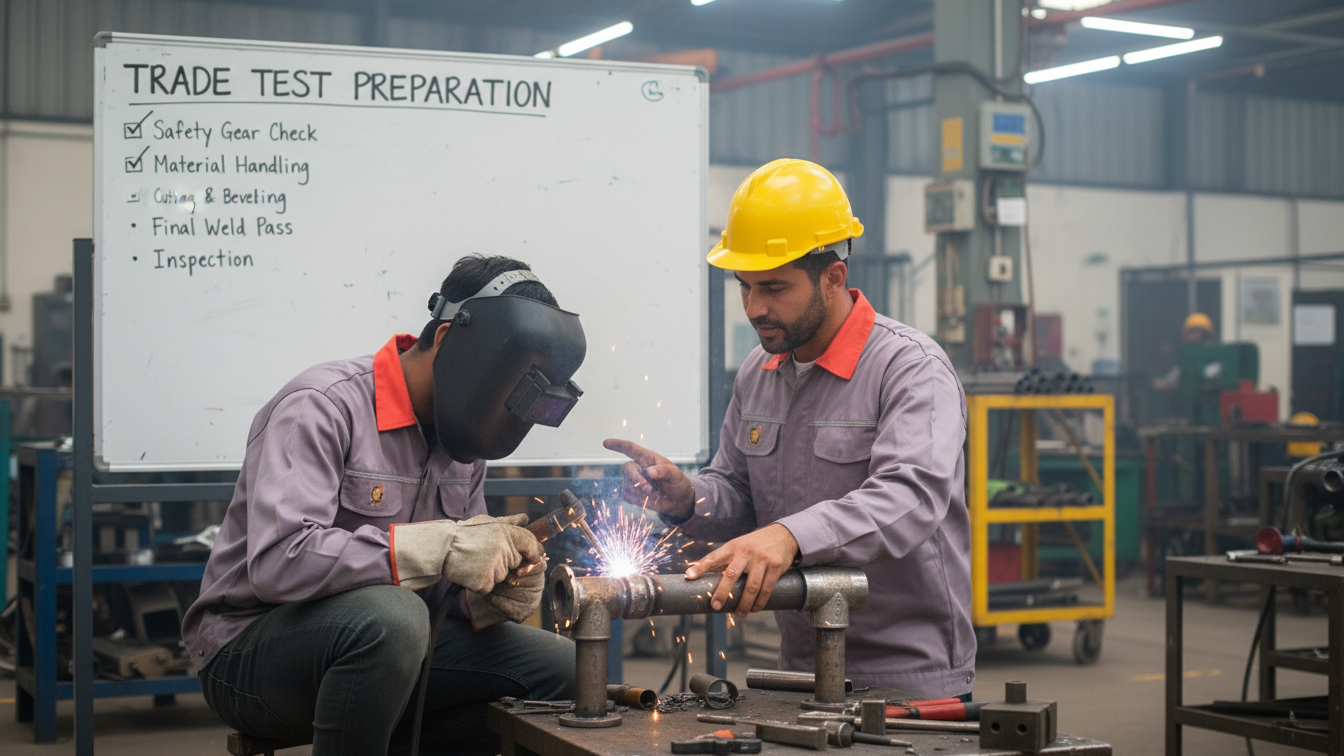
A Trade Test is a practical, hands-on examination designed to evaluate an individual's technical skills, competence, and safety awareness in a specific profession. Unlike a written exam or a standard verbal interview, a trade test requires the candidate to physically demonstrate their abilities using real tools, materials, and industry-standard equipment.
If you are applying for a technical job—especially for overseas employment in countries like Saudi Arabia, Qatar, and the UAE—your theoretical knowledge is not enough. Employers need concrete proof that you can execute the job safely and efficiently. That proof is obtained through a Trade Test.
Primary Purpose of Trade Testing
- To verify hands-on technical skills before hiring.
- To ensure the candidate follows international safety protocols (HSE).
- To assess the speed, accuracy, and quality of work.
- To prevent companies from hiring unqualified or fraudulent candidates.
Practical Focus
90% of the evaluation is based on actual hands-on performance.
Industry Standard
Tests are designed according to international EPC and ISO standards.
Who Needs a Trade Test?
Whether you are a fresh graduate from a technical college or a seasoned professional with 10 years of experience, a trade test is mandatory for almost all blue-collar and technical white-collar jobs overseas.
Fresh Workers
To prove their newly acquired skills and secure their first high-paying job abroad.
Experienced Pros
To validate their expertise for higher salary brackets and supervisor roles.
Gulf Job Seekers
Mandatory requirement for visa processing in Saudi Arabia (e.g., SVP program).
Trade Test vs. Other Evaluations
Many candidates confuse a trade test with a regular interview or a diploma. Here is a clear breakdown of why international employers rely strictly on Trade Tests.
Trade Test vs Interview
| Feature | Trade Test | Interview |
|---|---|---|
| Format | Physical / Hands-on | Verbal / Q&A |
| Proof of Skill | Absolute | Theoretical |
| Safety Check | Observed in real-time | Only asked about |
| Employer Trust | Very High | Moderate |
Trade Test vs Diploma/Certificate
| Feature | Trade Test | Diploma |
|---|---|---|
| Focus | Current Practical Ability | Past Academic Study |
| Duration | 1 to 4 Hours | 1 to 3 Years |
| Gulf Demand | Mandatory | Optional / Supportive |
| Fraud Risk | Zero (Live Test) | High (Fake Degrees) |
Why Employers Prefer Trade Tests over Experience Certificates?
In many South Asian countries, experience certificates can be easily forged or exaggerated. An employer in Saudi Arabia or Qatar cannot risk flying a worker 3,000 miles, paying for their visa and accommodation, only to discover they don't know how to operate the machinery.
A Trade Test acts as a live filter. It proves that the candidate's skills match the claims on their resume. It protects the employer's investment and ensures workplace safety on multi-million dollar EPC (Engineering, Procurement, and Construction) projects.
How Does a Trade Test Work?
The Trade Test process at Ashtar Trade Test & Technical Training Centre is designed to replicate the exact conditions of a Middle Eastern industrial site. Here is the step-by-step journey of a candidate.
Registration & Profiling
Safety & Theory Briefing
Practical Assessment
Evaluation & Scoring
Client Interview
Visa & Deployment
1. Documents Required
Before attempting a trade test for overseas recruitment, you generally need to provide the following documentation:
- Original Passport (valid for at least 6 months)
- Original CNIC (Computerized National Identity Card)
- Recent Passport-Size Photographs
- Updated CV detailing previous experience
- Experience Certificates (if applying as an experienced worker)
2. Scoring Criteria
Assessors evaluate candidates on multiple dimensions. Missing a safety step can result in immediate failure, regardless of technical skill.
Industries Utilizing Trade Tests
Different industries have different benchmarks for success. A trade test is tailored to mimic the exact environment of the industry the candidate is applying for.
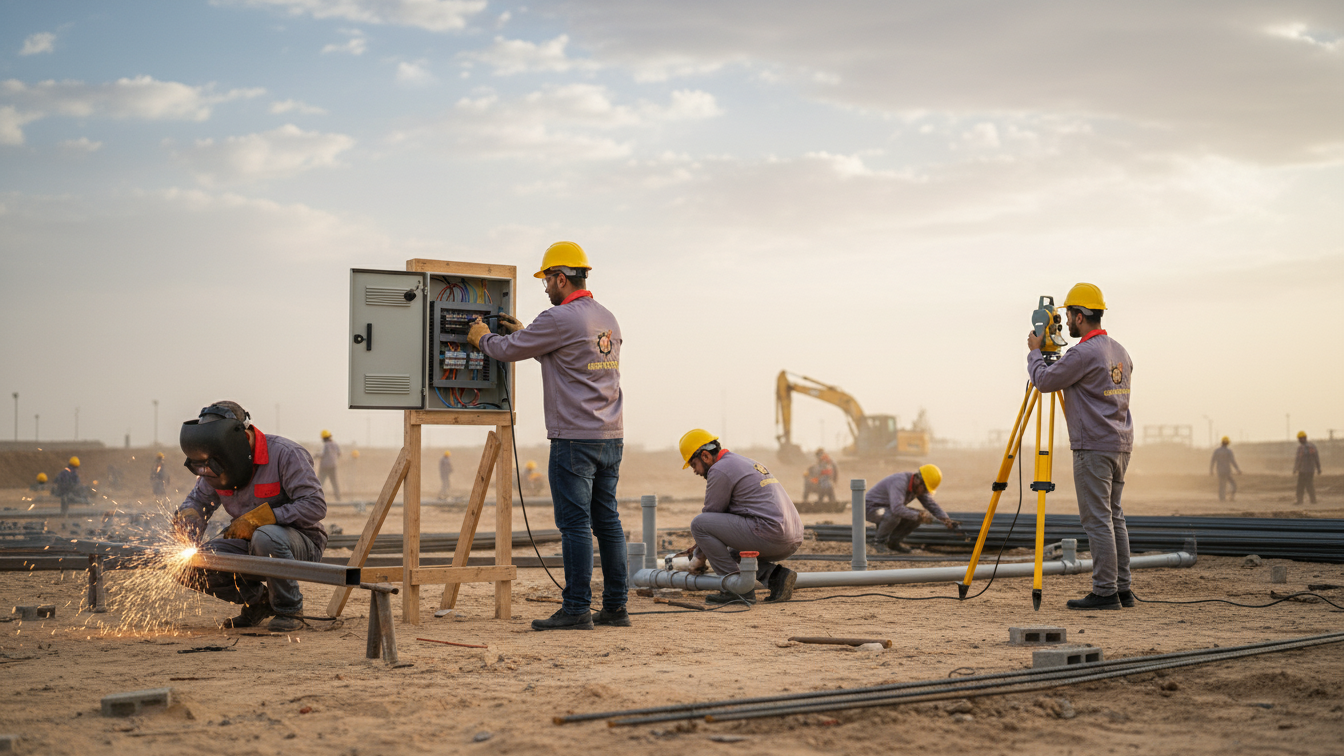
Oil & Gas (EPC)
The most stringent trade tests are found here. 6G Welders and Pipe Fitters must pass X-Ray weld tests and isometric drawing readings before being allowed on a rig or refinery.
Construction & Infrastructure
Civil trades like Steel Fixers, Shuttering Carpenters, and Masons are heavily tested on their speed, blueprint reading, and structural integrity.
Electrical & Instrumentation
Industrial Electricians are tested on panel wiring, motor control circuits, and troubleshooting live faults while adhering to strict LOTO (Lockout/Tagout) safety procedures.
Trade Test for Specific Gulf Countries
Every Middle Eastern country has slightly different legal and industrial requirements for technical workers. Here is what you need to know about Trade Tests for specific Gulf regions.
Trade Test for Saudi Arabia
Saudi Arabia is the largest market for Pakistani technical manpower, driven by mega-projects under Vision 2030 (like NEOM and The Line).
- SVP Program: The Saudi government has introduced the Skill Verification Program (SVP). A documented trade test is now officially required for visa stamping in many trades.
- Aramco Standards: If you are applying for an Oil & Gas job, your trade test will strictly follow Saudi Aramco standards, which have a zero-tolerance policy for safety violations.
Trade Test for Qatar
Qatar's infrastructure and natural gas sector (QatarEnergy) demands high-end technicians, specifically in piping and instrumentation.
- Shutdown Projects: Qatar is famous for "Shutdown" or "Turnaround" projects (short-term, extremely high-paying contracts). Because these projects are time-sensitive, companies require trade tests to ensure workers can hit the ground running on day one.
- QVC Process: While the Qatar Visa Center handles medical and biometric data, the technical approval relies entirely on the recruitment agency's trade test report.
Trade Test for UAE
The United Arab Emirates (Dubai, Abu Dhabi) is highly focused on modern construction, facilities management, and MEP (Mechanical, Electrical, and Plumbing).
- Multi-Skilling: UAE employers often prefer candidates who can handle multiple tasks (e.g., a plumber who also knows basic electrical work). Trade tests here often cover broader scenarios.
- Facilities Management: High demand for HVAC technicians and Electricians. Trade tests focus heavily on troubleshooting and maintenance rather than just new installation.
Trade Test for Oman & Kuwait
These countries have strong refining and petrochemical sectors.
- Rigorous Technical Scrutiny: Companies like PDO (Petroleum Development Oman) and KOC (Kuwait Oil Company) send third-party inspectors to Pakistan to witness the trade tests live.
Trade Tests for Shutdown Projects vs. Long-Term Visas
Shutdown Projects (3 to 6 months): Because the project duration is short and critical, employers have no time to train you. The trade test is brutally strict. You must achieve a near 100% score to be selected. Speed and precision are paramount.
Long-Term Employment (2+ years): While still strict, employers might accept a candidate who shows strong fundamental skills and great potential, even if they are slightly slower. They are willing to provide orientation training once you reach the site.
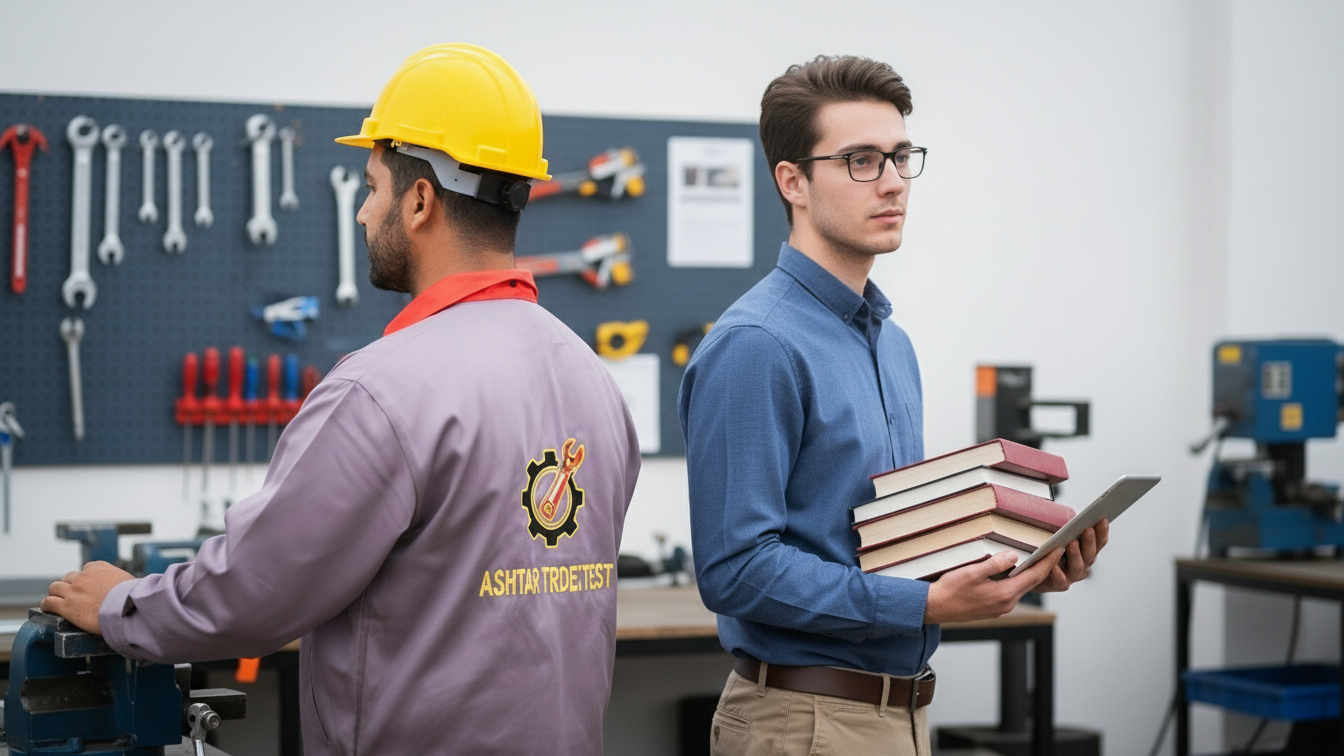
How Specific Trades Are Tested
Every trade requires a unique set of skills. At Ashtar Trade Test & Technical Training Centre, we prepare and evaluate candidates according to the specific criteria demanded by international employers.
Welding Trade Tests (6G, TIG, MIG, ARC)
Welding is the highest-paying technical trade in the Gulf. The 6G welding test is the ultimate benchmark. You will be required to weld a pipe at a 45-degree angle in a fixed position. Assessors look for root penetration, capping appearance, and the absence of porosity or slag inclusions. Often, the final weld is subjected to an X-Ray test.
Pipe Fitter Trade Test
Pipe fitters are tested on their ability to read isometric drawings, calculate pipe cut lengths, prepare bevels, and tack weld or fit flanges and elbows perfectly aligned to the required degree.
Pipe Fabricator Trade Test
A step above pipe fitting, fabricators must demonstrate advanced trigonometric calculations, layout developments (like dummy supports, laterals, and miters), and oversee the fitting process according to complex P&ID drawings.
Mechanical Fitter Trade Test
Mechanical fitters are evaluated on their ability to assemble, dismantle, and align static and rotating equipment (pumps, compressors, valves). Precision measurement using dial indicators and micrometers is a crucial part of this test.
Industrial Electrician Trade Test
The test includes reading electrical schematics, terminating cables, setting up a DOL (Direct On-Line) or Star-Delta starter panel, and troubleshooting faults in a live (but safe) circuit.
Civil Surveyor Trade Test
Surveyors must demonstrate proficiency with Auto Level and Total Station instruments. They are tested on setting out points, transferring elevations, and calculating coordinates accurately on the field.
Safety Officer (HSE) Trade Test
While mostly theoretical and interview-based, a practical Safety Officer test involves hazard identification on a mock site, filling out a Permit to Work (PTW), and conducting a mock Toolbox Talk (TBT).
Plumber Trade Test
Plumbers are tested on joining different types of pipes (PPR, PVC, Copper), installing sanitary fixtures, and performing pressure tests to ensure zero leaks.
Steel Fixer Trade Test
Steel fixers must read structural drawings, cut and bend rebar to exact dimensions, and tie steel for columns, beams, or slabs using proper binding wire techniques.
Shuttering Carpenter Trade Test
Carpenters are evaluated on making formwork for concrete pouring. Accuracy in dimensions, plumbness, and ensuring the formwork is strong enough to hold concrete pressure is tested.
Scaffolder Trade Test
Scaffolders must erect and dismantle a basic scaffold structure (Cuplock or Tube & Coupler) safely. Proper use of a safety harness and ensuring the scaffold is perfectly level and plumb is mandatory.
Mason Trade Test (Block & Tile)
Masons are tested on laying blocks or fixing tiles. Assessors check for perfectly level surfaces (using a spirit level), straight alignment (using a plumb bob), and neat joint finishing.
Not Sure If You Can Pass?
Don't risk failing your employer interview. Join our Trade Test Preparation Courses where we train you specifically to pass these rigorous exams on your first attempt.
Get Preparation TrainingBenefits of Passing a Trade Test
A trade test is not just an exam; it is a gateway to transforming your financial future and securing your family's stability.
High-Paying Gulf Jobs
A certified trade test is your direct ticket to high-salary visas in KSA, Qatar, and UAE.
Employer Trust
Overseas companies immediately trust candidates with authenticated trade test reports.
Avoid Visa Rejection
Without a valid skill certificate, many embassies (like Saudi) will reject the employment visa.
Lifetime Career Growth
The skills you demonstrate become the baseline for your promotions and salary increments abroad.
#1 Trade Test Center
in Pakistan
Why Choose Ashtar Trade Test Centre?
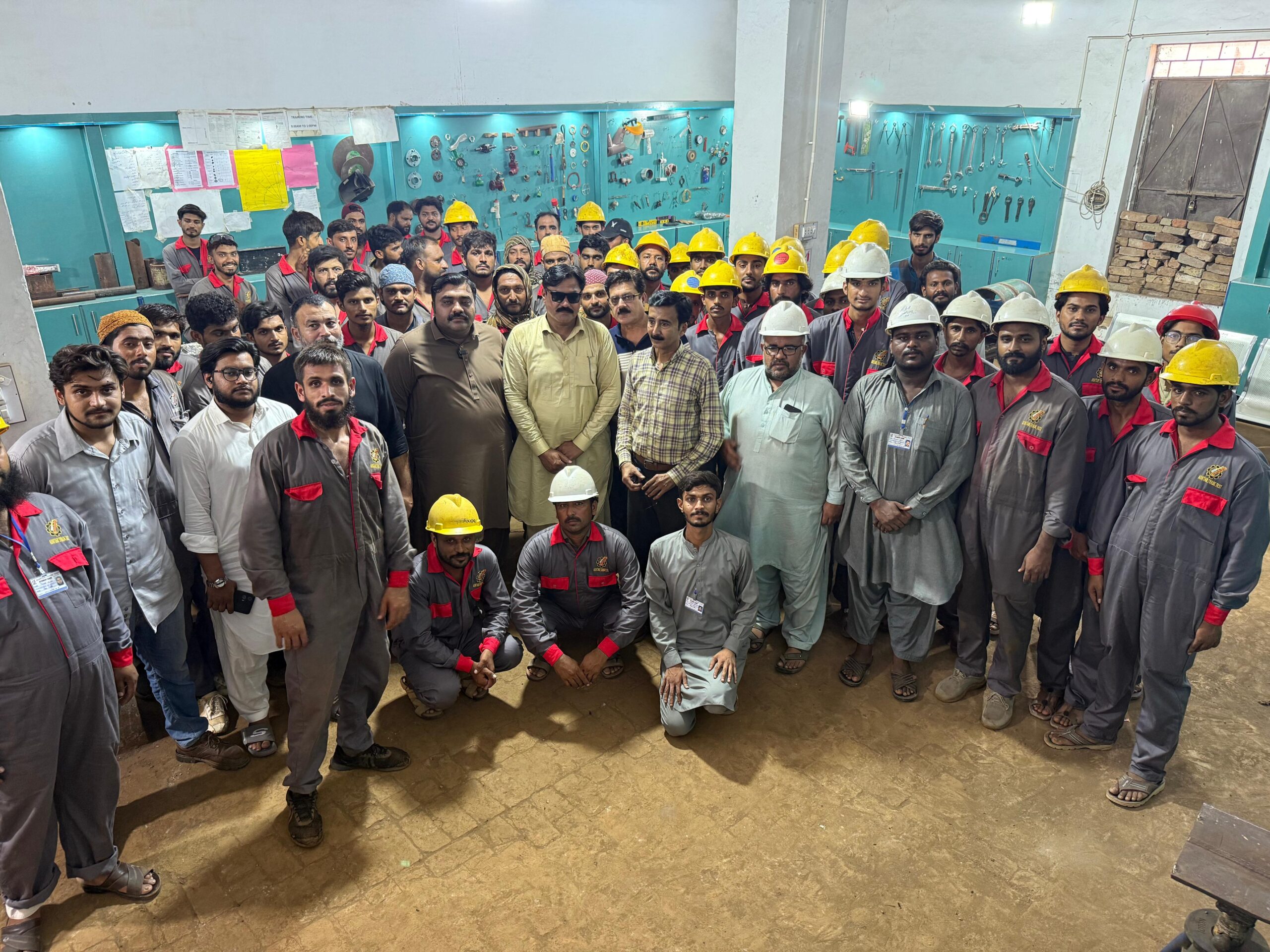
Not all trade testing centers are created equal. Ashtar Trade Test & Technical Training Centre is widely recognized as the premier hub for technical evaluation and overseas recruitment in Multan and across Pakistan.
Frequently Asked Questions (FAQs)
Everything you need to know about trade testing, overseas recruitment, and technical training in Pakistan.
A trade test is a practical examination where a candidate demonstrates their technical skills using real tools and materials under the supervision of an expert assessor. It proves hands-on competence to foreign employers.
Foreign employers, especially in the Gulf, cannot rely solely on interviews or certificates. A trade test is the only undeniable proof that you can perform the required job safely and efficiently on day one.
Anyone applying for a technical blue-collar or white-collar job overseas, such as Welders, Pipe Fitters, Electricians, Civil Surveyors, Scaffolders, Plumbers, and Safety Officers.
Yes. Under the new Skill Verification Program (SVP) in Saudi Arabia, passing a trade test from an authorized center is mandatory for visa processing in most technical trades.
An interview is verbal and tests your theoretical knowledge. A trade test is physical and tests your actual ability to execute the job using tools and materials.
You generally need your original passport, CNIC, updated CV, passport-size photographs, and any previous experience certificates or diplomas.
Depending on the trade, it can take anywhere from 1 hour to 4 hours. A 6G welding test usually takes longer due to joint preparation and cooling times.
If you fail, you will not be selected by the overseas employer. However, at Ashtar Trade Test Centre, you can enroll in our preparation courses to improve your skills and retake the test later.
No. Professional trade test centers like Ashtar provide all the necessary tools, machinery, PPE (Personal Protective Equipment), and consumables required for the test.
Scoring is usually divided into Technical Precision (50%), Health & Safety Compliance (30%), Time Management (10%), and Tool Identification (10%).
It is the most difficult welding test where a pipe is fixed at a 45-degree angle. The welder must weld around the pipe without moving it, proving they can weld in all positions (flat, horizontal, vertical, overhead).
Electricians are tested on panel wiring, conduit bending, reading schematics, installing DOL or Star-Delta starters, and safely troubleshooting faults.
Safety officers are tested on hazard identification in a mock environment, filling out risk assessments, issuing Permits to Work (PTW), and conducting Toolbox Talks.
A pipe fitter must read an isometric drawing, calculate cut lengths, prepare bevels, and tack weld fittings (like flanges and elbows) with exact degree alignments.
Most employers require a score of 75% to 80% to pass. For highly sensitive jobs like EPC Shutdown projects, the requirement can be 90% or higher.
Ashtar is a Government Registered and ISO 9001:2015 certified center with modern workshops, expert assessors, and a 90% practical training focus.
Yes, we offer specialized short courses and diplomas specifically designed to train you to pass rigorous overseas trade tests.
We are located in Multan, Pakistan, serving candidates from all over South Punjab and across the country.
Yes, we provide comfortable hostel facilities for candidates traveling from other cities to take their trade tests or training.
Yes, with the right training. Many of our fresh students have passed employer trade tests after completing our intensive hands-on preparation courses.
It is an initiative by Saudi Arabia to ensure that all expatriate workers possess the required skills for their professions before entering the Kingdom.
Absolutely. Shutdown projects are extremely time-sensitive. Employers rely heavily on trade tests to ensure workers are highly skilled and fast.
A mock trade test is a practice exam that simulates the exact conditions of a real employer test, helping candidates overcome nervousness and identify weak points.
For technical roles, it is almost impossible today. Even if an agency promises a visa without a test, you might face deportation or salary cuts if you fail the site test upon arrival.
No. A diploma proves you studied the subject, but a trade test proves you can currently perform the physical work safely and correctly.
You must wear proper PPE (helmet, safety shoes, gloves, coveralls, safety glasses). Ignoring safety protocols usually results in immediate failure.
Salaries vary by trade and country, but certified skilled workers (like 6G Welders or Industrial Electricians) earn significantly more than unskilled labor, often ranging from 1500 to 4000+ Riyals/Dirhams.
A 3D representation of a piping system on a 2D piece of paper. Reading this is a core requirement for pipe fitters and fabricators.
You can book by visiting our campus in Multan, calling our official numbers, or messaging us on WhatsApp through our website.
Yes, our evaluation reports are trusted by major recruitment agencies and top-tier employers across Saudi Arabia, Qatar, UAE, Oman, and Bahrain.