Pipeline Welder Course in Multan
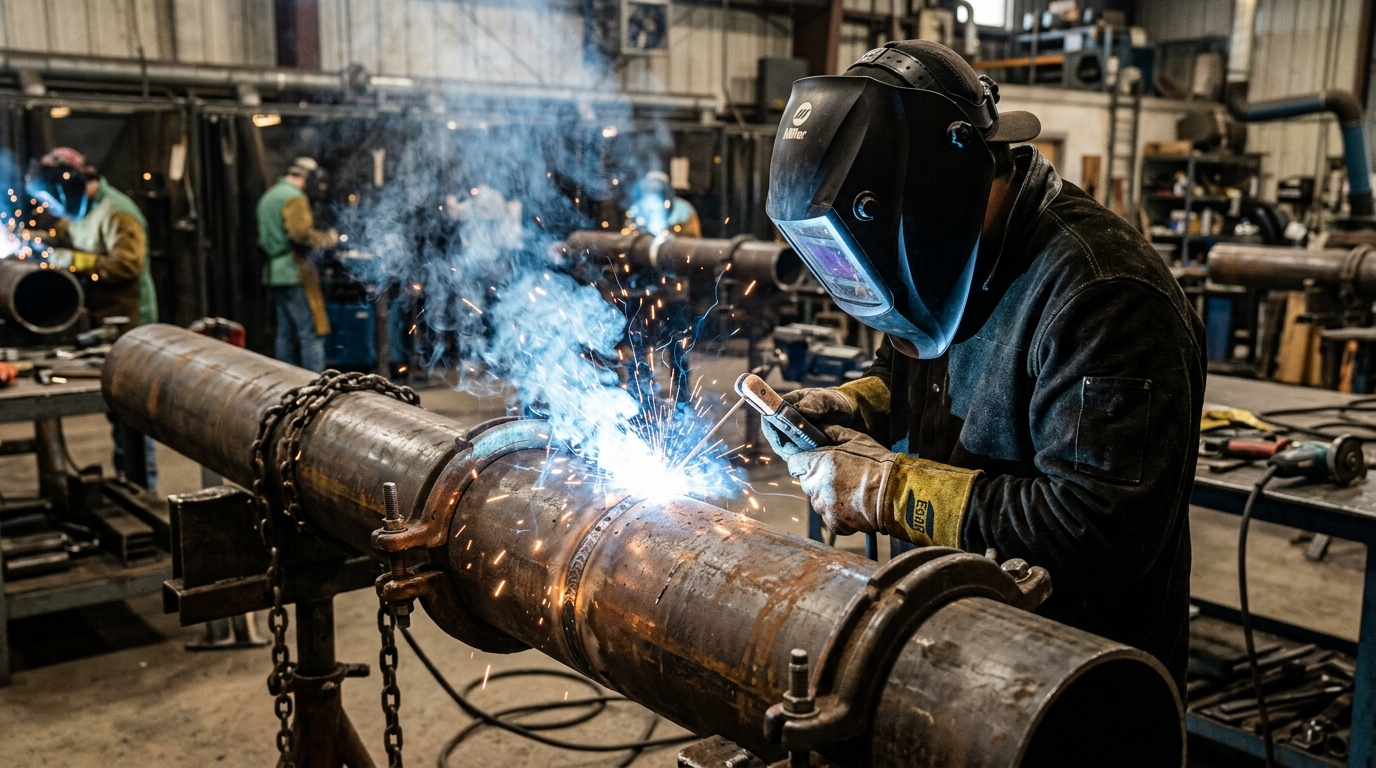
Practical Pipe & Pipeline Welding Training with Workshop Practice. Master SMAW stick electrode arc control, pipe bevel edge fitting, keyhole root penetration, and positional pipe joint capping at Ashtar Trade Test & Technical Training Centre in Multan.
Supervised Workshop Practice
Pipe Joint Beveling & Positional Arc Welding Practice
Master Practical Pipe & Pipeline Welding Skills in Multan
Pipeline welding is one of the most critical and highly specialized disciplines in industrial construction. Unlike general plate fabrication, pipeline welding involves joining thick-walled carbon steel pipes in fixed horizontal, vertical, and inclined positions. Pipeline welders must execute 100% full-penetration butt welds capable of enduring immense internal pressure, thermal expansion, and mechanical stress without leaking or failing.
Enrolling in a dedicated Pipeline Welder Course in Multan provides trainees with the focused workshop environment needed to master Shielded Metal Arc Welding (SMAW / Stick Arc Welding) on pipe spools. Candidates learn to manipulate fast-freezing cellulosic electrodes (such as E6010) for high-penetration root passes and low-hydrogen basic electrodes (such as E7018) for dense, flaw-free fill and cap passes.
At Ashtar Trade Test & Technical Training Centre, we prioritize practical workshop execution over passive classroom study. Trainees spend their hours inside individual welding bays, learning edge bevel angle checking, root face land preparation, fit-up clamping, tacking, and progressive positional welding from 2G up to 5G and 6G. Guided by experienced technical instructors, students build the body posture, hand stability, and visual inspection awareness required for trade test evaluations.
What Is Pipeline Welding?
An educational overview of pipe joint welding fundamentals, fit-up requirements, and positional control.
Pipeline Welding refers to the specialized technique of joining cylindrical metal pipes end-to-end using circumferential groove butt welds.
Because pipelines carry pressurized liquids, natural gas, steam, and chemical fluids, joint integrity is paramount. A single void, tungsten inclusion, lack of root penetration, or undercut defect can compromise the pipeline under hydrostatic test pressure.
Practical pipeline welding training teaches candidates how to align bevel edges, maintain uniform root gap spacing, manage thermal expansion during bridge tacking, and continuously adjust electrode angle as the arc travels around the curved pipe profile.
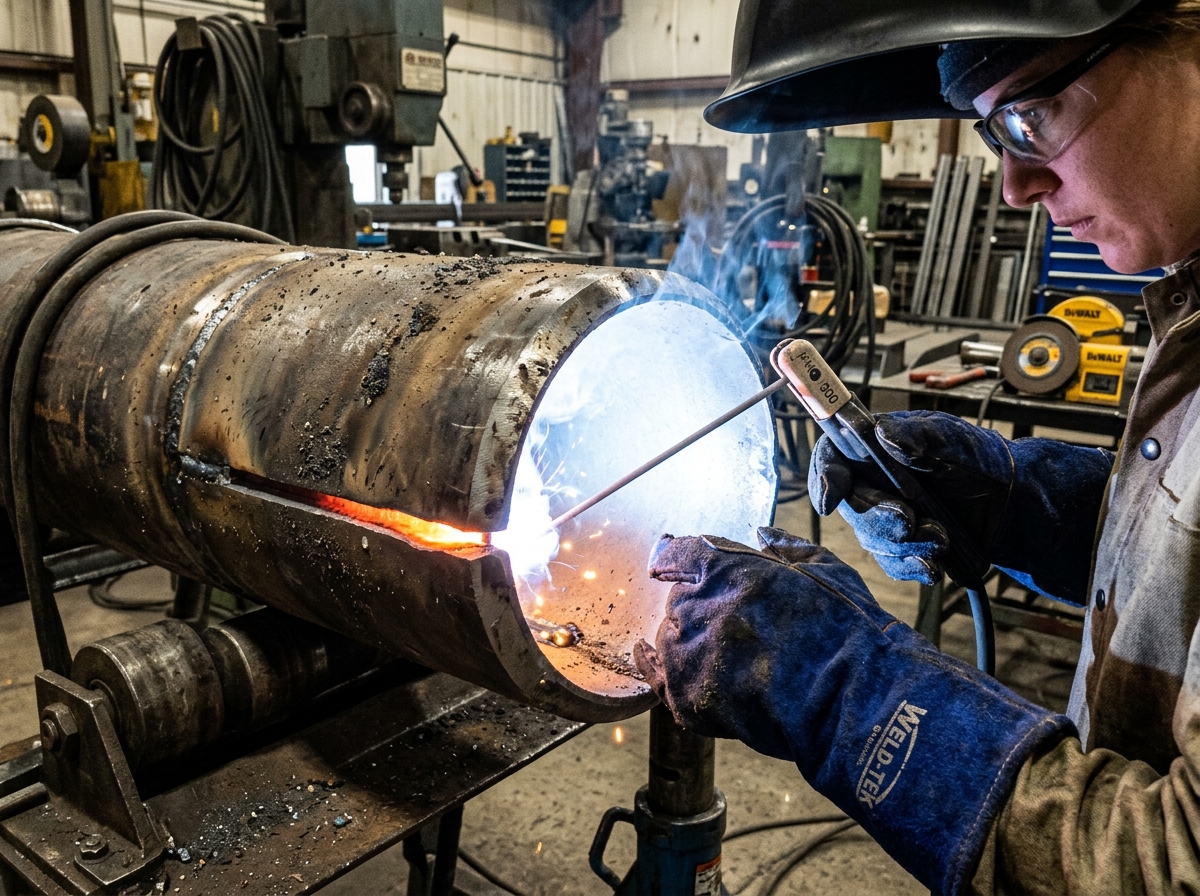
Close-up root pass welding on carbon steel pipe at Ashtar Trade Test Center Multan.
What Is the Difference Between a Pipe Welder and a Pipeline Welder?
In industrial recruitment and technical trade testing, terms like pipe welder and pipeline welder overlap heavily, but signify distinct practical operational contexts:
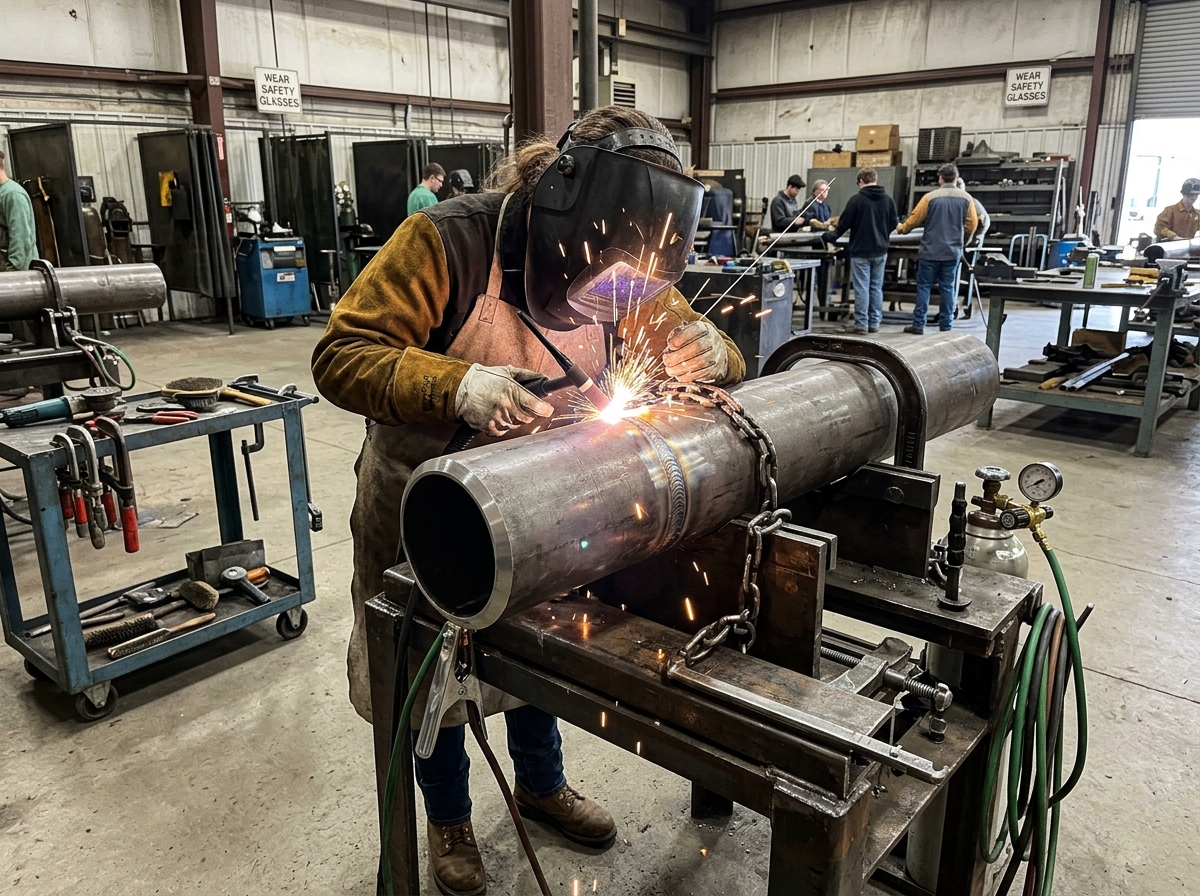
Pipe welder training bay showing industrial pipe joint setup and alignment tools.
1. Pipe Welder (Plant & Shop Spools)
Focuses on fabrication shop pipe spools, structural headers, flange-to-pipe fittings, and plant maintenance piping using shop positioners or fixed bench jigs.
2. Pipeline Welder (Field Cross-Country Joints)
Focuses on fixed field joints, transmission line tie-ins, downhill or uphill cellulosic electrode techniques, and high-production circumferential pipe butt welds under all weather and trench conditions.
SMAW Pipeline Welding Training
Shielded Metal Arc Welding (SMAW / Stick) remains the core workhorse process for cross-country oil, gas, and water pipeline installation. Its high arc force, portability, and independence from external shielding gas bottles make it ideal for site conditions.
At Ashtar Trade Test, our Pipeline Welder module covers electrode selection (E6010 cellulosic electrodes for keyhole root penetration and E7018 low-hydrogen electrodes for ductile capping), DC reverse polarity tuning, arc length control, and interpass slag removal.
• E6010 Cellulosic Electrode: Deep penetration, fast freezing slag for downhill root pass keyholing.
• E7018 Basic Electrode: High strength, smooth ripple capping with zero porosity for structural integrity.
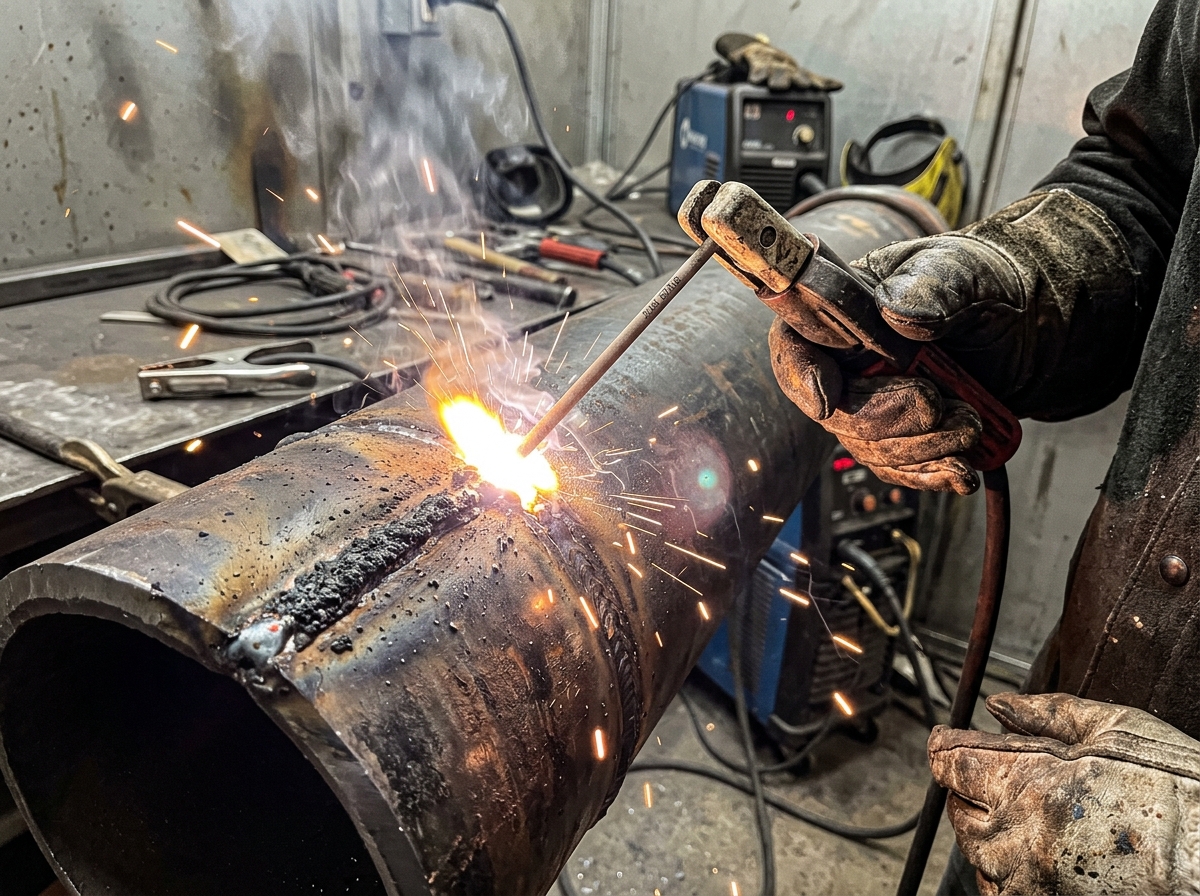
SMAW stick welding with E6010 root pass and E7018 capping on carbon steel pipe.
Pipeline Welding and 6G Pipe Welding
The 6G welding position—where test pipes are mounted fixed at a 45-degree angle—represents the universal benchmark assessment for pipeline welders. Candidates who master 6G position joint fit-up demonstrate the ability to weld flat, horizontal, vertical, and overhead transitions around a fixed pipe.
Learn more about dedicated 6G positional pipe welding training on our detailed 6G Welding Course in Multan page.
Explore 6G Welding Course Details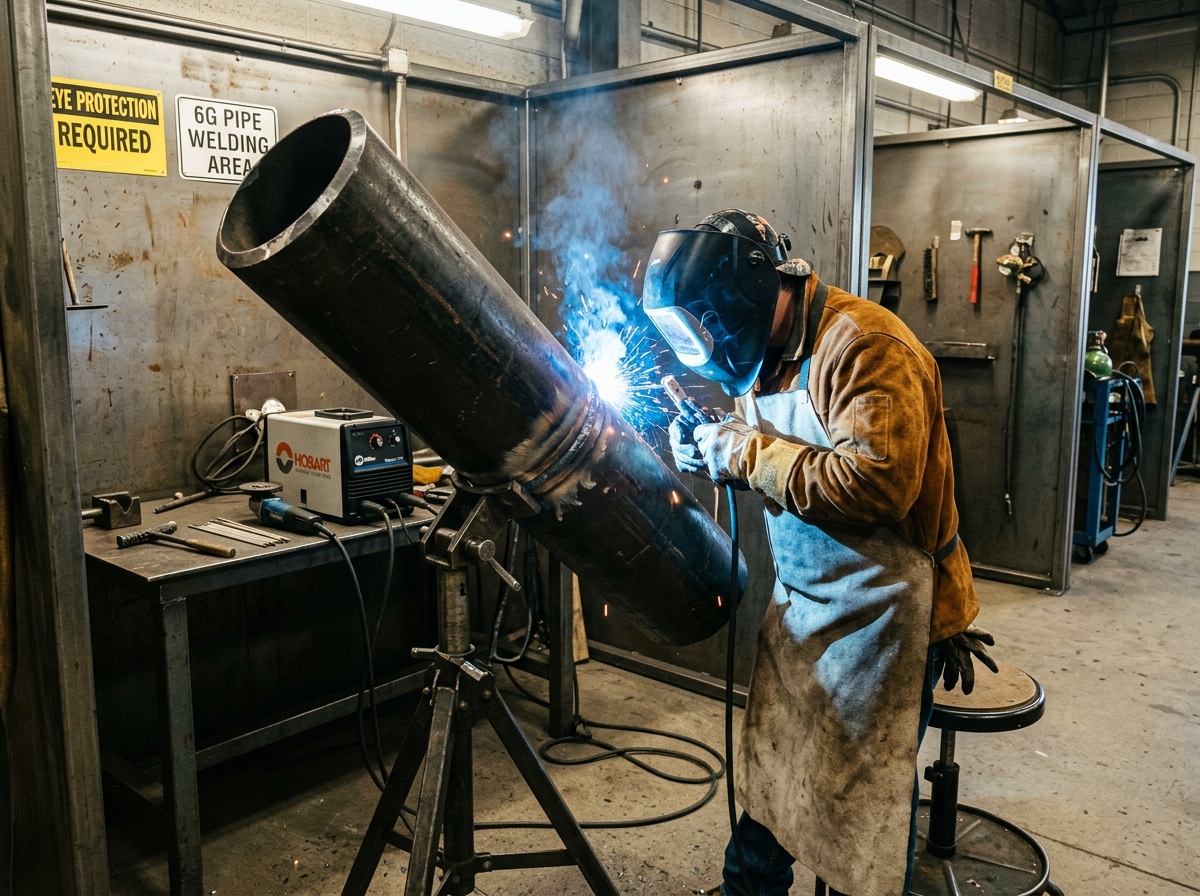
45-degree fixed inclined 6G pipe welding setup inside Ashtar workshop booth.
Pipe Welding Positions and Practical Training
Educational breakdown of 1G, 2G, 5G, and 6G positional welding requirements.
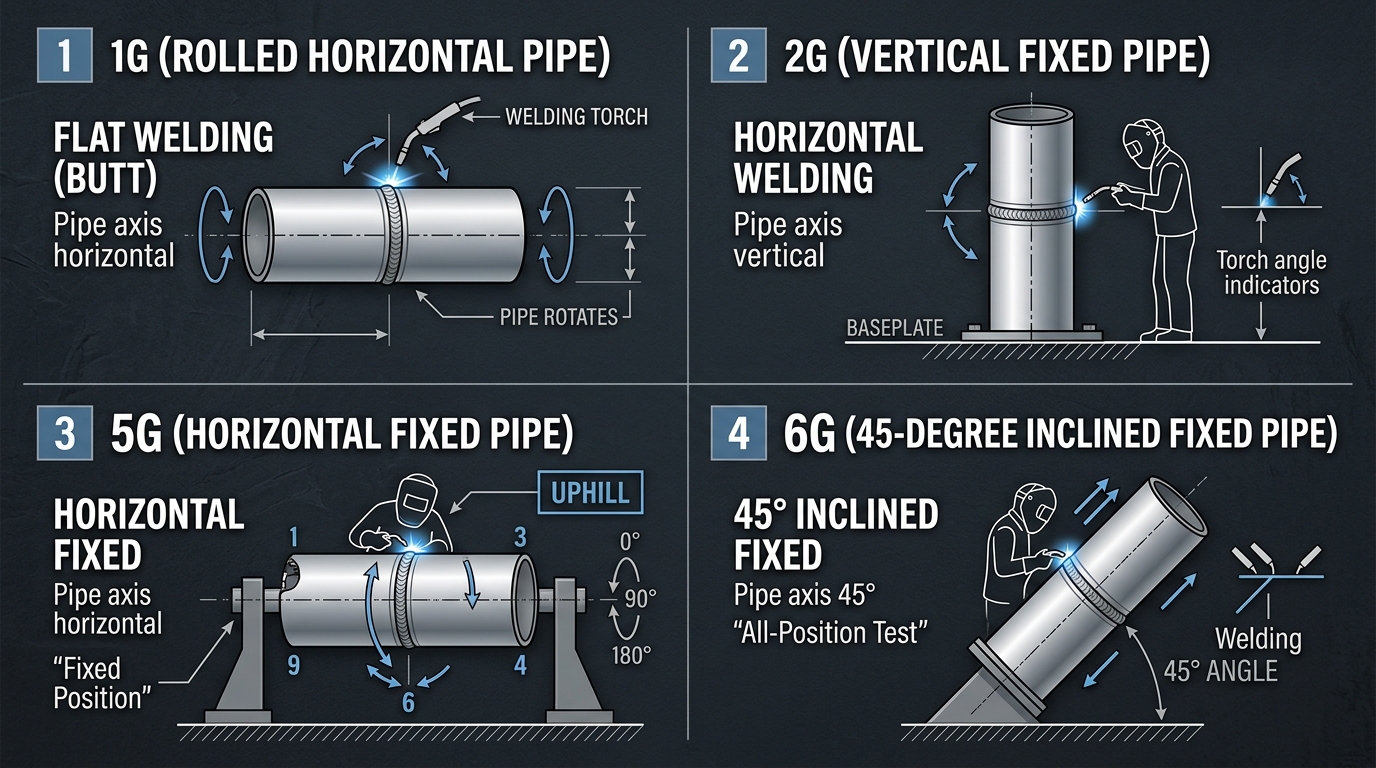
Technical educational diagram illustrating 1G, 2G, 5G, and 6G pipe welding positions.
1G (Rolled Horizontal)
Pipe rotates horizontally while welding takes place top-side in flat position. Ideal for arc puddle control.
2G (Fixed Vertical)
Pipe is mounted vertically fixed; weld is deposited horizontally around circumference requiring shelf-bead control.
5G (Fixed Horizontal)
Pipe is fixed horizontally; welder moves from overhead (bottom) through vertical to flat (top) positions.
6G (Fixed 45° Inclined)
Pipe is fixed at a 45-degree angle. Master positional test required by major industrial contractors and trade tests.
Pipe Preparation and Welding Practice
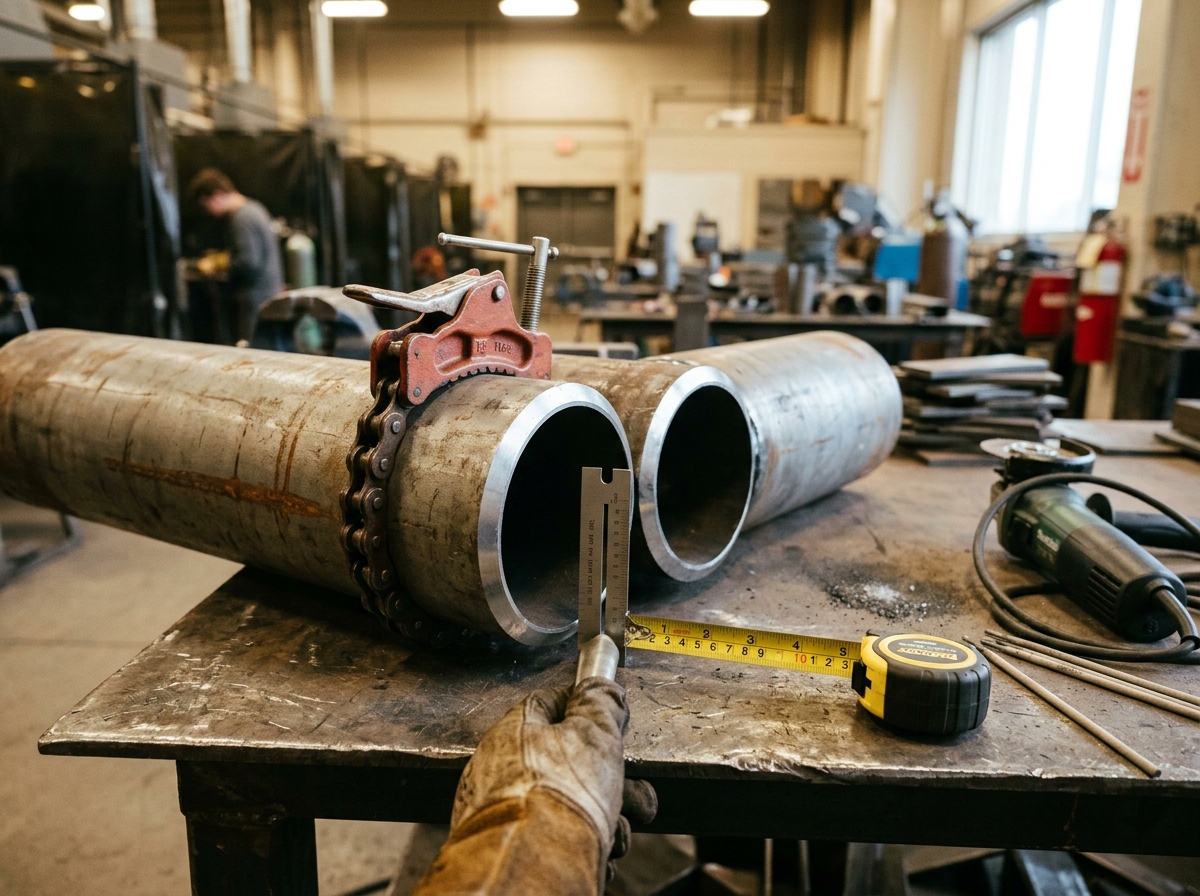
Precision pipe beveling, root gap fit-up, and Hi-Lo alignment inspection.
Successful pipeline welding relies heavily on meticulous joint edge preparation. Trainees learn to check bevel angles using bevel protractors, maintain a clean 1.6mm–2.4mm root land, align internal pipe walls with Hi-Lo gauges to minimize mismatch, and tack weld joints securely.
Workshop practice also covers grinding out keyhole stop-restarts to prevent crater cracks, cleaning slag completely with wire wheels, and ensuring every layer is smooth before depositing capping passes.
Practical Pipeline Welding Training in Multan
Dedicated individual practice booths equipped for SMAW and pipe joint welding.
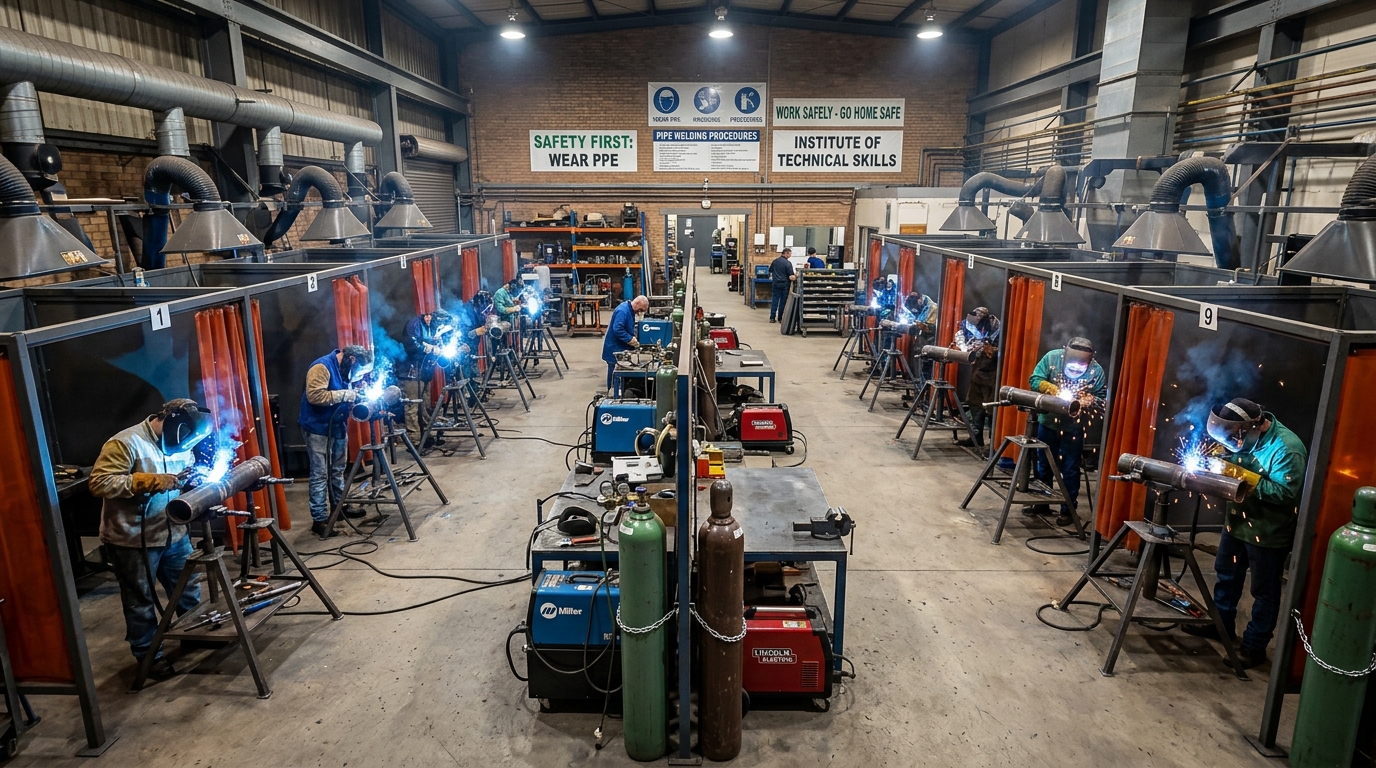
Active welding workshop facility with individual practice booths at Ashtar TTC Multan.
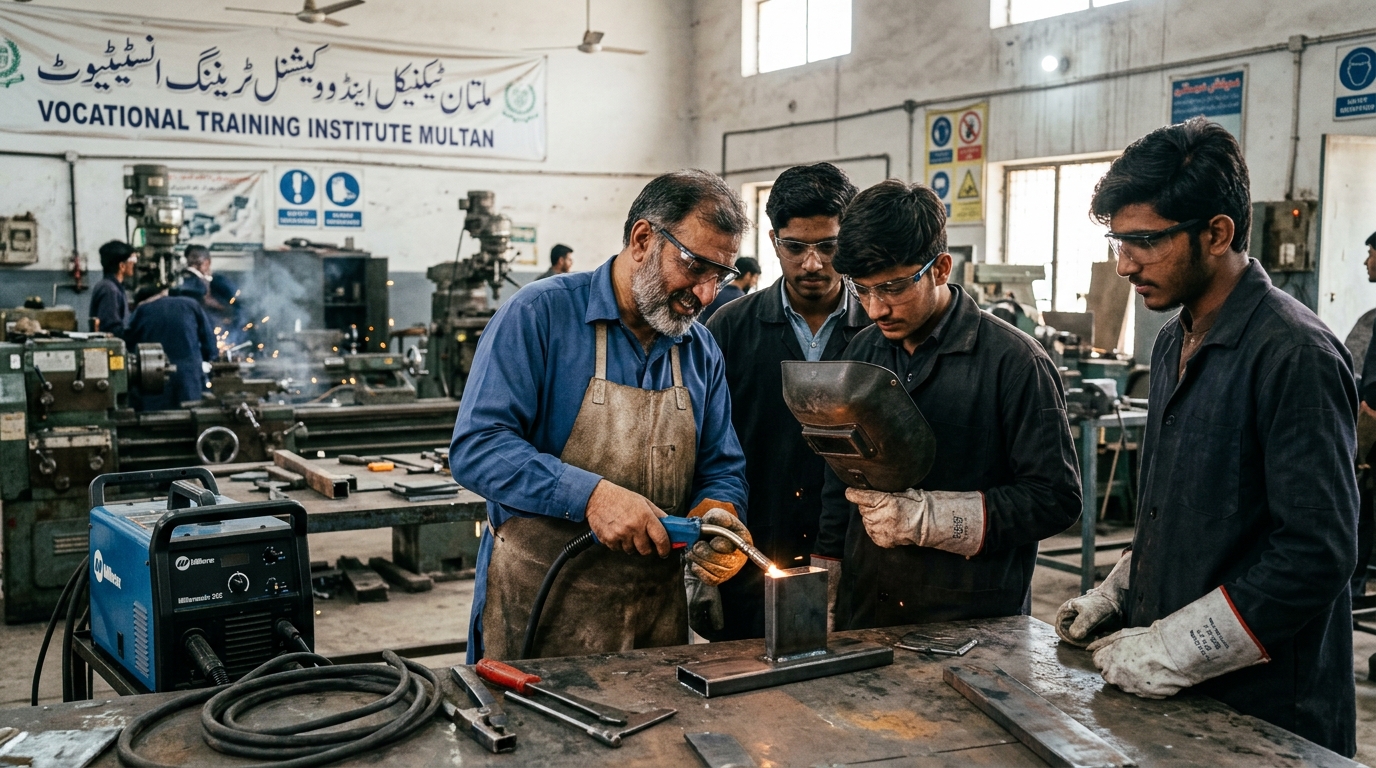
Practical workshop execution forms the cornerstone of training at Ashtar Trade Test & Technical Training Centre. Trainees spend their hours operating industrial SMAW welding power rectifiers, preparing real carbon steel pipe nipples, clamping joints in pipe stands, and performing multi-pass welds under instructor supervision.
Supervised Practical Training by Experienced Instructors
Mastering pipe welding requires continuous real-time guidance on torch angle, arc length, travel speed, and weave pattern. At Ashtar TTC, experienced technical instructors work directly alongside trainees in individual welding booths.
Instructors demonstrate proper stance, keyhole manipulation, slag chipping, and defect correction, ensuring trainees build correct muscle memory and safety habits for real job site conditions.
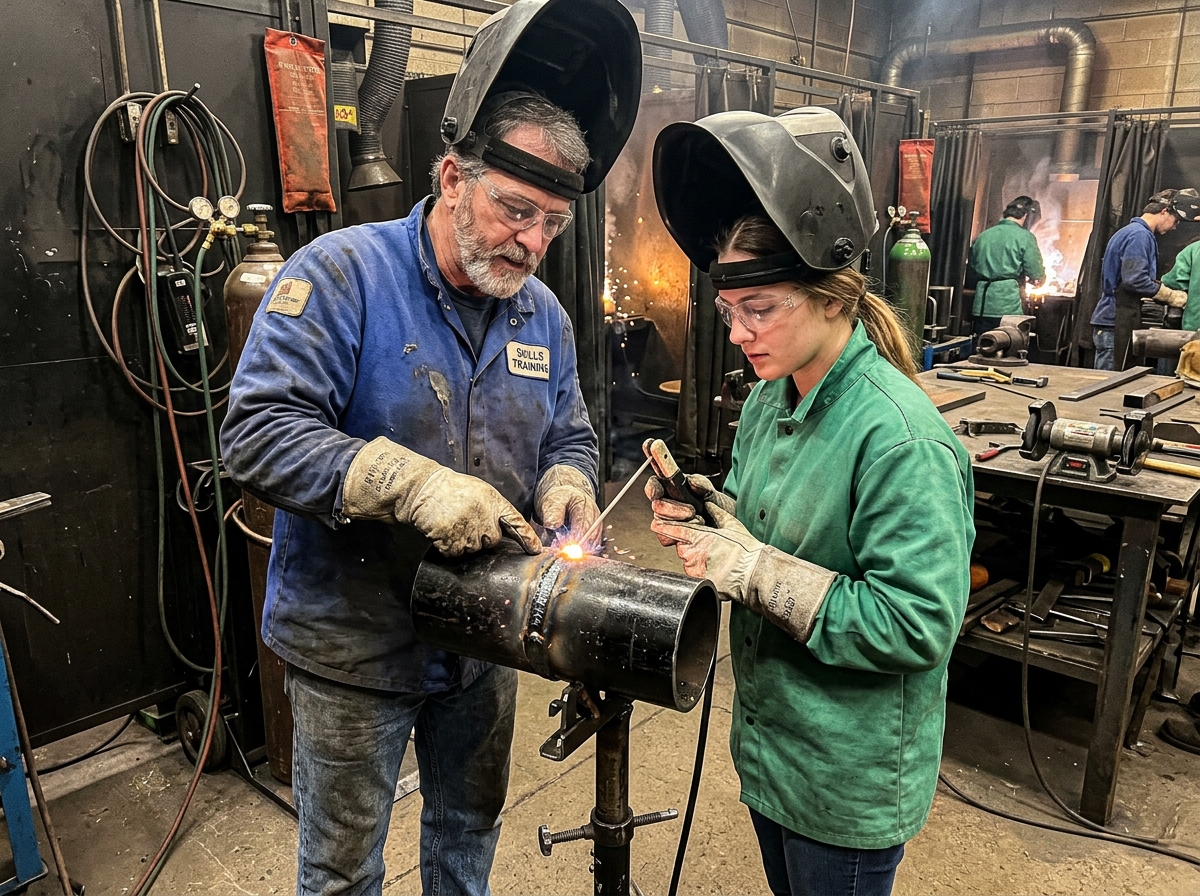
Experienced technical instructor supervising trainee during pipe joint welding.
Pipeline Welder Trade Test Preparation in Multan
Ashtar Trade Test provides practical workshop practice aligned with standard technical recruitment evaluation sheets. Trainees practice time-bound joint fabrication, root penetration checks, bead symmetry, and workshop safety protocols required during official trade test evaluations.
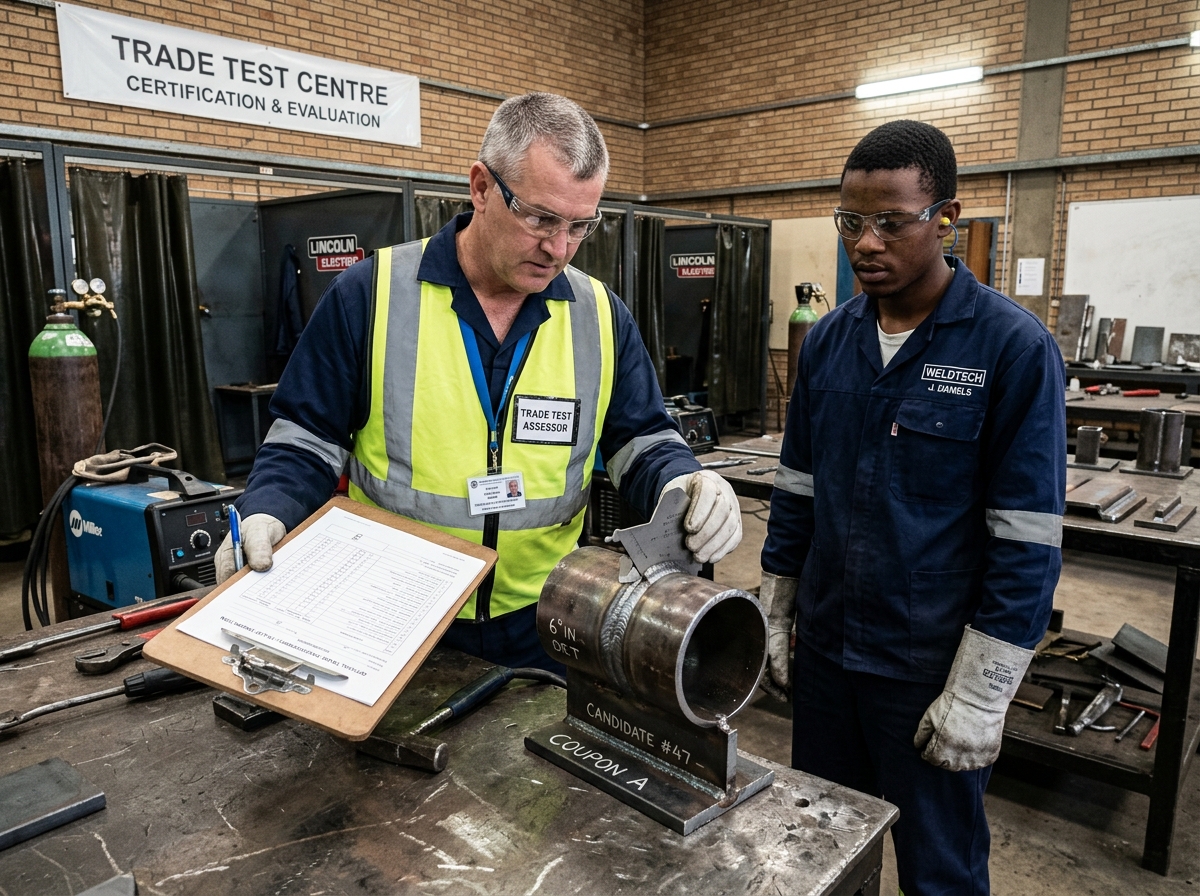
Technical evaluator inspecting welded pipe test coupon during trade test evaluation.
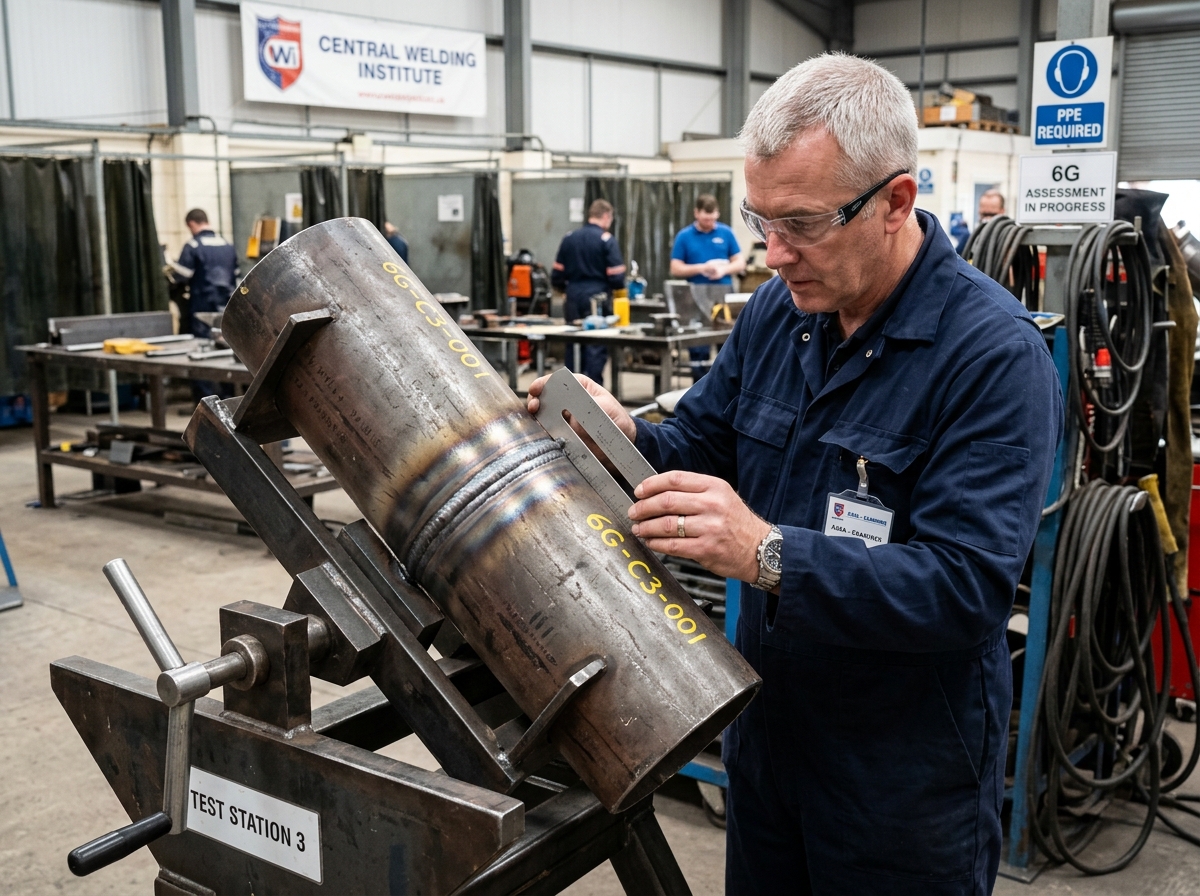
45-degree 6G fixed pipe specimen inspection at Ashtar Trade Test assessment station.
Pipeline Welding and Multi Welder Training
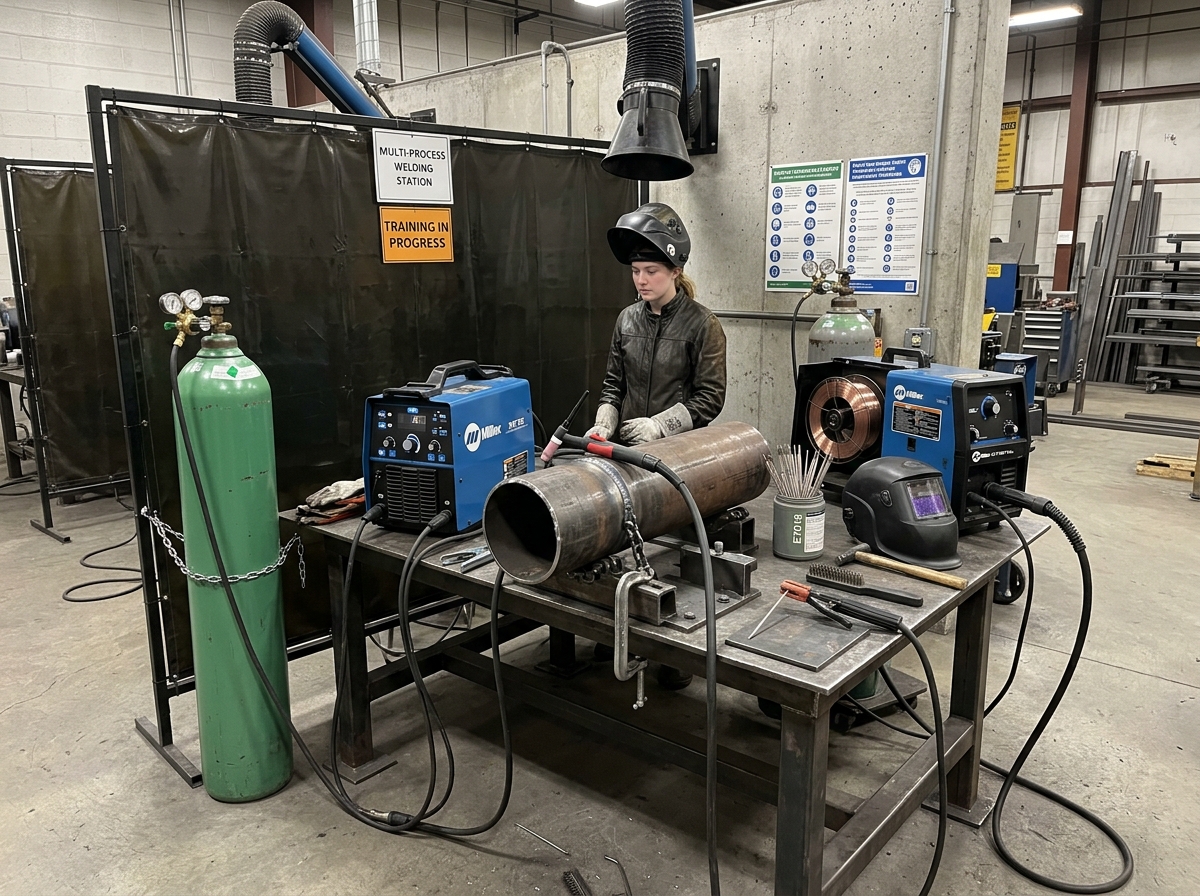
Multi-process welding station featuring SMAW, GTAW (TIG), and GMAW (MIG) equipment.
Many modern industrial projects require welders skilled across multiple processes—such as executing TIG argon root passes followed by SMAW stick capping.
Candidates seeking versatility across SMAW, GTAW/TIG, GMAW/MIG, and FCAW processes can explore our comprehensive Multi Welder Course in Multan.
Pipeline Welding and Pipe Fabrication
Combining pipe welding skills with isometric blueprint reading, pipe spool development, and fitting layout significantly increases technical competence.
Explore our dedicated Pipe Fabricator Course in Multan and Pipe Fitter Course in Multan modules for complete piping trade training.
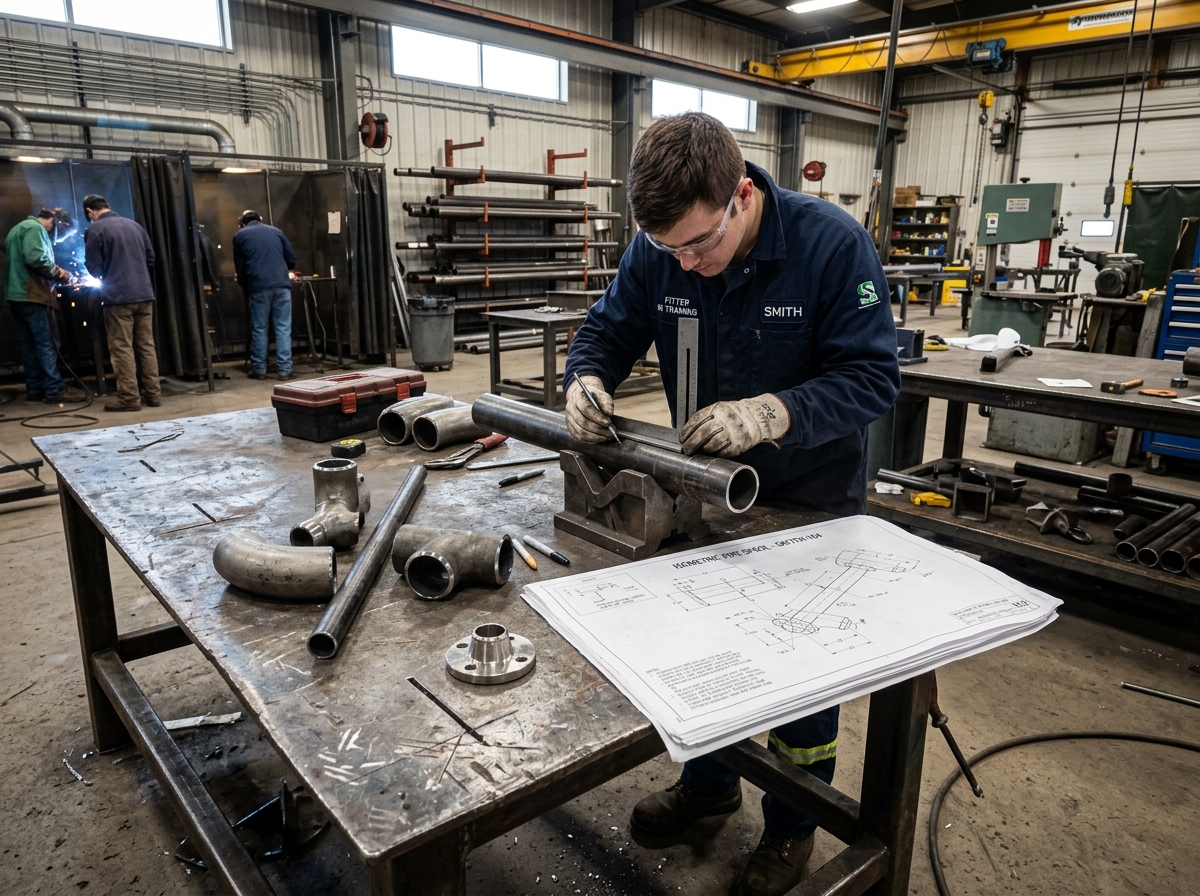
Pipe spool layout, blueprint reading, and joint alignment in fabrication workshop.
Who Can Consider Pipeline Welder Training?
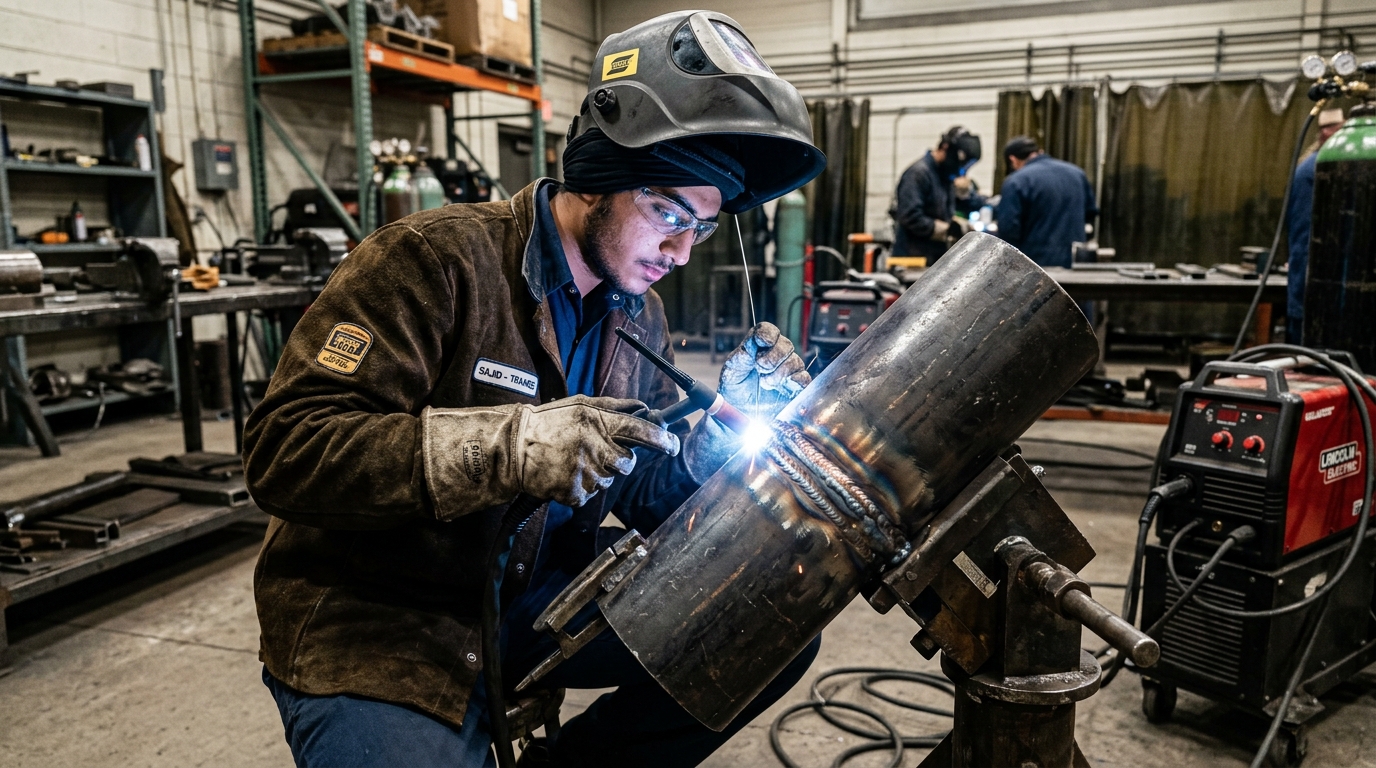
Trainees practicing pipe welding techniques in dedicated individual workshop booths.
Beginners in Pipe Welding
Candidates learning practical pipe beveling, gap fit-up, and arc welding.
Existing SMAW Welders
Stick welders upgrading from plate welding to 2G, 5G, and 6G pipe joints.
Pipe Fabrication Workers
Technicians combining practical pipe welding experience with layout skills.
Trade Test Candidates
Technical candidates preparing for upcoming trade test evaluations in Multan.
Weld Quality Inspection & Visual Defect Control
Visual inspection discipline is integrated into every workshop practice session. Trainees learn to inspect completed test coupons for:
- Full root pass penetration and uniform inner bead reinforcement
- Absence of internal undercut, crater cracks, or tungsten inclusions
- Smooth capping pass height, consistent weave width, and clean toes
- Proper interpass cleaning and elimination of trapped slag pockets
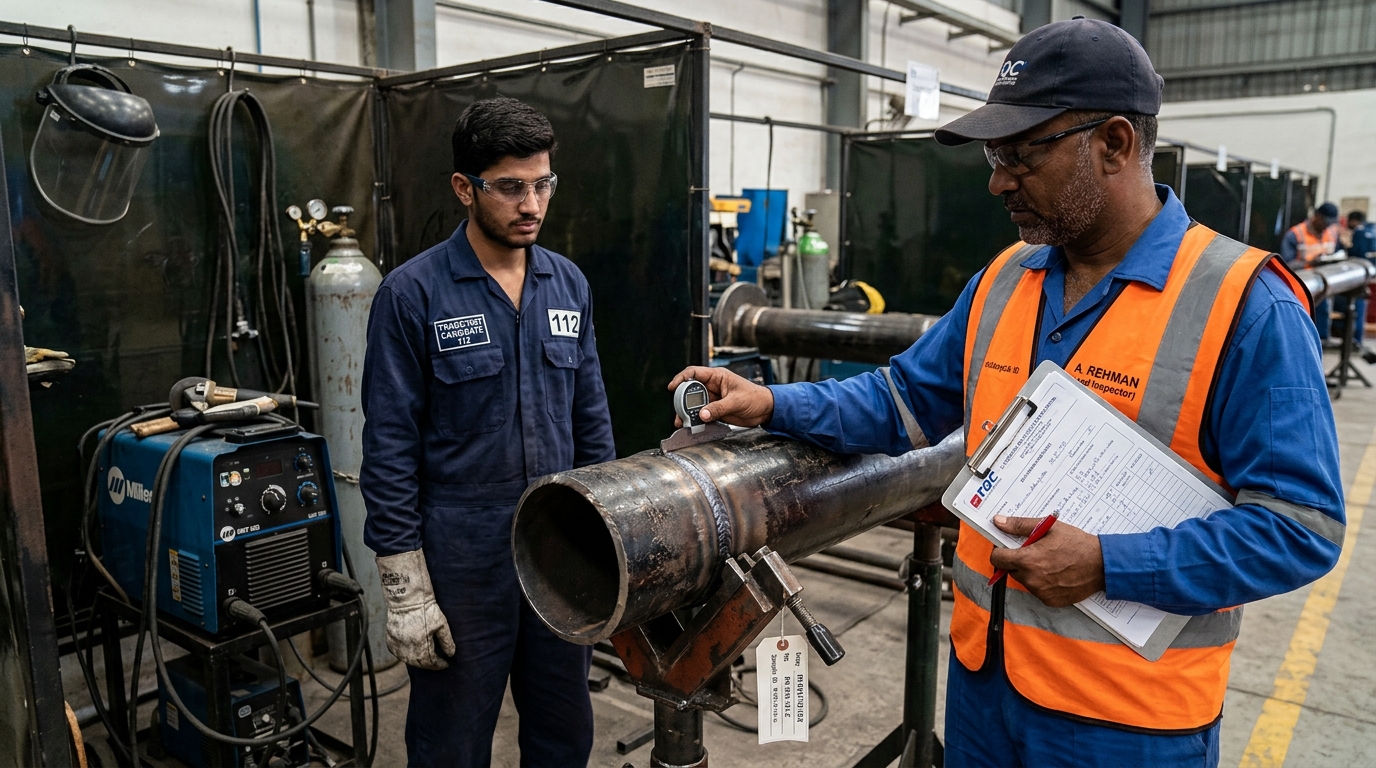
Visual weld inspection and quality assessment of completed pipe test joints.
About Ashtar Trade Test & Technical Training Centre
Authentic practical workshop facility at Usman-e-Ghani Road campus, Multan.
Ashtar Trade Test & Technical Training Centre is an established technical skill development and trade testing facility situated on Usman-e-Ghani Road, near Brite Hall School, Multan, Punjab, Pakistan.
Our facility focuses on practical workshop training across core technical trades including Pipeline Welder, 6G Pipe Welding, TIG / GTAW Welding, MIG / GMAW Welding, Multi Welder training, Pipe Fitting, Pipe Fabrication, Industrial Electrical, and Mechanical Fitting.
Pipeline Welder Course Summary
| Course Title | Pipeline Welder Course in Multan |
| Primary Focus | Pipe & Pipeline Arc Welding (SMAW) |
| Training Type | Practical Workshop Training |
| Provider | Ashtar Trade Test & Technical Training Centre |
| Campus Location | Usman-e-Ghani Road, near Brite Hall School, Multan, Punjab, Pakistan |
| Inquiry Phone | 0300-7365255 | 0300-7322762 |
| Duration & Fee | Contact Ashtar Trade Test directly for current batch schedule and fee structure. |
Related Courses & Guides
6G Welding Course in Multan
45-degree fixed inclined pipe welding practical training & trade test prep.
Multi Welder Course in Multan
Multi-process welder training across SMAW, GTAW, GMAW, and FCAW processes.
TIG Welding Course in Multan
Practical TIG & Argon welding training, torch manipulation, and root pass practice.
MIG Welding Course in Multan
Practical MIG & GMAW wire-feed welding training, shielding gas tuning, and plate joints.
Welding Course in Multan
Comprehensive SMAW, TIG, and MIG welding training programs in Multan.
Welding Training Catalog
Main course catalog for all welding and pipe fitting training modules.
Pipe Fitter Course
Isometric drawing reading, pipe beveling, threading, and flange alignment.
Pipe Fabricator Course
Spool template development, pipe shearing, fitting, and structural layout.
Trade Test Center in Multan
Pre-departure technical skill assessment and trade testing facility in Multan.
Frequently Asked Questions About Pipeline Welder Course in Multan
Ready to Build Your Pipeline Welding Skills?
If you're looking for practical pipeline and pipe welding training in Multan, contact Ashtar Trade Test & Technical Training Centre for current course availability, duration, fees and admission information.
Address: Usman-e-Ghani Road, near Brite Hall School, Multan, Punjab, Pakistan
Website: www.ashtartradetest.com
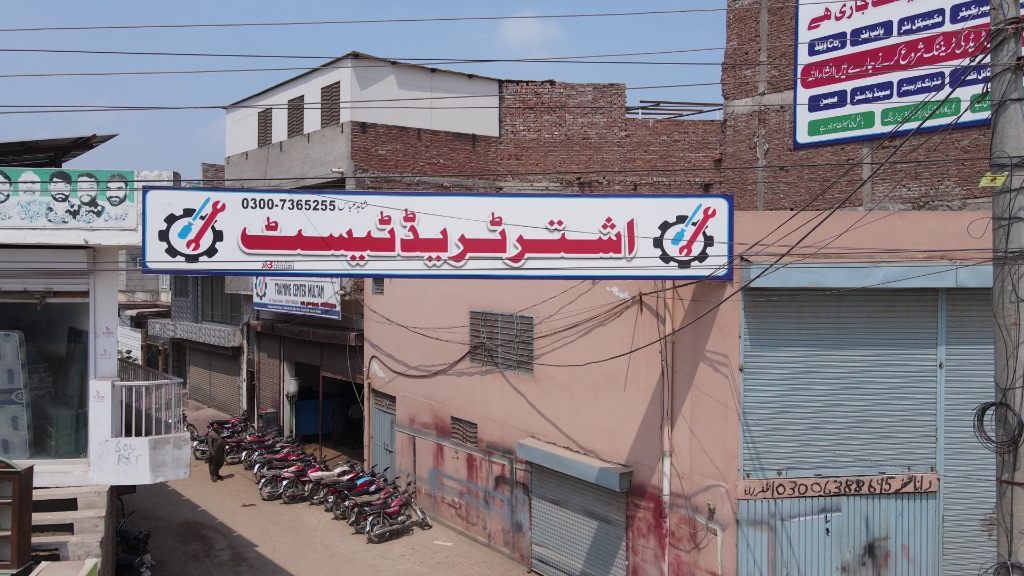
Main campus building of Ashtar Trade Test & Technical Training Centre in Multan.