TEVTA Admission Process in Punjab: A Student's Guide
Navigating the technical and vocational admission landscape in Punjab requires an understanding of qualification criteria, application timelines, institutional frameworks, and verified document preparation. Whether you are exploring engineering diplomas (DAE) or intensive practical workshop trades, this student guide explains how to research programmes and verify official admission information.
Public Notice & Transparency: Public TEVTA admissions follow regulated biannual government schedules published in official admission notices. Do not assume admissions are open without consulting current official notices. Ashtar Trade Test & Technical Training Centre is an independent private training facility in Multan providing educational guidance and practical industrial workshop preparation.
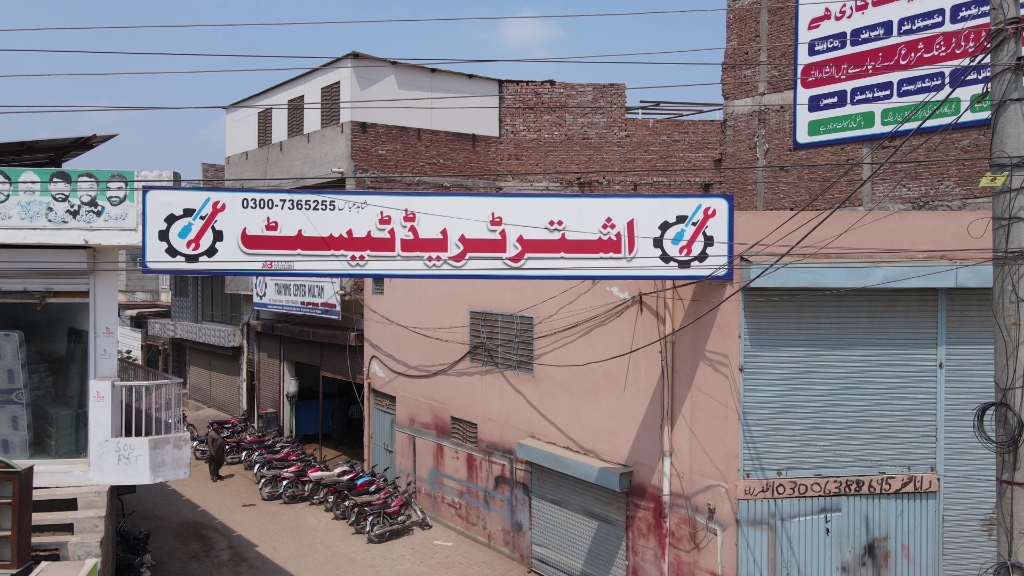
Usman-e-Ghani Road, Multan, Punjab | Technical Evaluation & Workshop Bays
Understanding TEVTA's Role in Punjab's Technical Ecosystem
The Technical Education and Vocational Training Authority (TEVTA) is the statutory body governing public-sector technical colleges, polytechnics, and vocational training institutes across the province of Punjab. Established to standardize curricula, develop skilled industrial manpower, and regulate technical training, TEVTA oversees hundreds of institutes.
Technical Education (DAE)
Three-year Diploma of Associate Engineer programs conducted through polytechnic colleges (GCTs). Curricula blend applied mathematics, engineering physics, drawing, and laboratory practice examined by the Punjab Board of Technical Education (PBTE).
Vocational Training Programs
One-year to two-year vocational diplomas (such as G-II and G-III certifications) focused primarily on core practical crafts. Taught at Government Technical Training Institutes (GTTIs) and Vocational Training Centres (VTCs).
Short Skill Modules (3-6 Months)
Intensive, fast-track competency-based courses designed for rapid employment in domestic industries and overseas GCC labor markets. Emphasis is placed on manual trade execution, tool handling, and workshop safety.
Step-by-Step TEVTA Admission Guide for Punjab
Follow this sequential 8-step roadmap to navigate public polytechnic admissions and evaluate vocational training opportunities effectively across Punjab.
Identify Field of Interest
Decide whether your career pathway aligns with industrial manufacturing, electrical maintenance, civil construction, piping fabrication, or welding. Selecting a defined technical focus prevents mid-course transfers.
Find Relevant Institution
Locate institutes offering your trade. Compare Government Colleges of Technology (GCTs) for 3-year DAE engineering with specialized private practical workshop bays like Ashtar Trade Test Centre in Multan for fast-track skill acquisition.
Read Admission Notice
Carefully review the current official admission notice published in newspapers or online portals. Check intake windows (Fall or Spring), quota seats (sports, disabled, Hafiz-e-Quran), and morning vs evening shifts.
Confirm Eligibility
Ensure your academic records meet the specific criteria: Matric Science with minimum required percentage for DAE engineering, or Matric Arts/Middle for vocational certificates. Check any published age limits.
Prepare Required Documents
Gather original and verified photocopies of educational certificates, NADRA Smart B-Form/CNIC, father's CNIC, domicile, character certificate, and passport-size photographs as required by the prospectus.
Verify Fees & Deadlines
Check government bank challan submission guidelines, admission form costs, and semester tuition fee deadlines. Never submit cash to unauthorized individuals; use official designated bank branches.
Submit Application
Follow the published instructions: either complete the online application on the designated provincial portal or submit physical application files with stamped fee challans directly to the college admission desk.
Retain Confirmations
Secure your student copy of the bank challan, application diary number, and official receipt slip. Monitor published merit lists on campus notice boards or official web portals.
TEVTA Admission Eligibility Requirements in Punjab
Educational eligibility is determined strictly by the program level, regulatory board (such as PBTE), and statutory curriculum guidelines. There is no single universal eligibility rule across all technical courses.
DAE Engineering Diplomas
- Academic Qualification: Matriculation in Science subjects.
- Compulsory Subjects: Mathematics, Physics, and Chemistry.
- Minimum Percentage: Typically 45% aggregate marks for regular merit seats.
- Age Considerations: Usually between 15 to 22 years for regular morning sessions; evening self-finance programs often accommodate older candidates.
Vocational Trade Diplomas
- Academic Qualification: Matriculation (Science or General/Arts streams).
- Prerequisites: Basic numerical literacy and technical comprehension.
- Acceptable Streams: Open to both fresh matriculates and candidates seeking trade certifications.
- Typical Trades: Electrician, auto mechanic, machinist, refrigeration technician.
Practical Skill Short Courses
- Academic Qualification: Middle (8th class pass) or Matriculation.
- Physical Fitness: Good manual dexterity, eyesight, and ability to handle workshop machinery safely.
- Age Policy: Flexible age limits, frequently accommodating adult craftsmen and career transitioners.
- Specialized Focus: Multi-welding (TIG/MIG/SMAW), pipe fabrication, trade test preparation.
Required Documents for Admission Applications
Below is a representative checklist of documents typically requested during technical admissions in Punjab. Document checklists depend directly on the institution and the official notice, so this list serves as a practical preparatory reference rather than an absolute official mandate.
Academic Result Cards / Sanad
Original and attested copies of your Matriculation (SSC) or Middle school certificate, issued by your respective BISE examination board.
NADRA Smart B-Form or CNIC
Computerized National Identity Card (CNIC) if 18 or older, or official NADRA Computerized Smart B-Form copy for students under 18.
Guardian / Father's CNIC
Attested photocopy of your father's or legal guardian's valid Computerized National Identity Card for verification records.
Domicile Certificate
Proof of residency in Punjab (or relevant district domicile such as Multan, Khanewal, Lodhran) required for regular government subsidized quota seats.
Character Certificate
Issued by the headmaster, principal, or institution last attended certifying conduct and disciplinary record.
Recent Photographs
Usually 4 to 8 passport-size photographs with sky-blue or white backgrounds, attested on the reverse side as specified.
How to Compare Courses and Select the Right Program
Selecting a technical course requires balancing your academic strengths, budget, target job market, and practical workshop access. Evaluate prospective programs using these 6 objective criteria.
1. Practical Booth vs Theory Ratio
Engineering diplomas (DAE) allocate significant curriculum hours to theoretical math, physics, and technical drawings. If your objective is rapid manual competence (such as 6G pipe welding or pipe spool fabrication), confirm the daily hours spent inside practical workshop booths with live tooling.
2. Training Duration vs Financial Runway
A 3-year DAE requires long-term commitment before entering the job market. Conversely, 3-to-6 month intensive trade test modules are tailored for students needing immediate employment or preparing for overseas recruitment delegation interviews.
3. Examination Board & Recognition
Determine which authority issues the credential. Government diplomas are certified through the Punjab Board of Technical Education (PBTE). Private workshop certificates verify skill hours and practical competency for trade test performance.
4. Tooling & Consumable Allowances
In trades like high-pressure welding, skill depends directly on consumed materials. Verify whether the institute provides sufficient welding electrodes (E6010, E7018), argon shielding gas, carbon steel pipes, and grinding disks during daily practice.
5. Campus Workshop Facilities
Always inspect the workshop premises before paying admission fees. Confirm machine safety, ventilation hoods, PPE availability, pipe beveling machines, and dial gauge alignment rigs.
6. Domestic vs Overseas Job Market Demand
Trades like pipe fitting, 6G argon welding, and industrial electrical wiring maintain continuous hiring demand across Saudi Arabia, UAE, Qatar, and Oman, whereas general theory trades may experience localized competition.
Example Trade Pathways: Industrial Welding & Pipe Fabrication
Students considering mechanical and fabrication tracks can explore distinct specializations depending on available campus bays. Key examples include:
How to Check Official Admission Dates, Fees & Schedules
Government technical education and private technical training operate under different fee models and admission cycles. Here is how students can accurately verify current figures without relying on rumors or outdated materials.
Public Sector TEVTA Colleges
Government Regulated Fees- Admission Intakes: Conducted primarily twice a year: the Fall intake (July to September following BISE matric results) and the Spring intake (December to February).
- Subsidized Tuition: Government institutes receive public subsidies, offering nominal per-semester tuition fees fixed in their official prospectuses.
- Verification Source: Always verify schedules through official notices published by TEVTA Punjab (tevta.gop.pk) or PBTE (pbte.edu.pk).
Private Technical Training Centres
Consumable & Workshop Based- Rolling Monthly Batches: Private practical workshops frequently operate rolling monthly admissions with flexible morning and evening shifts.
- Fee Determinants: Training fees reflect direct consumable costs: daily welding electrode expenditure, shielding gases, pipe spools, and 1-on-1 instructor time.
- Verification Source: Contact the training institute's admissions desk directly to inspect workshops and receive verified batch fee breakdowns.
Technical Training & Trade Test Preparation in Multan
For students and industrial craftsmen in Multan and across South Punjab seeking intensive, hands-on workshop training rather than purely theoretical classroom instruction, ASHTAR TRADE TEST CENTRE provides specialized practical training facilities and rigorous trade test assessment rehearsal.
Hands-on Multi-Welding
Intensive SMAW stick, TIG argon root pass, and MIG welding booths with X-ray quality evaluation.
Pipe Fitting & Blueprint Takeoffs
Isometric drawing reading, rolling offsets, elbow takeoffs, flange 2-hole leveling, and spool fabrication.
Trade Test Assessment Bays
Timed mock test assessments simulating Gulf client recruitment delegations (Aramco, ADNOC standards).
Mechanical & Safety Modules
Dial indicator shaft alignment, bearing maintenance, torque wrench handling, and HSE workshop protocols.

Individual welding booths, heavy pipe fitting rigs, and industrial testing bays in Multan.
7 Critical Admission Mistakes Students Should Avoid
Every academic year, hundreds of students face admission disqualification or waste tuition fees due to avoidable application mistakes. Be mindful of these common traps.
Applying Without Checking Subject Eligibility
Submitting an application for DAE Engineering with a Matric Arts certificate leads to automatic disqualification by PBTE. Always verify whether science subjects (Math, Physics, Chemistry) are required before applying.
Relying on Outdated Admission Notices
Social media groups frequently circulate screenshots of admission notices from previous years. Relying on obsolete cutoff dates results in missed bank challan deadlines and forfeiture of application rights.
Assuming Identical Fees Across All Courses
Assuming that all technical trades share identical fee structures is a costly error. High-consumable workshop trades (such as pipe welding with argon shielding gas) have significantly different fee models than classroom-based IT trades.
Confusing Private Training with Govt Colleges
Failing to recognize the institutional difference between public polytechnic colleges (which follow fixed annual academic schedules) and private practical workshop centers (which provide flexible skill training) causes procedural confusion.
Assuming Recognition Without Board Verification
Enrolling in an unverified program under the assumption that its diploma can be attested by IBCC or MOFA without checking its registration code on the official PBTE or NAVTTC directory.
Missing Strict Registration Deadlines
Even after securing provisional admission, failing to deposit semester dues and submit original attested matric result cards before the designated cutoff date results in admission cancellation.
Believing Unverified Job or Salary Guarantees
Falling for fraudulent advertising that promises "100% guaranteed foreign employment" or "guaranteed government jobs" upon course completion. Legitimate training centers focus on verifiable practical skill acquisition, safety compliance, and trade test preparation.
Frequently Asked Questions Regarding TEVTA Admissions
Clear, verified answers to common questions asked by students and parents exploring technical education in Punjab.
How can I check the TEVTA admission process in Punjab?
To check the TEVTA admission process in Punjab, review published admission notices in major national daily newspapers or visit official regulatory portals such as the TEVTA Punjab website (tevta.gop.pk) and the Punjab Board of Technical Education (pbte.edu.pk). You can also visit local government technical training institutes (GTTIs) or Government Colleges of Technology (GCTs) directly to obtain official prospectuses, admission forms, and deadline schedules.
Where can I find current admission notices?
Current admission notices are published twice a year: the Fall session (July to September) and the Spring session (December to February). Official announcements are made via TEVTA Punjab official publications, provincial government press releases, and campus bulletin boards across technical institutes in Multan, Lahore, Faisalabad, and other Punjab districts.
What qualifications are required for TEVTA courses?
Qualifications depend directly on the specific level of study. Three-year DAE (Diploma of Associate Engineer) programs strictly require Matric Science with Mathematics, Physics, and Chemistry. Vocational diploma programs (1 to 2 years) typically accept Matric in any stream (Science or Arts), while short-term practical trade courses (3 to 6 months) often accommodate candidates with middle school (8th class) education or foundational literacy.
Which documents may be required?
Typically requested documents include original and attested photocopies of your Matric or Middle certificate/result card, computerized CNIC or NADRA Smart B-Form, father or guardian CNIC copy, recent passport-size photographs, domicile certificate, and character certificate from your last attended educational institution.
How can I check course fees and duration?
Public polytechnic colleges provide subsidized, government-regulated fee schedules published in their annual prospectuses, often charged per semester. For private technical training facilities, fees depend on practical booth hours, machinery access, and workshop consumables such as welding electrodes, carbon steel pipes, and shielding gases. Contact respective institutions directly for current fee schedules.
Are all courses available at every institute?
No. Technical and vocational course offerings vary significantly depending on the campus infrastructure, workshop machinery, and sanctioned faculty. For example, high-pressure pipe welding and DAE Civil engineering require specialized industrial bays available only at select polytechnic colleges and specialized training centers.
How can I find technical training options in Multan?
Students in Multan can explore public campuses such as Government College of Technology (GCT) Qasimpur Colony and Government Technical Training Institutes, as well as private specialized workshop facilities. For intensive, hands-on workshop training in welding, pipe fitting, and Gulf trade test preparation, candidates can visit Ashtar Trade Test & Technical Training Centre on Usman-e-Ghani Road, Multan, or call 0300-7365255.
How can I verify an institute's affiliation or a programme's recognition?
Verify affiliation by requesting the institution's official registration code and checking it directly on official portals such as the Punjab Board of Technical Education (pbte.edu.pk) affiliated institute directory or the National Vocational and Technical Training Commission (navttc.gov.pk) accredited registry. For overseas Gulf employment, check whether credentials qualify for attestation by IBCC and the Ministry of Foreign Affairs (MOFA).
Need Help Exploring Technical Training Options?
Whether you are evaluating government polytechnic diploma pathways across Punjab or seeking intensive, practical workshop practice in Multan to prepare for industrial trade test assessments, our technical instructors are available to guide you.