TEVTA Courses After Matric in Punjab: Eligibility & Training Options
Completed your matriculation and exploring technical or vocational education in Punjab? Whether you passed with Matric Science, Matric Arts, or are planning your next educational step, selecting the right technical discipline depends on your career objectives, academic eligibility, training duration, and practical workshop access.
Important Guidance: Course availability, eligibility criteria, and fee structures differ substantially between public polytechnic institutions (such as GCTs regulated under TEVTA and PBTE) and private technical training facilities. Review individual syllabus requirements and verify current admission notices before enrolling.
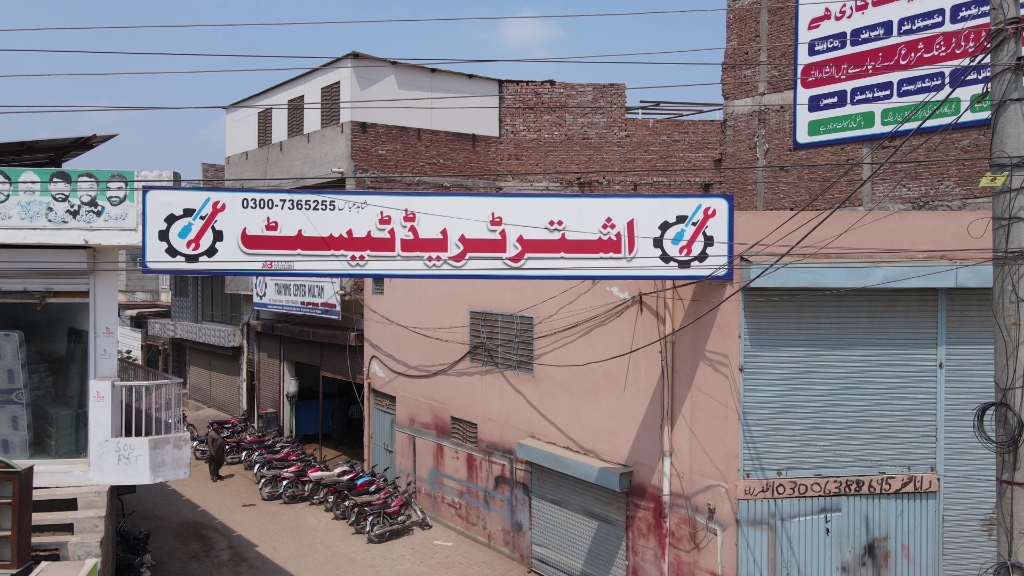
Usman-e-Ghani Road, Multan, Punjab | Technical Training & Trade Test Bays
Why Consider Technical and Vocational Education After Matric in Punjab?
For tens of thousands of students graduating from secondary school boards (BISE) across Punjab each year, deciding whether to follow traditional intermediate schooling (FSc, FA, ICom) or pursue hands-on technical training is a defining milestone. Technical and vocational education provides practical, applied knowledge designed to bridge the gap between classroom textbooks and industrial worksites.
Practical Skill Development
Unlike purely theoretical academic tracks that emphasize rote memorization, technical training focuses on physical tool mastery, metal handling, welding arc control, and machinery diagnostics directly on workshop equipment.
Tool & Workshop Literacy
Students learn to operate standard industrial machinery—ranging from angle grinders, cut-off saws, and pipe beveling tools to welding rectifiers and dial gauges—while internalizing essential workshop safety protocols.
Exploring Diverse Trades
Matric students can explore several technical trades—such as pipe fabrication, structural welding, mechanical maintenance, or electrical installation—to discover where their personal aptitude and spatial reasoning thrive.
Technical Learning Foundation
Learning technical measurement, reading engineering schematics, and understanding tolerances builds a solid base for future qualifications, including advanced technical diplomas, inspection courses, and supervisory roles.
Apprenticeship & Helper Pathways
Vocational preparation positions candidates to apply for industrial apprenticeships, junior technician roles, or site helper positions in manufacturing units, construction projects, and processing facilities.
Trade Test Readiness
For those targeting industrial craft careers locally or internationally, structured workshop practice prepares individuals for rigorous hands-on skill verification tests administered by foreign employers and inspection agencies.
Comparing 3-Year DAE Diplomas vs Short Vocational Courses After Matric
Understanding which educational structure fits your timeline and career intent
| Feature | 3-Year DAE (Polytechnic Diploma) | Short Vocational Courses (3-6 Months) |
|---|---|---|
| Primary Objective | Supervisory engineering technician qualification with academic progression | Immediate practical craftsmanship, tool handling, and trade test preparation |
| Matric Requirement | Strictly Matric Science (Math, Physics, Chem) with 45%+ marks | Open to Matric Science, Matric Arts, or candidates awaiting results |
| Curriculum Balance | 50% Classroom Engineering Theory + 50% Lab Demonstrations | 80-90% Direct Hands-On Workshop Practice + 10-20% Safety/Drawing Theory |
| Examining Authority | Punjab Board of Technical Education (PBTE) annual board exams | Institutional certificate of completion or specialized trade test evaluation |
| Academic Pathway | Eligible for B.Tech, BS Engineering Technology, or lateral university entry | Focuses on workplace readiness, apprenticeship, or overseas skill verification |
Technical and Vocational Course Categories for Matric Students
Explore popular industrial trades available in Pakistan. While some of these trades are taught as government-accredited courses under TEVTA and NAVTTC frameworks, others are delivered by private trade test centres focusing on intensive, targeted workshop practice.
Note: The following categories represent broad industrial trade disciplines and do not constitute an exhaustive or officially certified list of active TEVTA Punjab offerings. Always check official prospectuses for government course registrations.
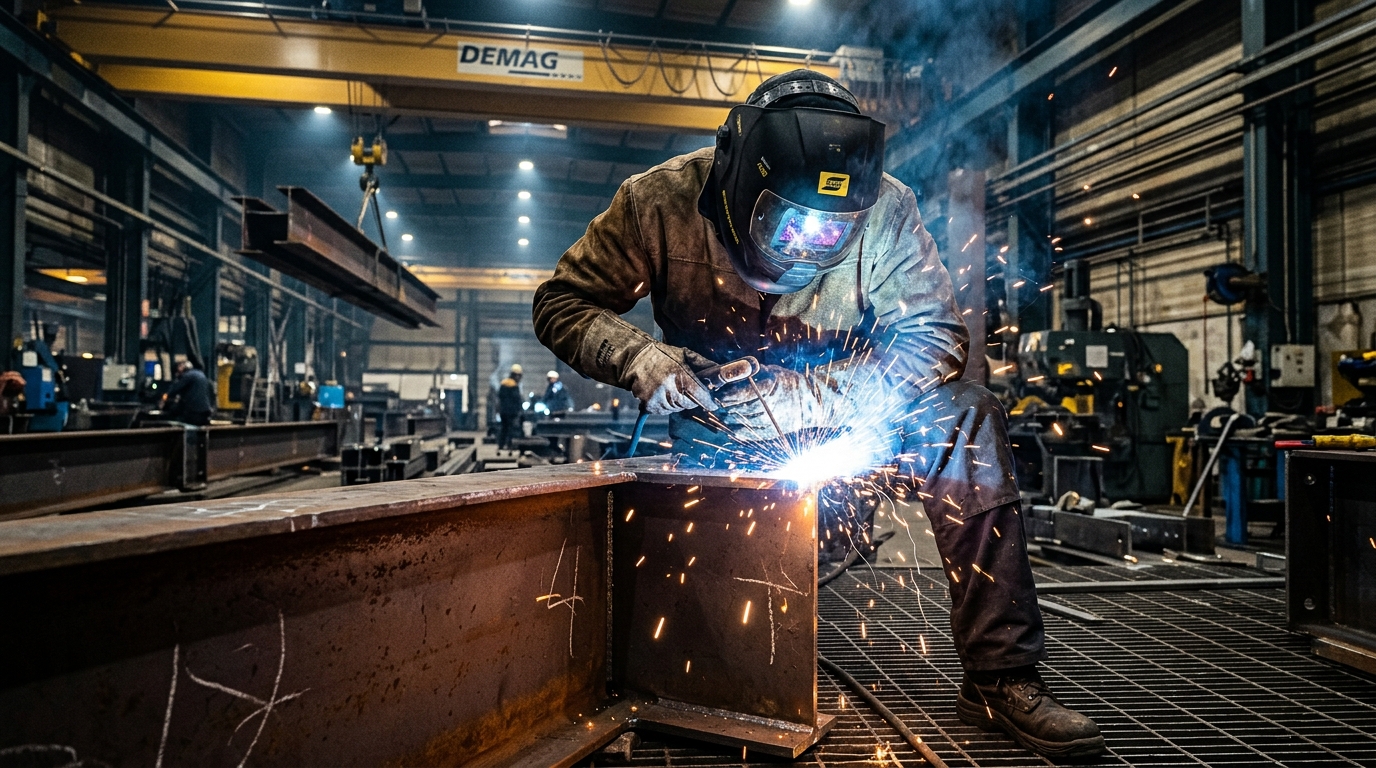
Industrial Welding (SMAW / ARC)
Covers fundamental electric arc welding principles, power source setup, electrode selection (e.g. E6010, E7018), fillet and groove joints in 1F to 4F positions, workshop ventilation, and weld defect elimination.
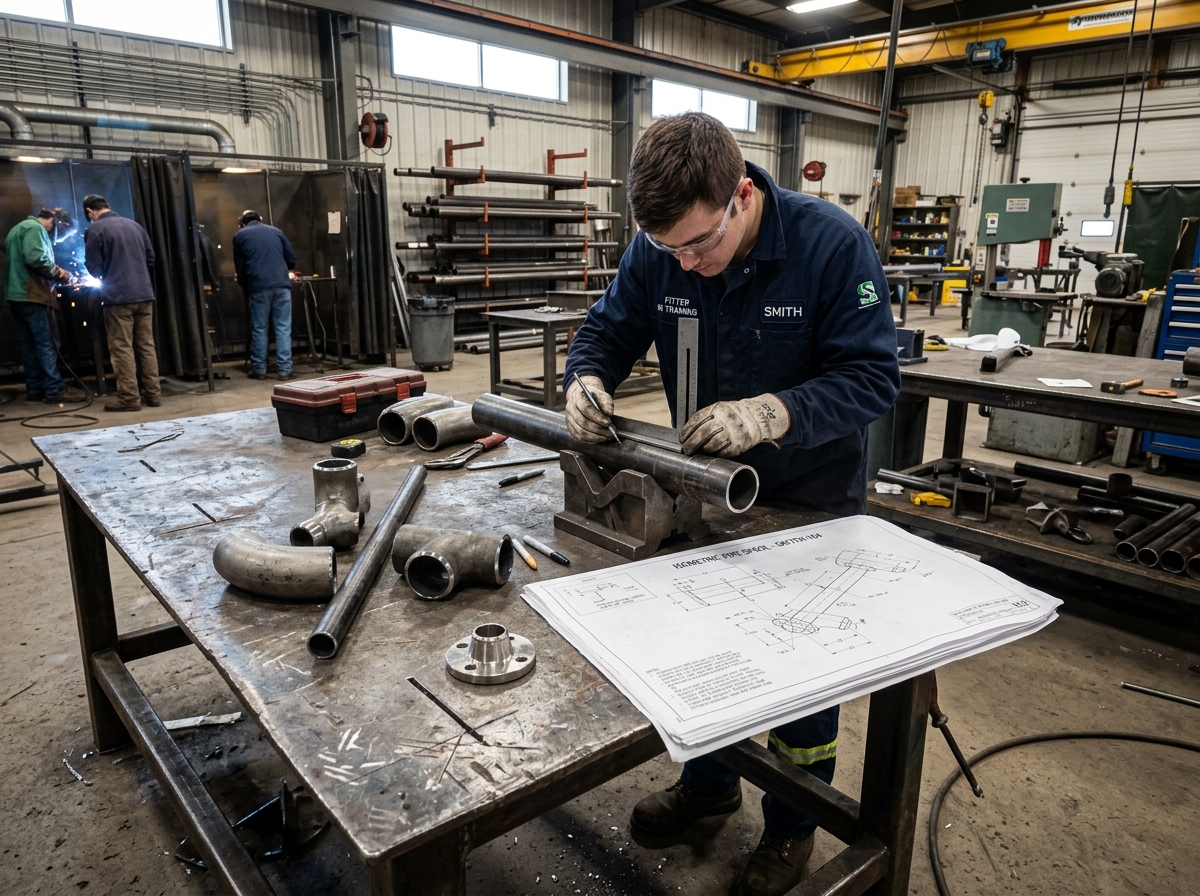
Steel & Metal Fabrication
Teaches trainees to interpret structural blueprints, measure and mark plates, perform gas and mechanical cutting, align structural steel beams, and assemble components with accurate root gaps and tack welds.
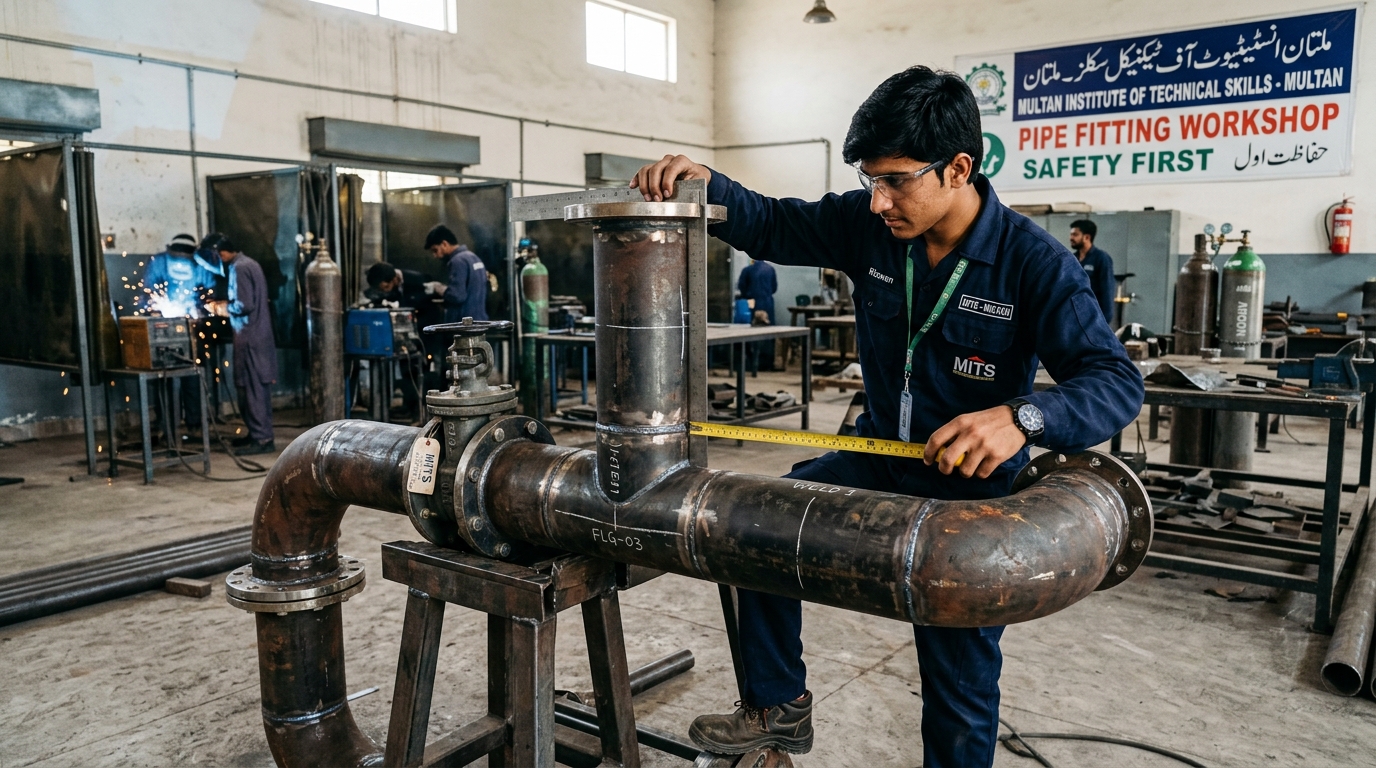
Pipe Fabrication & Fitting
Focuses on piping isometric drawings, cut-length calculations, elbow center takeoffs, flange 2-hole leveling, miter bends, pipe spool fit-up, and hydrostatic pressure testing principles.
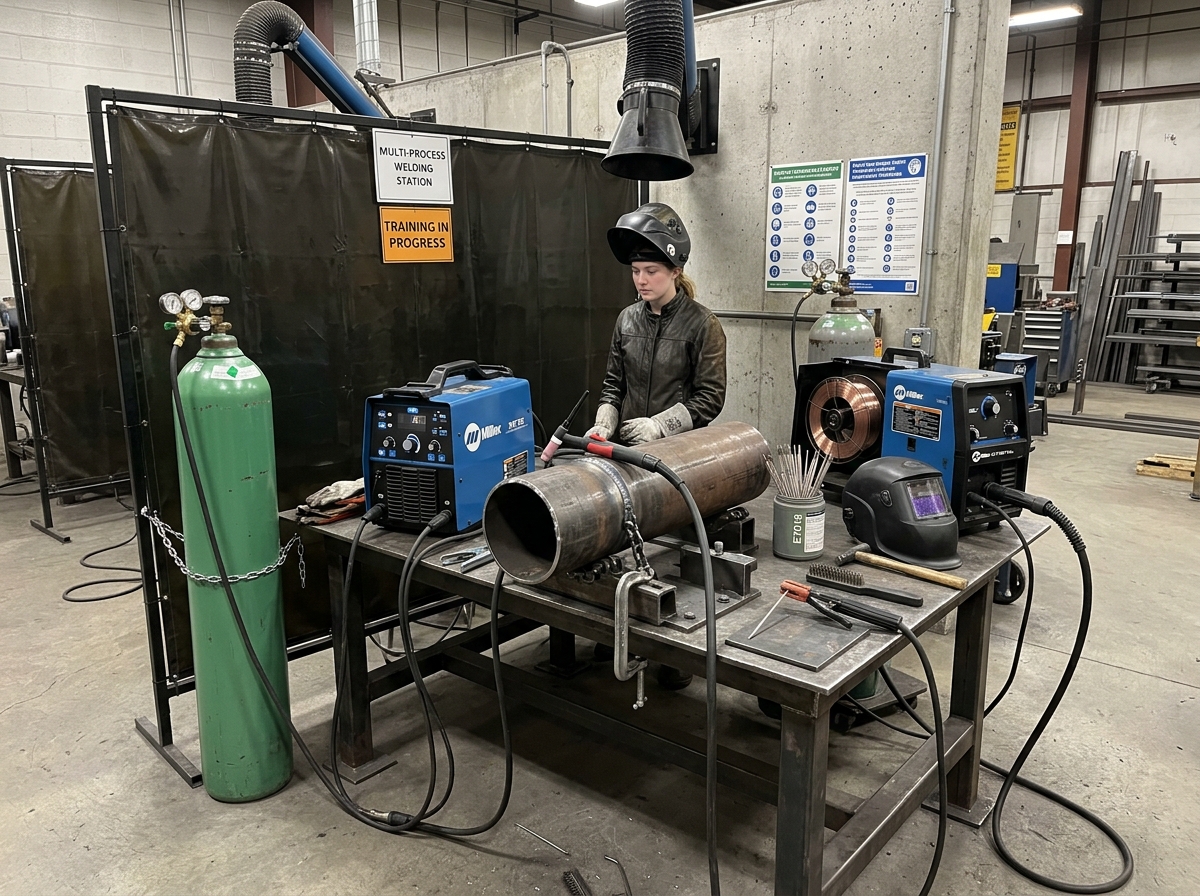
Multi-Welding Skills (TIG + ARC)
Combines Gas Tungsten Arc Welding (GTAW/Argon) for precision root passes with Shielded Metal Arc Welding (SMAW) for filler and cap passes on carbon steel and alloy industrial piping.
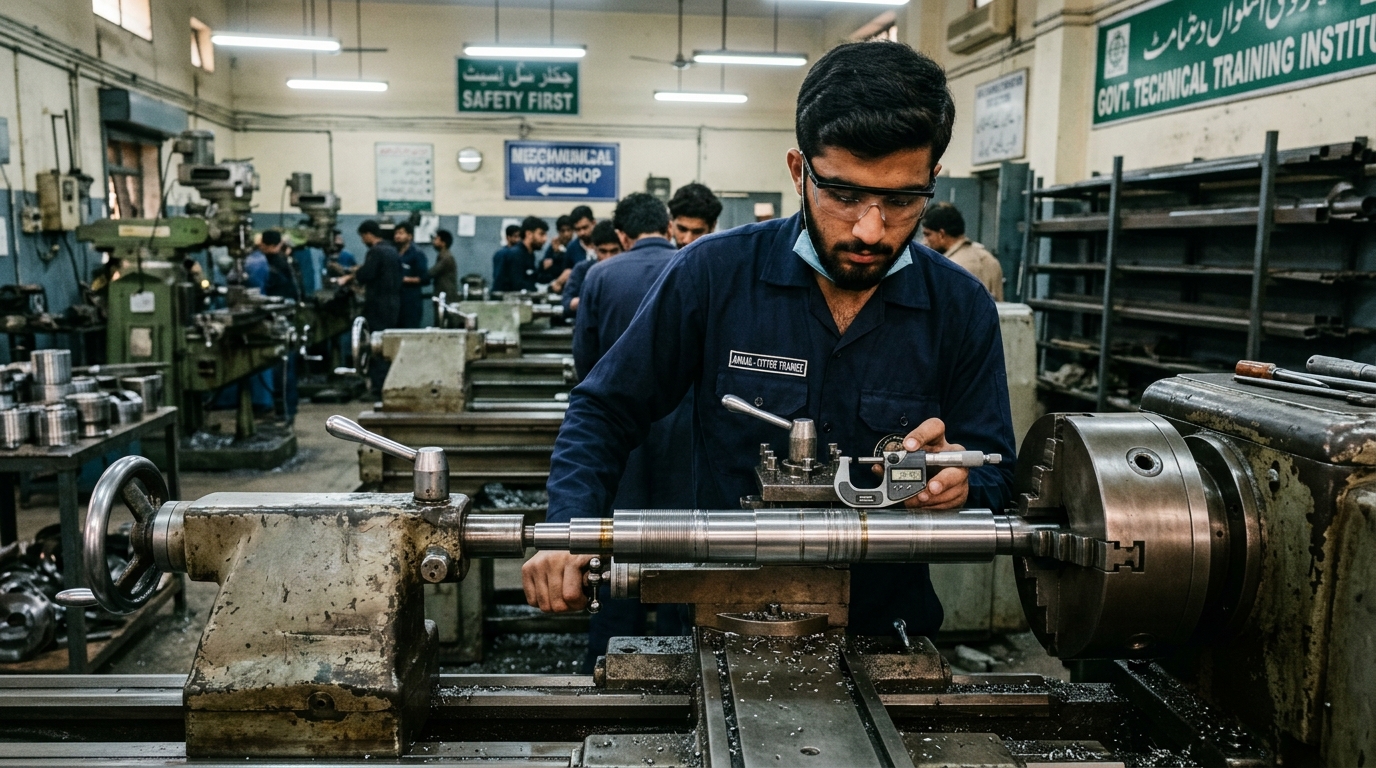
Mechanical & Plant Fitting
Training on rotating plant machinery, centrifugal pumps, gearboxes, bearing clearances, shaft alignment with dial indicators, coupling bolts, and industrial preventive maintenance.
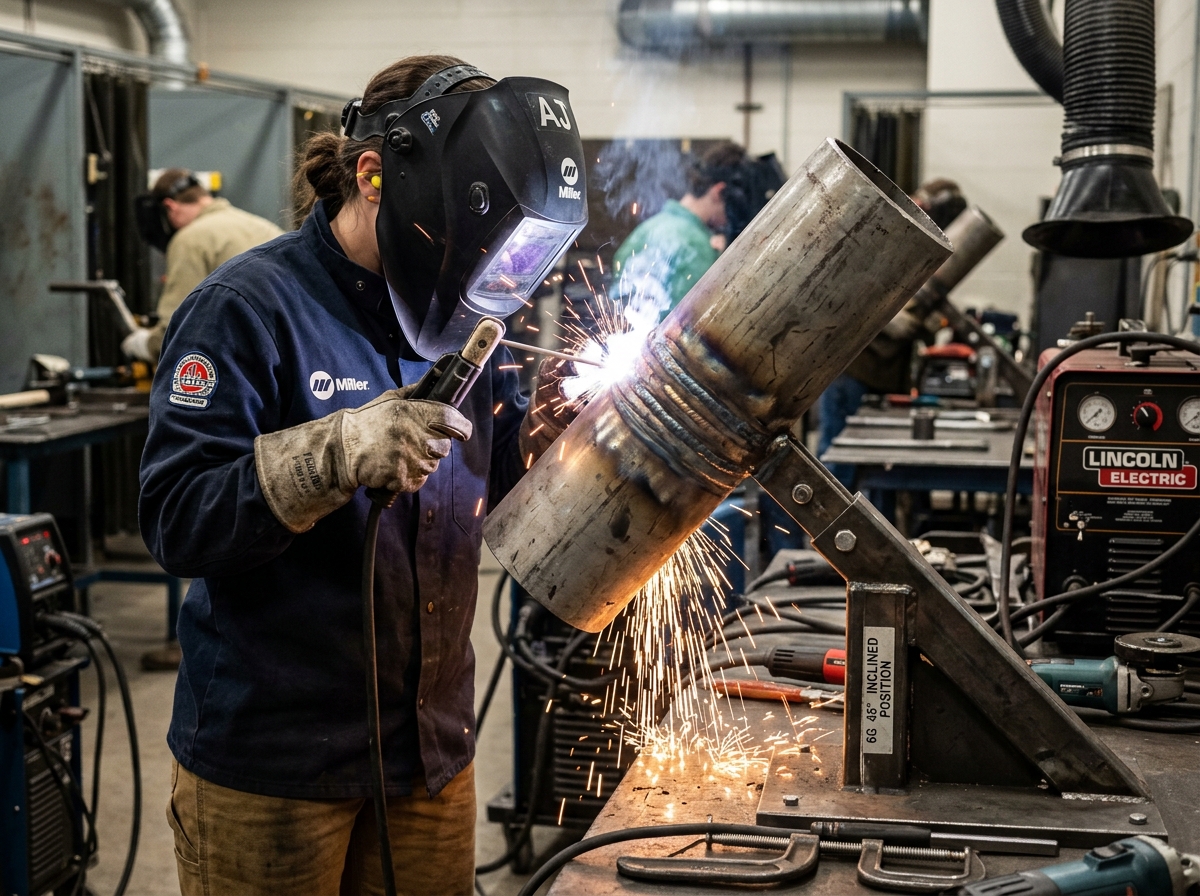
6G High-Pressure Pipe Welding
Specialized training in the 45-degree fixed inclined 6G position for high-pressure petroleum and steam lines, demanding strict root penetration, radiographic soundness, and bend test compliance.
Eligibility Requirements for Technical Courses After Matric in Punjab
Admission standards are not uniform across all vocational institutions. Entry prerequisites differ based on whether you apply for a formal government polytechnic diploma under the Punjab Board of Technical Education (PBTE) or an intensive, hands-on trade testing program at a private technical training centre.
1. Educational Background: Matric Science vs Matric Arts
For formal 3-year DAE engineering programs, public polytechnics (GCTs) strictly require Matric with Science subjects (Mathematics, Physics, and Chemistry) with a minimum of 45% aggregate marks. In contrast, short vocational courses (3-to-6 months) in welding, plumbing, and pipe fitting are typically open to both Matric Science and Matric Arts candidates, with certain basic craft courses accepting Middle-school graduates.
2. Age Regulations
Government subsidised morning shifts often apply age limits (typically 18 to 21 years at the time of admission, with limited relaxation quotas). Evening self-finance programs and private technical institutes offer greater flexibility, accommodating mature learners, career switchers, and returning overseas workers.
3. Standard Documentation Checklist
Applicants generally need: (a) Original Matric Result Card or Certificate (Sanad), (b) Computerized B-Form or CNIC copy, (c) Father/Guardian CNIC copy, (d) Recent passport-size photographs with blue/white background, and (e) Domicile certificate (specifically required for provincial quota seats in public colleges).
4. Prior Technical Experience
No prior mechanical or workshop background is required for entry-level foundation courses after matric. Training begins with basic shop safety, hand tools, and measurement scales. For advanced trade test preparation (such as 6G alloy pipe welding or advanced machine alignment), basic welding or fitting familiarity is recommended.
Statutory Verification Notice
Before submitting application forms or paying admission charges at any training centre, verify the specific programme details directly:
- Check the official gazette notices published by TEVTA Punjab (tevta.gop.pk) or PBTE (pbte.edu.pk).
- Confirm whether the course is a formal board-examined diploma or an institutional trade certificate.
- Verify exact daily hours allocated to hands-on machines versus classroom lectures.
Course Duration and Fee Guidance for Technical Education
Understanding the time commitment and financial structure helps matric students and parents plan realistically. Course durations in Punjab range from 3-month fast-track skill modules to 36-month full polytechnic diplomas.
3-Month Short Courses
Intensive workshop-focused modules designed for immediate practical learning. High concentration of booth practice with minimal theory.
6-Month Vocational Certificates
Balanced combination of practical workshop hours and foundational blueprint and measurement interpretation.
1 to 2-Year Vocational Diplomas
Broader trade competence including machining, mechanical assembly, drafting, and safety supervision (G-II level).
3-Year DAE Engineering
Polytechnic engineering diploma examined by PBTE. Qualifies graduates as associate engineers for supervisory roles.
Transparent Fee Information Policy
Course fees in Punjab depend directly on the institution type, program duration, and workshop consumable usage. Government polytechnics offer highly subsidized tuition (often nominal per-semester fees established by TEVTA Punjab). Private technical training centres charge fees based on continuous electricity consumption, gas supply (argon, oxygen, acetylene), welding electrodes, and machine tooling.
Advisory: We do not publish speculative or unverified fee tables. Prospective trainees should contact the respective admissions office directly to confirm current fees, batch schedules, installment options, and consumable inclusions.
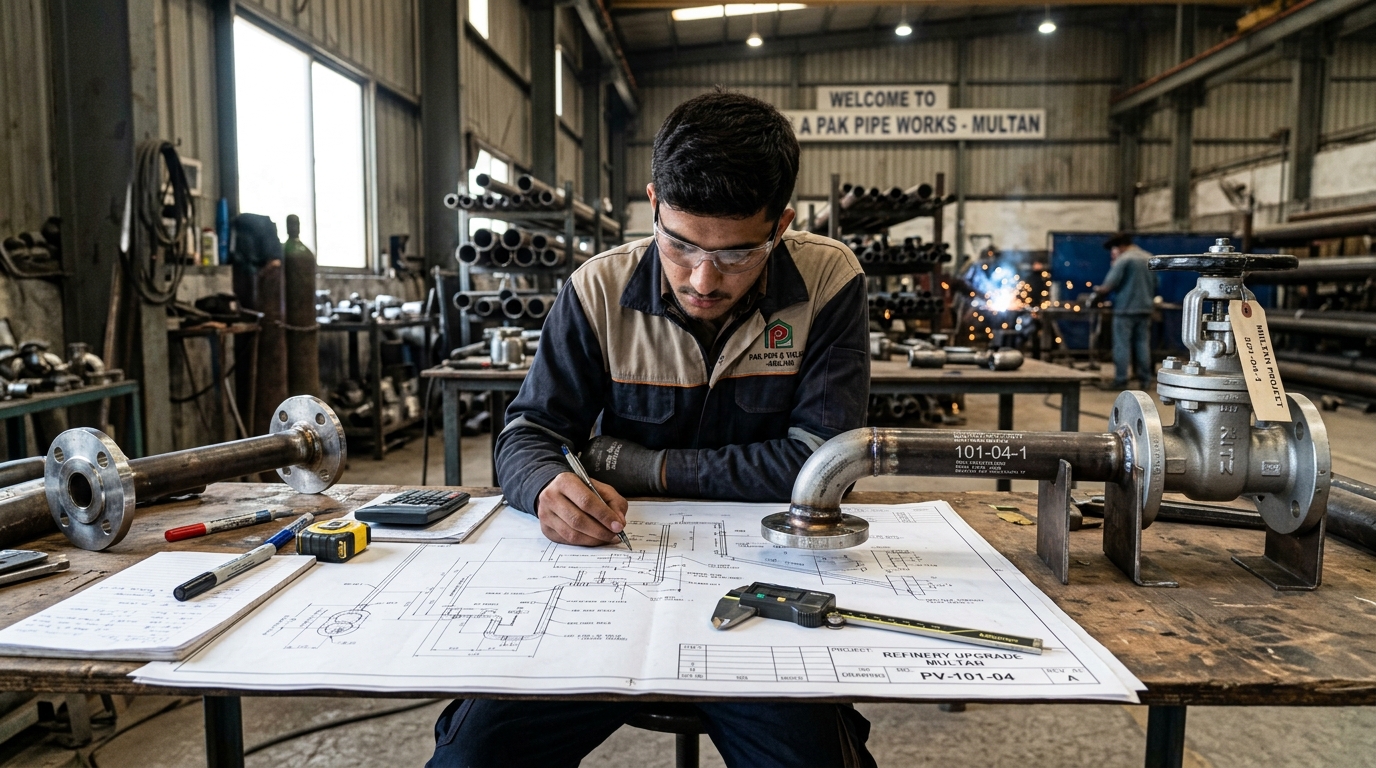
Developing spatial measurement and blueprint literacy for industrial fabrication
What Core Skills Can Students Develop in Workshop Training?
The true value of technical education lies in developing tangible skills that translate directly into workshop capability. Depending on the chosen trade, students progress from fundamental safety to sophisticated fabrication techniques:
Handling angle grinders, cut-off saws, pipe threaders, beveling bevelers, and welding rectifiers safely.
Precision reading with measuring tapes, vernier calipers, dial indicators, and spirit levels to millimeter accuracy.
Interpreting isometric drawings, orthographic projections, bill of materials (BOM), and welding symbol conventions.
Adhering to hot work permits, fire extinguisher handling, eye arc flash prevention, and respiratory filtration standards.
Aligning pipe joints, maintaining consistent 2.5–3.2 mm root gaps, bridge tacking, and flange two-holing.
Recognizing and preventing common defects: undercut, porosity, lack of root penetration, and excessive weld spatter.
Career and Further Learning Pathways After Technical Training
Technical training is not a dead-end trade; it serves as a stepping stone. Depending on personal motivation, workmanship, and continuous practice, graduates can explore multiple progressive routes:
1. Domestic Industrial Employment
Entry into local manufacturing industries, sugar mills, fertilizer complexes, oil refineries, textile units, and industrial construction contracting sites across Punjab and Pakistan as junior fitters, welders, or maintenance assistants.
2. Trade Test Preparation for Overseas
For craftsmen seeking work in the Gulf region (Saudi Arabia, UAE, Qatar, Oman, Kuwait), passing client trade tests administered by visiting foreign delegations is mandatory. Practical training refines candidate performance under exam conditions.
3. Further Technical Education
Students can advance from short certificates to comprehensive 3-year DAE engineering diplomas, followed by higher education programs (B.Tech or BS Engineering Technology) or specialized non-destructive testing (NDT / CSWIP) inspector credentials.
Explore Technical Training Options in Multan
If you are a matric student located in Multan, South Punjab, or surrounding districts (Khanewal, Muzaffargarh, Lodhran, Bahawalpur) seeking intensive practical training in industrial welding, piping layout, or Gulf trade test preparation, Ashtar Trade Test & Technical Training Centre welcomes you to explore our workshop bays.
Clear Statutory Distinction: Ashtar Trade Test & Technical Training Centre is an independent private technical training facility and trade test preparation venue in Multan. We are NOT a public-sector TEVTA campus, nor are we an affiliated examination board of the Punjab Board of Technical Education (PBTE). Trainees seeking government polytechnic admissions should refer to official TEVTA Punjab admission circulars.
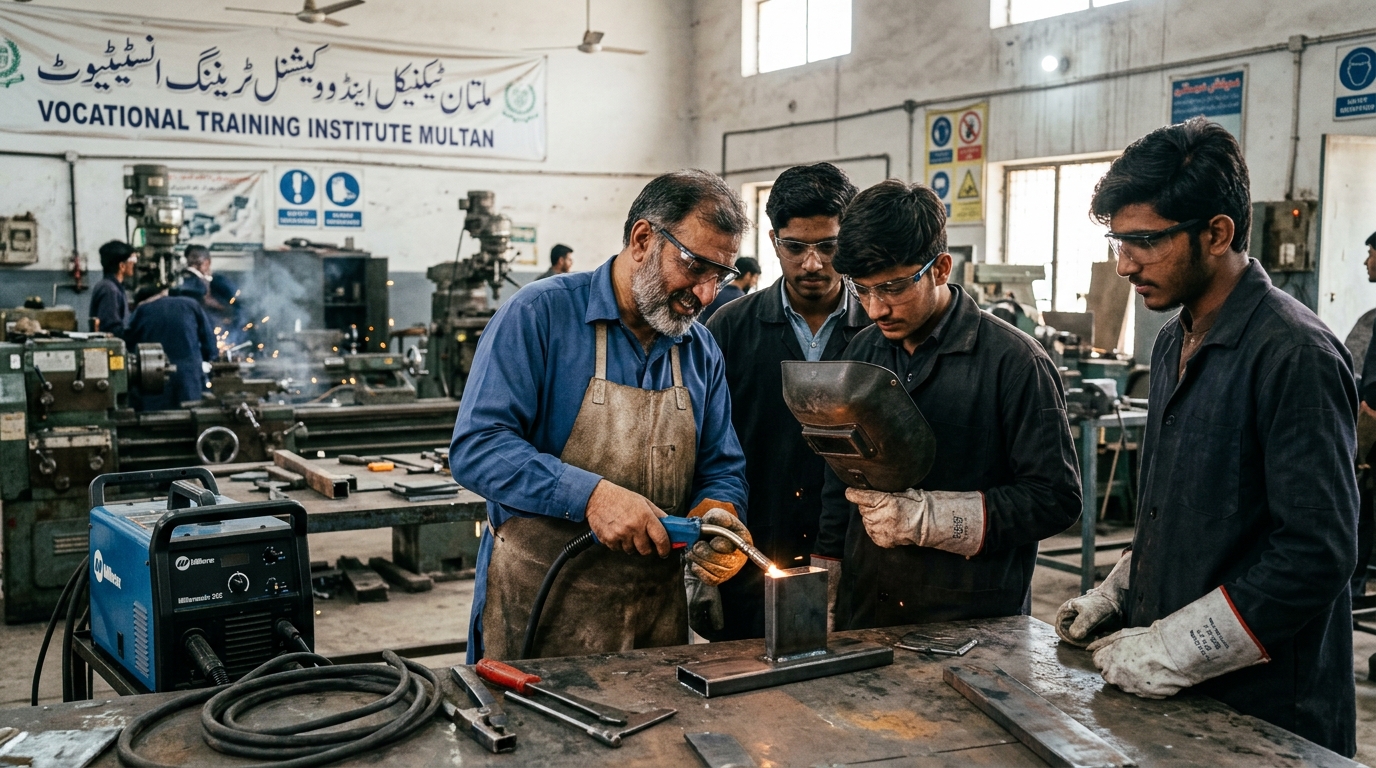
Real industrial machines, safety equipment, and individual practice booths.
How to Choose a Suitable Course: 7-Step Evaluation Checklist
Choosing the wrong technical course can cost months of effort. Evaluate programmes systematically against these seven verification criteria before committing time or tuition:
Check Educational Prerequisites
Confirm whether the trade mandates Matric Science with specific percentage criteria (as in PBTE engineering diplomas) or accommodates Matric Arts and general candidates.
Review Detailed Course Syllabus
Request a breakdown of daily hours allocated to physical workshop machine time versus theoretical classroom lectures. In technical crafts, hands-on booth time is decisive.
Confirm Duration & Total Fees
Ensure the fee structure covers all essential consumables (welding rods, pipes, grinding discs, shielding gas) without surprise mid-session assessments or charges.
Inspect Practical Facilities
Visit the campus in person. Inspect the condition of welding booths, safety ventilation, pipe fitting stands, machine tools, and individual student practice space.
Verify Certificate Credentials
Clarify who issues the certificate: a statutory provincial board (e.g., PBTE), a national qualification framework (NAVTTC), or an institutional workshop trade certificate.
Confirm Admission Schedule
Check whether the program follows fixed annual/biannual government cycles (Fall/Spring) or flexible monthly rolling admissions typical of private technical centres.
Align with Personal Interests and Long-Term Goals
Choose a trade based on your genuine mechanical aptitude and physical stamina rather than simply following what peers are doing. Welding requires steady hand control and heat endurance; pipe fitting demands 3D spatial thinking and arithmetic takeoffs; electrical work demands schematic logic and circuit precision. Match your strengths to the trade.
Frequently Asked Questions About Technical Courses After Matric
Clear, verified answers to common inquiries from matric students and parents evaluating technical and vocational training options in Punjab:
Q1.Which technical courses can students consider after matric in Punjab?
After matriculation in Punjab, students can consider several pathways: 3-year Diploma of Associate Engineer (DAE) programs in mechanical, civil, electrical, or electronics engineering under the Punjab Board of Technical Education (PBTE); 1-to-2 year vocational certificates (G-II, G-III); and 3-to-6 month intensive practical short courses in specialized trades such as industrial welding (SMAW, TIG, MIG, 6G pipe), steel and pipe fabrication, mechanical plant fitting, and industrial electrical wiring.
Q2.What are the eligibility requirements for TEVTA courses after matric?
Eligibility depends strictly on the individual program and educational institution. Formal 3-year DAE engineering diplomas under PBTE and public TEVTA colleges mandate Matric with Science subjects (Mathematics, Physics, Chemistry) with minimum 45% marks. Short vocational courses (3 to 6 months) and specialized trade test preparation modules typically accommodate both Matric Science and Matric Arts candidates, with select basic craft modules open to middle-pass applicants.
Q3.Can students explore welding training after matric?
Yes, students can explore welding training after matriculation. Training paths range from introductory manual metal arc welding (SMAW/Stick) to specialized processes such as TIG (Argon) root welding, MIG/MAG semi-automatic welding, and advanced 6G high-pressure pipe welding. Programs are offered through public vocational centres during regular academic cycles and through dedicated private technical training institutes.
Q4.How can I check course duration and fees?
Students should verify course duration, fees, and admission dates directly with the relevant institution or review its published prospectus. Public-sector TEVTA and PBTE colleges provide subsidized fee schedules published in biannual admission notices. Private technical institutes set fees based on workshop practical hours, machinery usage, and raw consumables like electrodes, shielding gas, and carbon steel pipes.
Q5.How can students find technical training options in Multan?
In Multan, students can explore both public polytechnic campuses (such as Government College of Technology Qasimpur Colony and Government Technical Training Institutes) and established private technical training facilities. For intensive, hands-on workshop practice in welding, pipe fabrication, and trade test preparation, students can visit Ashtar Trade Test & Technical Training Centre on Usman-e-Ghani Road, Multan, or call 0300-7365255.
Q6.Does every technical course require matric?
No, not every technical course requires matriculation. While engineering diplomas (DAE) strictly require a Matric Science certificate, numerous vocational trade courses (such as basic plumbing, elementary arc welding, and general manual crafts) accept students with middle-school education (8th grade) or prior workshop experience. However, completing matriculation provides greater flexibility for technical progression and certificate attestation.
Q7.How can I verify official TEVTA admissions?
Official public TEVTA admissions in Punjab must be verified through official government channels: the TEVTA Punjab portal (tevta.gop.pk), the Punjab Board of Technical Education website (pbte.edu.pk), national qualification listings on navttc.gov.pk, or by visiting the admissions office of the local government college directly during announced Fall or Spring admission windows.
Q8.Is Ashtar Trade Test Centre an official TEVTA institute?
No. Ashtar Trade Test & Technical Training Centre is an independent, private technical training and trade test evaluation facility based in Multan, Pakistan. We are NOT a government-run TEVTA campus, nor are we an affiliated examination board of PBTE. We specialize in private, hands-on workshop skill development and practical trade test rehearsal for industrial craftsmen.
Ready to Explore Your Technical Training Options?
Whether you are evaluating industrial welding, pipe fabrication, or mechanical fitting after matriculation, our technical evaluators are available to explain course outlines, evaluate your trade interests, and provide guided workshop tours in Multan.