
Welder Trade Tests for Overseas Employment
Preparing for an overseas welding assessment? Understand the relevant test requirements, review essential welding skills and learn what to confirm before attending a technical assessment.
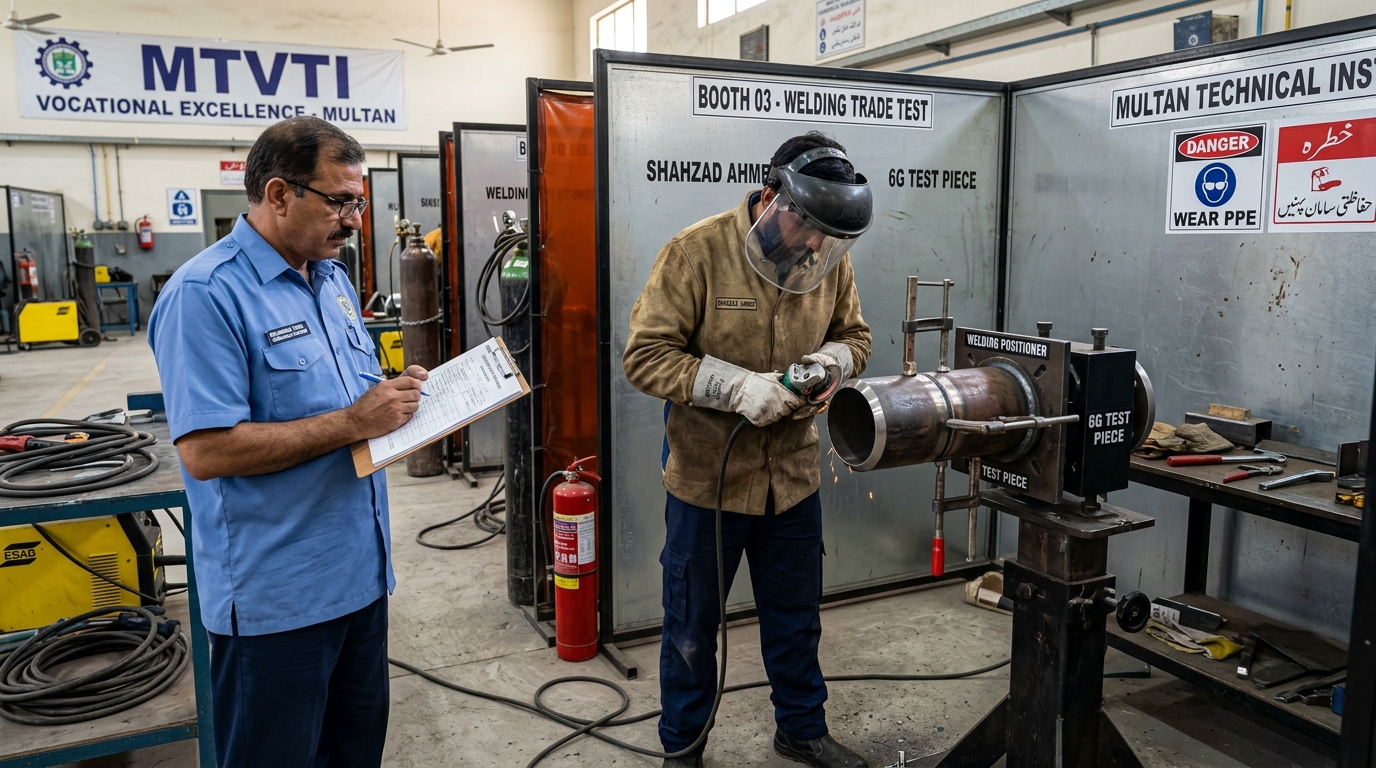
Supervised Workshop Assessment Practice
Ashtar Trade Test & Technical Training Centre
Objective Technical Readiness
Understand essential joint fit-up, welding positions, and inspection standards before scheduling your official overseas trade assessment.
1. Welding Skills
Review the practical skills relevant to your assessment, including torch angle, root gap setup, and puddle control.
2. Test Requirements
Confirm the required process, position, materials, wall thickness, and assessment format with your testing authority.
3. Official Verification
Check applicable verification requirements with the responsible national assessment authority before booking.
Understand Welder Trade Tests Before Applying for Overseas Jobs
A welder trade test is a practical or technical assessment used to evaluate whether a candidate can perform specified welding tasks according to an employer's requirements, an applicable qualification or an authorised assessment programme.
The exact assessment depends on the destination country, occupation, employer, welding process, material and testing authority. Different industrial sectors—such as oil and gas refineries, petrochemical plants, structural civil infrastructure, or marine fabrication—apply distinct acceptance criteria for weld soundess and visual appearance.
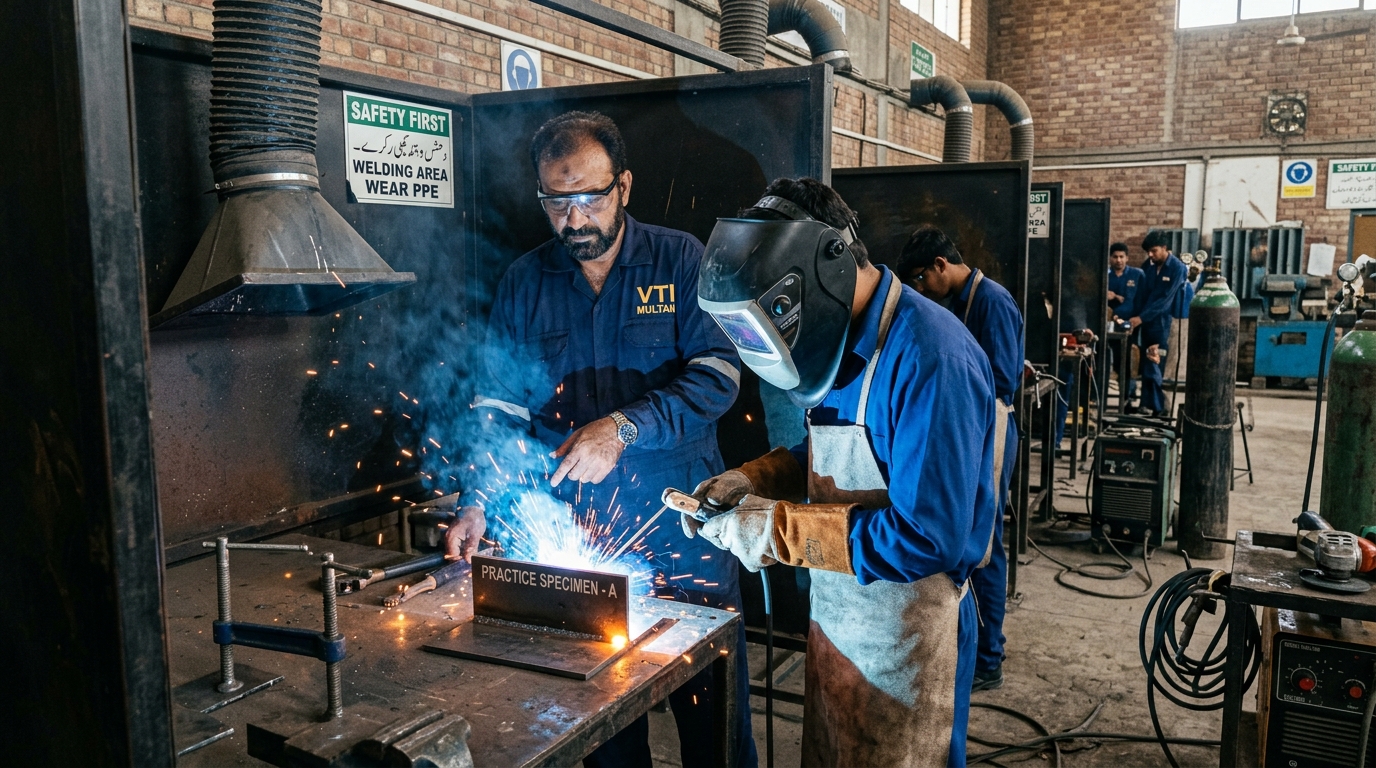
Standardized Test Booths
Practical Assessment Infrastructure
What Is a Welder Trade Test?
Clear, practical insights into what testing evaluates, how it differs from vocational education, and the legal realities of overseas recruitment.
Purpose of Practical Assessment
The primary purpose is to objectively verify that a craftsman can produce code-compliant, structurally sound welds free from disqualifying internal or surface defects, under timed conditions according to a specified Welding Procedure Specification (WPS).
Testing vs. Learning a New Skill
A trade test is an evaluation of established competency, not a training course. While training institutes teach foundational metallurgy, machine setup, and hand habits over months, a trade test measures your current skill level within a couple of focused hours.
Process & Position Confirmation
Welding processes (SMAW, GTAW, GMAW) and test positions (such as plate 3G or pipe 6G) require entirely distinct hand manipulation and heat input control. Passing a flat plate test does not qualify a candidate for high-pressure fixed 6G pipework.
Employer-Specific Requirements
Different engineering contractors and overseas recruitment delegations establish proprietary testing protocols. While one employer may require full volumetric X-ray testing on heavy carbon steel spools, another may emphasize visual inspection and fillet weld fracture tests.
No Employment or Visa Guarantee
Passing a trade assessment is a technical milestone verifying hand skill, but it does not automatically guarantee overseas employment, visa issuance, or a recruitment contract. Employment offers depend entirely on verified employer demands, interviews, quotas, background checks, and official government immigration approvals.
Important Skills to Review Before a Welding Assessment
Examiners observe not just the final weld bead, but your complete workshop discipline from coupon fit-up and tacking to machine calibration and safety compliance.
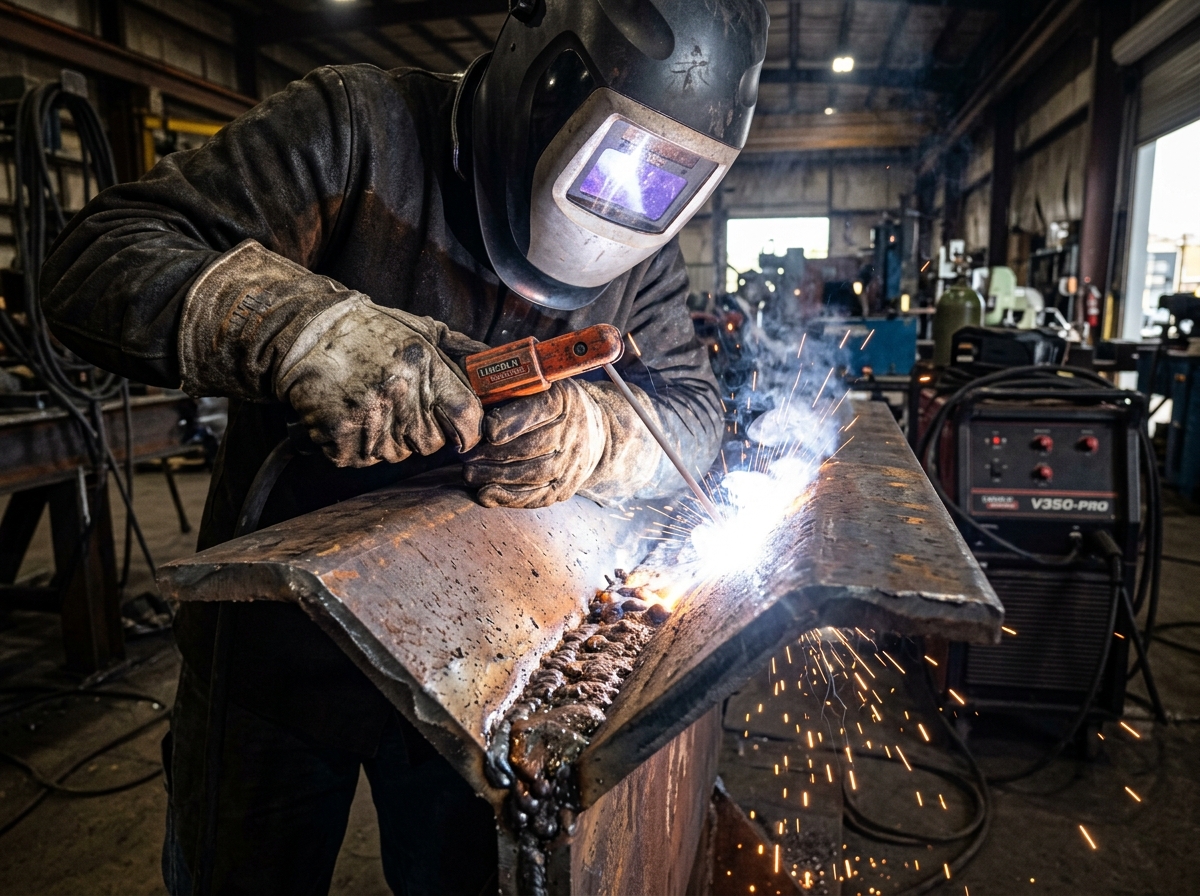
Welding Process Knowledge
Candidates should confirm the specified process, such as SMAW (Stick), GTAW (TIG), or GMAW (MIG/MAG). Understand current polarity (DCEN vs. DCEP), proper shielding gas flow (such as 100% Argon for TIG or Ar/CO2 mixes for MIG), tungsten electrode grind geometry, and correct filler wire alloy classification.
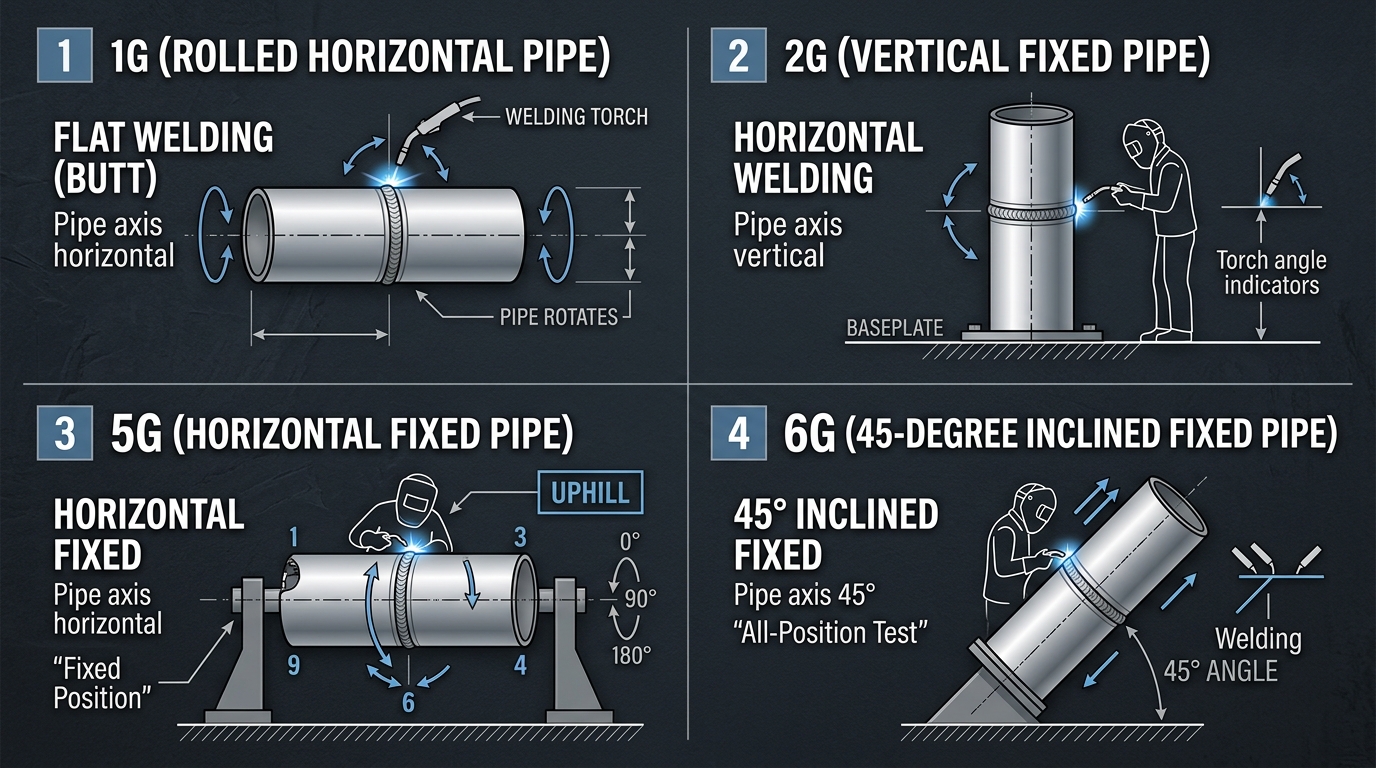
Welding Positions
Plate welding positions range from 1G (flat) and 2G (horizontal) to 3G (vertical uphill) and 4G (overhead). Pipe assessments frequently evaluate fixed 5G and inclined fixed 6G (45°) orientations. Practising the exact position specified for the assessment is critical because torch angle and puddle freezing change radically.
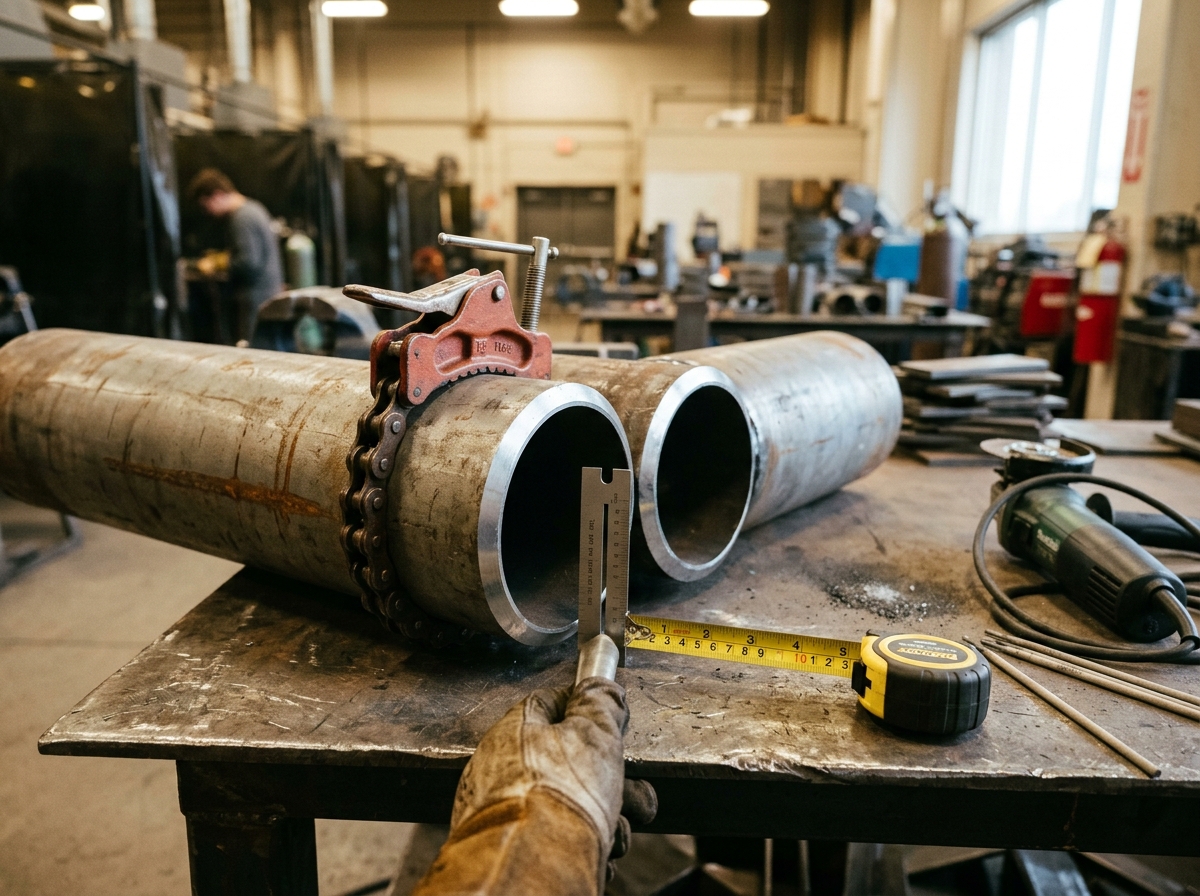
Joint Preparation and Fit-Up
Alignment, joint preparation, bevel angles (typically 30° to 37.5° for V-grooves), root face (land thickness of 1.5–2.5 mm), and uniform root gap (2.4–3.2 mm) directly determine root pass penetration. Proper bridge tacks and feathering tack ends prevent root restart defects during live evaluation.
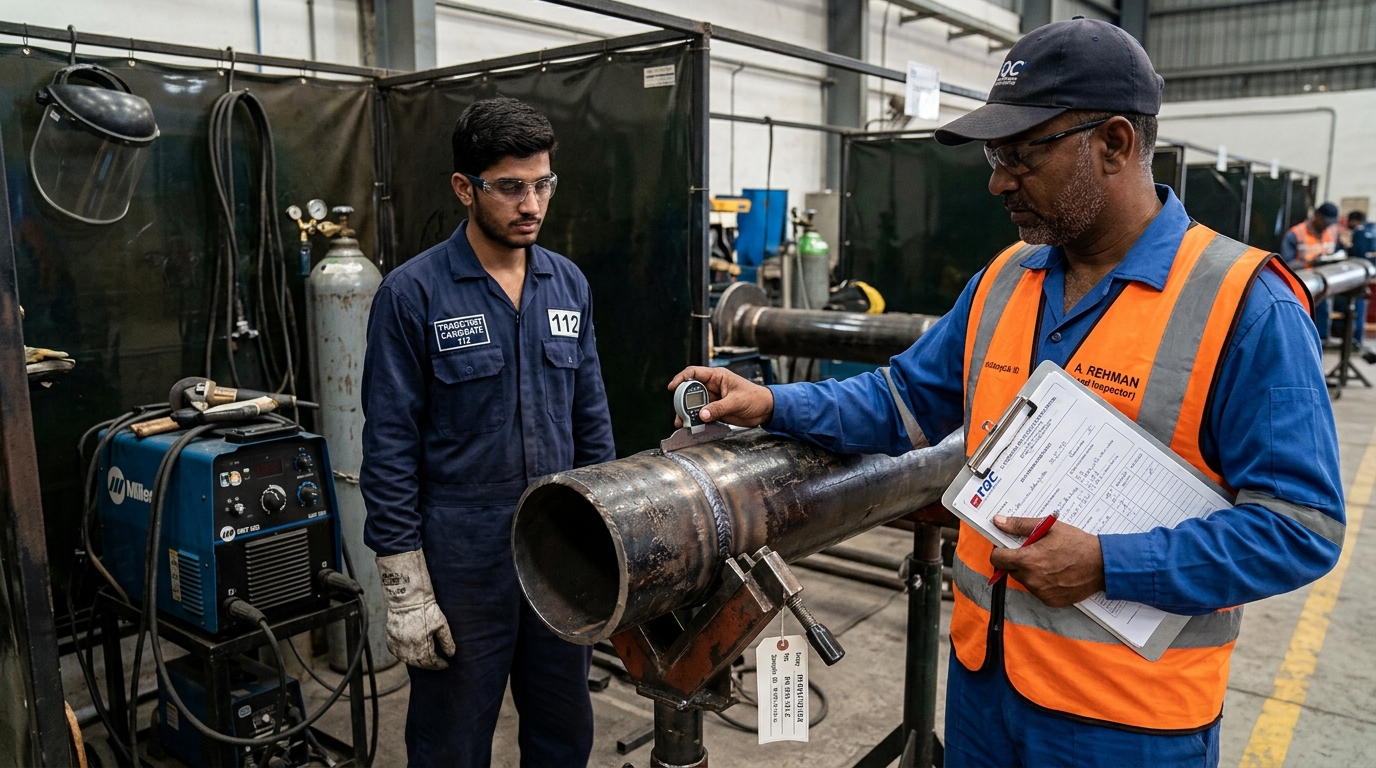
Welding Quality & Inspection
Understanding the acceptance criteria of international codes (ASME Section IX, AWS D1.1, API 1104) is vital. Candidates must inspect their finished weld beads for root concavity, lack of penetration, internal porosity, tungsten inclusions, undercut, and surface spatter before presenting the coupon to examiners.
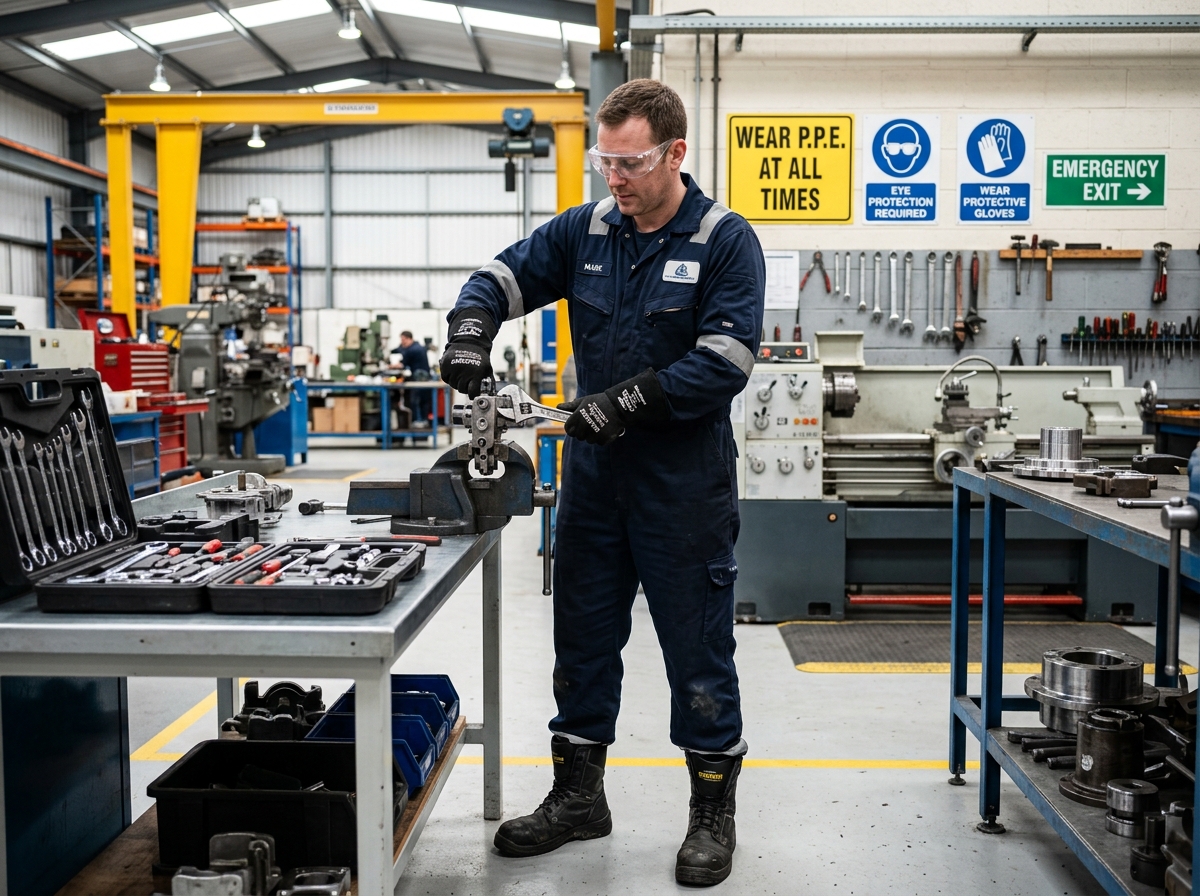
Equipment and Safety
Appropriate PPE including leather welding gloves, flame-retardant welding jackets, safety boots, and correct auto-darkening shade selection (DIN 9–13) is mandatory. Candidates must demonstrate compliance with workshop safety procedures, ground clamp placement, and ventilation/fume management.
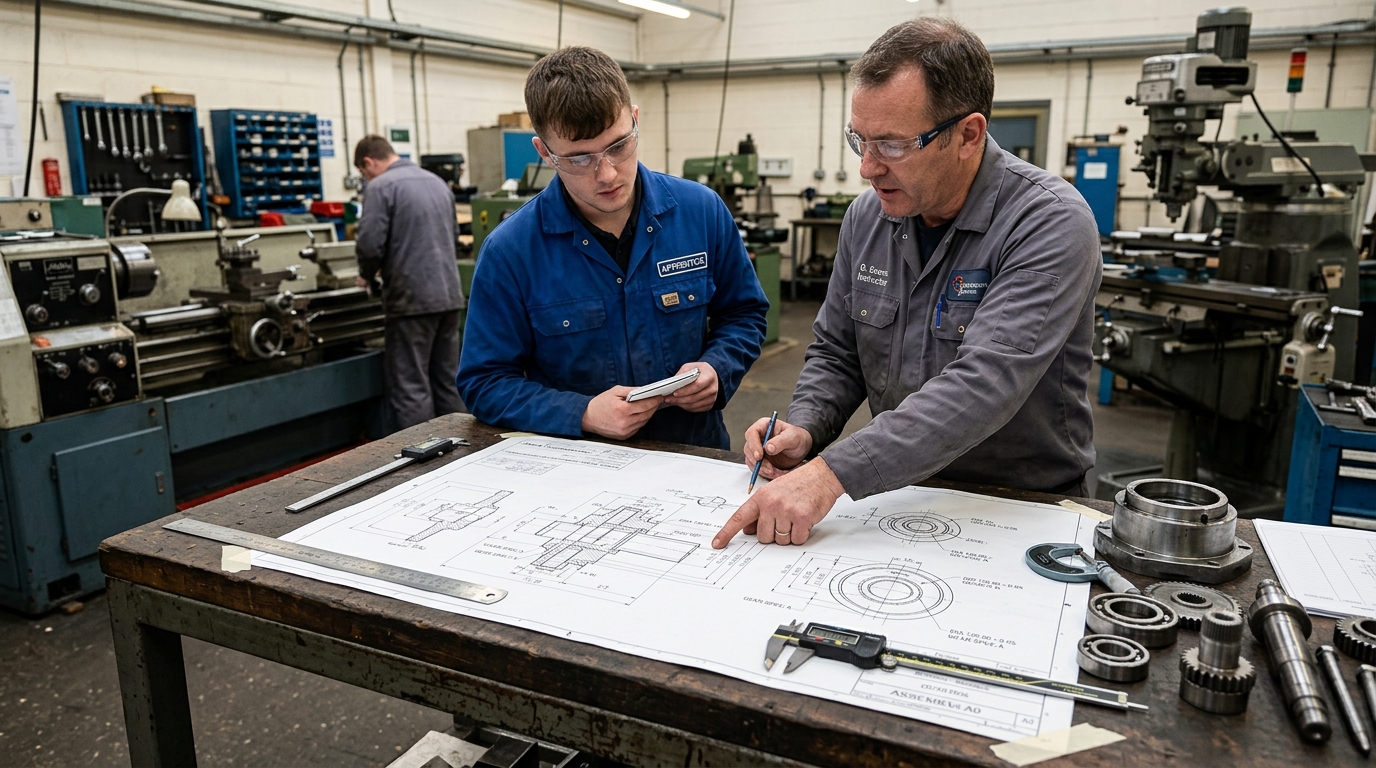
Technical Drawing Interpretation
Dimensions, joint details, and standard AWS/ISO welding symbols guide modern fabrication tests. Welders must know how to read a Welding Procedure Specification (WPS), recognize fillet vs. groove weld callouts, interpret weld sizes, and calculate joint tolerances accurately.
Common Types of Welding Assessments
Review common welding assessment categories encountered in international recruitment and skills assessment schemes.
Plate Welding Assessment
Evaluates groove and fillet welds on mild steel or alloy test plates across 1G to 4G positions. Evaluated by visual inspection followed by guided face and root bend tests to verify soundness and lack of fusion.
Pipe Welding Assessment
Practical evaluation on cylindrical pipes in fixed 2G, 5G, or 6G positions. Evaluators test uniform open-root penetration, tie-ins, and consistent hot, fill, and cap passes under radiographic (X-ray) or bend test standards.
SMAW / Stick Welding
Shielded Metal Arc Welding using flux-coated electrodes such as cellulosic E6010 for open roots and low-hydrogen basic E7018 for fills and caps. Focuses on arc strike management, slag chipping, and interpass cleaning.
TIG / GTAW Welding
Gas Tungsten Arc Welding requiring non-consumable tungsten, high-purity argon shielding gas, and manual filler wire feeding. Critical for oil, gas, chemical, and sanitary root passes with zero tungsten inclusion.
MIG / GMAW Welding
Gas Metal Arc Welding using continuous solid wire electrodes and shielding gas mixtures. Evaluates gun angles, wire feed speed, voltage synchronization, and spatter minimization on structural and fabrication joints.
Structural Welding Assessment
Specialized testing for multi-pass fillet and groove welds on heavy structural columns, beams, gusset plates, and bracing joints in accordance with AWS D1.1 structural welding code specifications.
Do Overseas Welding Test Requirements Differ by Country?
Yes. Overseas welding test requirements differ significantly between Saudi Arabia, the United Arab Emirates, Qatar, Oman, Kuwait, and European or international destinations. There is no single universal test that applies across every country or employer.
Saudi Arabia
Applies mandatory verification under the Skill Verification Program (SVP) for designated professions, alongside independent technical delegation testing for oil, gas, and petrochemical contractors.
United Arab Emirates & Qatar
Primarily rely on client-delegation trade tests conducted by overseas recruitment delegations in accredited workshops. Focuses heavily on 6G ASME pipe coupons, bend tests, and radiographic quality.
Other International Markets
Require compliance with specific international codes such as EN ISO 9606, AWS D1.1, or ASME Section IX, typically accompanied by witnessed qualification records (WPQR/WQT).
Saudi Arabia: Skill Verification Requirements
Saudi Arabia's Skill Verification Program applies to specified occupations for which verification is mandatory. Candidates should confirm whether their exact occupation is included and follow the current official instructions.
Takamol's Skill Verification Program is an assessment and verification service, not a job-placement or training provider. Verification certifies practical competency in designated trades under official government bilateral arrangements.
*Official resource verification note: Requirements, testing slots, and eligible occupation codes are administered by official authorities. For destinations outside Saudi Arabia, candidates should consult their employer, authorised recruiter, and the relevant assessment authority.
How to Prepare for an Overseas Welder Trade Test
Follow this sequential 7-step preparation timeline to systematically eliminate mistakes, clarify requirements, and arrive confident on test day.
Step 1 — Confirm Your Job Category
Identify the precise occupation and welding trade required by the recruiting employer or sponsor (e.g., 6G Pipe Welder, CS Multi-Welder, Plate Welder, or Structural Fabricator).
Step 2 — Verify the Assessment
Confirm the responsible testing authority, verifying whether your assessment is conducted by an employer delegation, a technical testing board, or an official skill verification programme.
Step 3 — Review the Test Specification
Check the exact welding process (SMAW, GTAW, GMAW), base material schedule, pipe diameter, wall thickness, test position (1G–6G), and specific acceptance standards.
Step 4 — Practise Relevant Skills
Arrange suitable supervised practice in real welding booths where necessary. Hone puddle control, bevel fit-up, root pass keyhole maintenance, and cap bead uniformity.
Step 5 — Prepare Required Documents
Follow the current official checklist for your specific assessment. Ensure your original CNIC, passport (if required), appointment token, and CV are in order.
Step 6 — Confirm Your Appointment
Double-check the date, testing centre location, reporting time, examination fee status, identification requirements, and personal safety gear requirements.
Step 7 — Follow the Official Result Process
Use the responsible authority or employer's official channel to check visual inspection results, laboratory bend/radiography reports, and verified next steps.
What Should You Check Before Registering?
Review this essential pre-registration checklist to prevent scheduling delays, mismatched occupation titles, or entry refusals at the assessment centre.
Original Identity Documents
Valid, unexpired Computerized National Identity Card (CNIC) issued by NADRA. Original physical card required.
Passport Details
Machine-readable passport where applicable, with sufficient validity for overseas processing.
Exact Trade & Occupation Category
Verified trade title matching your official recruitment application or testing registration token.
Testing Authority & Centre Details
Exact physical address, designated test hall, and arrival reporting point confirmed prior to travel.
Appointment Confirmation Slip
Printed appointment confirmation slip, registration token, or interview calling letter.
Assessment Fee & Payment Method
Current assessment fee confirmation and approved payment receipt or voucher as designated by the testing body.
Day-of-Assessment Instructions & PPE
Confirmed reporting time, allowed personal protective equipment (safety shoes, auto-darkening helmet), and workshop protocols.
Why Is Proper Trade Test Preparation Important?
Even seasoned welders can struggle under timed examination conditions or unfamiliar machine configurations without targeted preparation.
Understanding Assessment Format
Helps candidates understand the expected coupon dimensions, time allowances, bevel angles, and examiner scoring criteria before the test starts.
Targeting Skill Gaps
Helps identify hand habits that need correction—such as root suckback, erratic travel speed, or improper torch inclination in overhead sectors.
Equipment & Safety Familiarity
Encourages comfort with modern multi-process inverters, high-frequency arc initiators, remote amperage regulators, and workshop extraction booths.
Documentary Preparedness
Helps candidates prepare all necessary identification paperwork, registration tokens, and appointment schedules well before travelling.
Eliminating Confusion & Anxiety
Reduces test-day hesitation and anxiety. While proper preparation equips the craftsman with practical readiness, candidates should note that passing depends on their actual demonstration on examination day and does not guarantee employment or migration.
Need Information About Welding Trade Tests in Multan?
Contact Ashtar Trade Test & Technical Training Centre to enquire about currently available welding trade test services, relevant requirements and preparation options.
Ashtar Trade Test & Technical Training Centre
Usman-e-Ghani Road, Near Bright Hall School, Multan, Pakistan
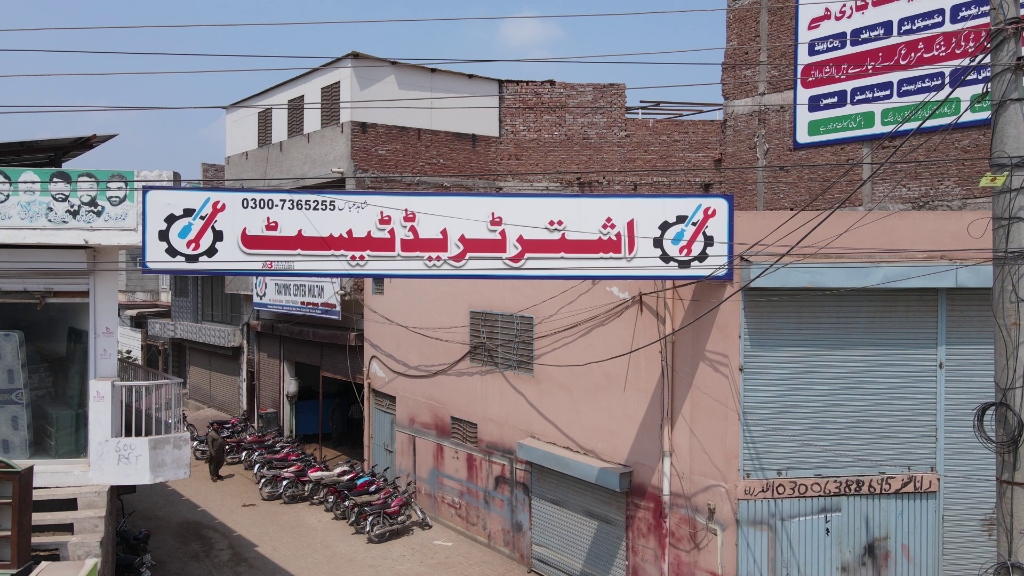
Central Multan Campus
Usman-e-Ghani Road, Near Bright Hall School
Frequently Asked Questions
Direct, transparent answers regarding welder trade testing, verification, and candidate readiness.
Prepare for Your Next Welding Assessment
Understand the requirements, review your practical skills and confirm the assessment process before taking your next step.
Related Welding & Technical Trade Links