
Scaffolder Trade Test Preparation in Multan
Preparing for a scaffolder skills assessment? Learn about common scaffolding safety principles, practical assessment considerations and the requirements you should confirm before attending a test.
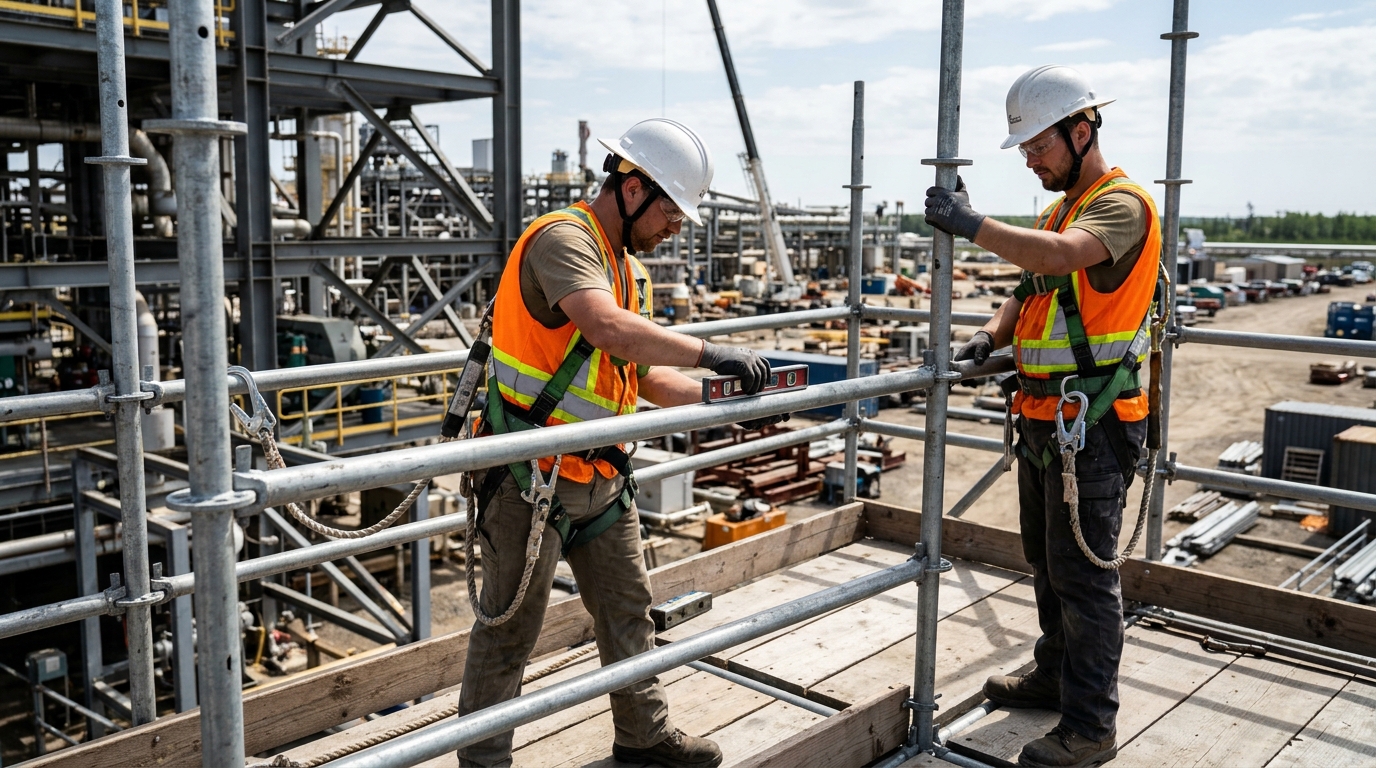
Access & Height Safety Standards
Ashtar Trade Test & Technical Training Center
Objective Assessment Information
Understand essential component terminology, load tolerances, tie spacing, and safety inspection protocols before attending your official trade assessment.
Direct Phone Enquiries
Call to enquire about current services and test schedulesCenter Location
Usman-e-Ghani Road, Near Bright Hall School, Multan, Pakistan.
Easily accessible for Southern Punjab candidatesWhat Is a Scaffolder Trade Test?
A scaffolder trade test is a practical and theoretical evaluation used to assess a candidate's understanding of scaffolding components, assembly principles, safe access, inspection requirements and workplace safety.
The precise assessment content and format depend on multiple factors, including:
- The Recruiting Employer: Specific contractors establish proprietary testing standards for plant construction, offshore platforms, or high-rise building facades.
- The Destination Country: Safety regulations vary across Saudi Arabia, the UAE, Qatar, Oman, Kuwait, and international destinations.
- The Applicable Qualification: Whether testing aligns with NVQ/CISRS frameworks, OSHA 1926 standards, or domestic technical testing boards.
- The Type of Scaffolding Work: Tube and coupler (fitting), modular systems (Cuplock, Kwikstage, Ringlock), or mobile access towers.
- The Applicable Safety Standards: Strict adherence to local building codes, site permit-to-work systems, and client-specific height safety manuals.
Scaffold Assembly & Access Rigging
Standardized Workshop Environment
Important Topics to Review Before a Scaffolder Assessment
Review the primary technical knowledge areas evaluated during practical and oral scaffolding assessments.
Scaffolding Components
Understand the specific engineering purpose of every structural component in tube-and-fitting and modular/system scaffolds. This includes vertical standards that carry compressive loads, horizontal ledgers running longitudinally, transoms/putlogs that support the working deck, diagonal facade and ledger braces preventing sway, sole boards, base plates, and load-bearing right-angle double couplers, swivel couplers, and sleeve pins.
Safe Access and Platforms
Master regulations for secure platform boarding and safe vertical transit. Ladders must be set at a safe 4:1 slope angle, tied securely at the top and bottom, and extend at least 1 metre (or 3 rungs) above landing points. Working platforms must be fully boarded without trip hazards, fitted with robust double guardrails (top rail at 950–1150 mm, mid rail at 470 mm), and 150 mm toe-boards to prevent tool drops.
Stability and Load Considerations
Scaffolding stability relies strictly on approved design layouts, base foundation bearing capacity, and secure ties into sound permanent structures. Review box ties, through ties, lip ties, and ground anchors. Candidates must understand safe working load (SWL) classifications: Light Duty (1.5 kN/m² for inspection), General/Medium Duty (2.0 kN/m² for brickwork), and Heavy Duty (3.0 kN/m² for masonry).
Inspection and Defect Reporting
Equipment must be inspected prior to erection, after adverse weather, and at statutory intervals (typically every 7 days). Review standard Scafftag management systems (Green "Safe to Use" vs. Red "Do Not Use / Under Construction"). Learn to detect bent tubes, mushroomed tube ends, corroded threads, split or warped timber boards, and report defects immediately to a designated competent person.
Personal Protective Equipment
Working at height demands strict adherence to site fall-arrest protocols. Review the proper inspection, donning, and fit of a full-body safety harness with shock-absorbing twin lanyards and scaffolding carabiners. Maintaining continuous 100% tie-off while transitioning or erecting scaffolds above designated height thresholds, alongside chin-strap safety helmets, steel-toe boots, and grip gloves, is critical.
Risk Assessment and Site Safety
Comprehensive worksite awareness protects both scaffolders and ground personnel. Understand how environmental conditions—such as high winds exceeding safe working thresholds, heavy rain, or icy conditions—mandate work stoppages. Learn essential clearance distances from overhead electrical power lines (minimum 3 metres/10 feet) and the enforcement of barricaded exclusion zones with drop hazard warning signs.
How to Prepare for a Scaffolder Trade Test
Follow this sequential 7-step guide to approach your scaffolding assessment with thorough preparation and clear expectations.
Step 1: Confirm the Exact Occupation and Assessment Category
Identify whether the assessment targets Basic Scaffolder, Advanced Scaffolder, Scaffolding Inspector, or System Scaffolding Erector.
Step 2: Ask the Responsible Employer or Assessment Organization for the Official Test Specification
Request the precise testing syllabus, whether based on OSHA 1926 Subpart L, British Standard TG20, international client standards (such as ARAMCO), or national vocational frameworks.
Step 3: Review Relevant Scaffolding Components and Safety Principles
Study component terminology, standard bay lengths, transom spacings, tie intervals, joint pin placements, and safe lifting ergonomics.
Step 4: Arrange Appropriate Supervised Practical Preparation if Required
Seek practical rehearsal under qualified supervision where candidates can practice timed assembly, leveling with spirit levels, and correct spanner torque on couplers.
Step 5: Review the Applicable Inspection, Access and Safety Requirements
Examine platform guardrail dimensions, toe-board fitting, ladder securing protocols, Scafftag handover procedures, and harness inspection.
Step 6: Confirm the Assessment Date, Location, Fees and Required Documents
Verify exact testing hall location, reporting time, examination fee payment receipts, identity documents, and personal safety equipment requirements.
Step 7: Follow the Official Reporting and Assessment Instructions
Arrive punctually in approved safety footwear and workwear, listen carefully to examiner safety briefings, and follow the responsible organization’s evaluation rubric.
What Should You Confirm Before Registering?
Before booking an assessment or paying any fee, confirm each of the following points with the responsible organization to prevent administrative setbacks.
Exact Occupation & Category
Confirm whether your trade test category specifies Tube & Fitting, Cuplock, Kwikstage, or System Scaffolding.
Testing Authority / Provider
Verify the official testing authority, employer recruitment delegation, or designated assessment venue.
Required Identification Documents
Original physical Computerized National Identity Card (CNIC) issued by NADRA.
Passport Details Where Applicable
Valid machine-readable passport with adequate validity for international employment processing.
Test Appointment & Reporting Location
Printed interview calling letter, registration token, testing date, reporting time, and specific workshop address.
Applicable Assessment Fees
Confirm test fee amounts, designated bank deposit slips, or official payment vouchers required before the test.
Registration & Reporting Instructions
Review center rules regarding mobile phones, reporting cut-off times, and attendance verification.
Employer-Specific Requirements
Check if the sponsoring employer requires candidate-provided safety harness, chin-strap helmet, or scaffolding spanners.
Are Scaffolder Trade Test Requirements the Same in Every Country?
No. Scaffolder assessment requirements can vary significantly between employers, destination countries, and specific assessment programs. There is no single universal test.
Middle East & Gulf Contractors
Recruiters for Saudi Arabia, UAE, Qatar, and Oman frequently administer employer-delegation tests focused on tube-and-clamp or Cuplock system erection, speed, leveling, and strict harness tie-off compliance.
National Skill Verification Programs
Certain destinations mandate official skill verification programs (such as Saudi Arabia's Takamol SVP) for specific trade categories. Candidates must verify if their exact occupation code is subject to mandatory verification.
International Standards Alignment
Projects operated by multinational oil, gas, and energy firms align with international standards such as OSHA 1926 Subpart L, British BS EN 12811, or corporate guidelines (e.g. ARAMCO scaffolding safety manuals).
Key Steps for Candidates to Remember
Why Prepare Before a Scaffolder Assessment?
Even experienced scaffolders can encounter difficulties during timed tests if they are unfamiliar with the evaluation rubric, component terminology, or specific client safety protocols.
Understand the Assessment Format
Learn how examiners structure timed practical assembly tests, verbal safety questioning, and component identification tasks.
Identify Gaps in Technical Knowledge
Pinpoint areas needing review, such as tie spacing formulas, load classifications, or ladder angle calculations before the assessment.
Review Relevant Safety Principles
Reinforce essential fall-prevention discipline, 100% tie-off compliance, and hazard recognition in a controlled setting.
Prepare the Correct Documents
Ensure all identification cards, tokens, and verification paperwork are in order to prevent disqualification or reporting delays.
Reduce Confusion About Testing Procedures
Familiarize yourself with workshop layouts and examiner instructions, helping reduce test-day stress and avoidable errors.
Looking for Scaffolder Trade Test Information in Multan?
Contact Ashtar Trade Test & Technical Training Center to enquire about current scaffolder assessment services and any relevant preparation options.
Our team can clarify the services currently available, applicable requirements and the next steps for making an enquiry. We believe in providing transparent, factual guidance regarding technical assessments.
Ashtar Trade Test & Technical Training Center
Usman-e-Ghani Road, Near Bright Hall School, Multan, Pakistan
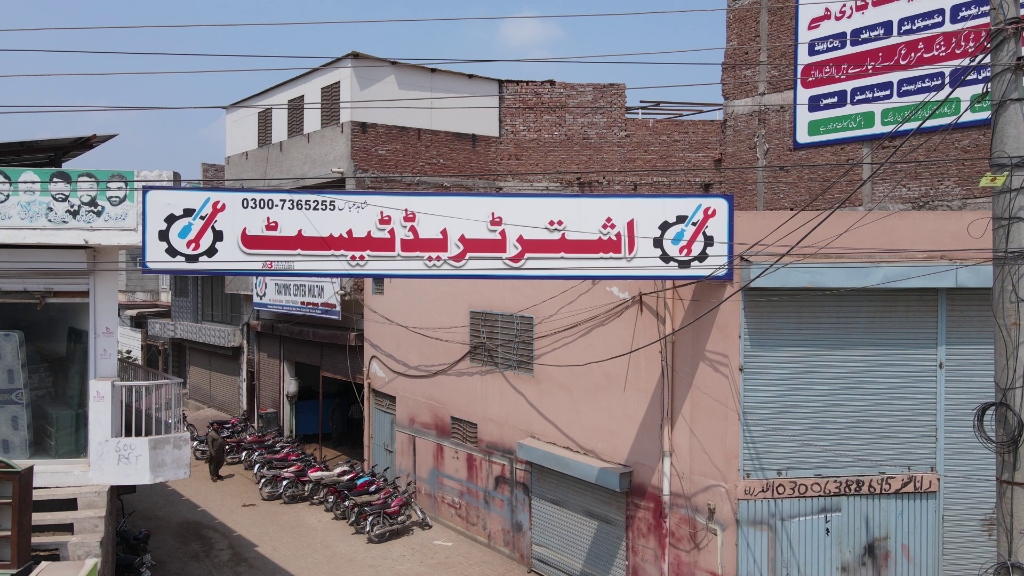
Multan Campus Facility
Usman-e-Ghani Road, Near Bright Hall School
Frequently Asked Questions
Factual answers regarding scaffolder trade tests, preparation considerations, and verification requirements.
Get the Right Information Before Your Scaffolder Assessment
Confirm the assessment requirements, review the relevant safety topics and check the available services before taking your next step.
Related Technical Trade & Assessment Links