Mechanical Fitter Trade Test Preparation in Multan
Practical Mechanical Skills and Technical Assessment Preparation
This dedicated preparation page provides guidance for candidates, technicians, and aspiring tradesmen seeking to review practical mechanical fitting concepts before participating in industrial assessments. At Ashtar Trade Test & Technical Training Centre in Multan, trainees develop hands-on familiarity with mechanical blueprints, component identification, rotating shaft assembly, bearing installation, and precision inspection tools.
Whether you are an aspiring fitter, an experienced worker reviewing key tasks prior to an employer delegation test, or preparing for overseas recruitment in the Gulf, our structured workshop environment helps you practice with confidence under instructor supervision.
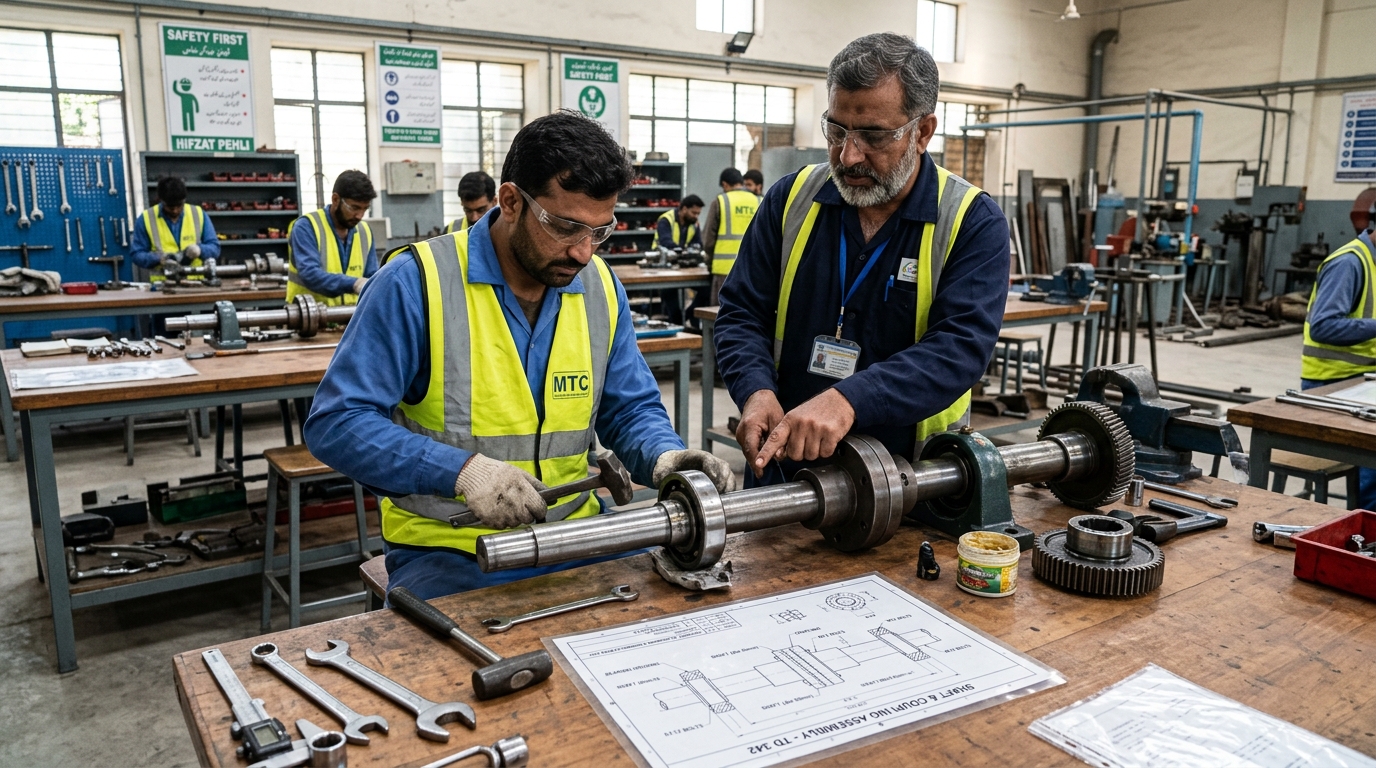
Practical Mechanical Workshop Simulation
Trainee and instructor reviewing transmission shaft assembly and technical drawings in Multan.
Course & Assessment Details Overview
What is a Mechanical Fitter Trade Test?
A Mechanical Fitter Trade Test is a practical evaluation conducted by engineering employers, plant contractors, or recruitment delegations to verify whether a job candidate possesses the genuine manual skills and technical understanding needed on an active job site.
In many industrial settings, theoretical knowledge alone is insufficient. Employers need to observe how a technician approaches a mechanical assembly task in real time. Can the candidate interpret an assembly diagram? Do they know how to position bearings onto a shaft without damaging precision surfaces? Can they measure tolerances with a vernier caliper or micrometer and recognize correct bolt torque sequences?
Practical Ability vs Theory: Assessments emphasize physical execution, component handling, and tool dexterity rather than written essays.
Employer-Specific Variations: Test formats vary widely between companies. Some focus on rotating pump maintenance, others on gearbox overhauls, conveyor drives, or plant machinery alignment.
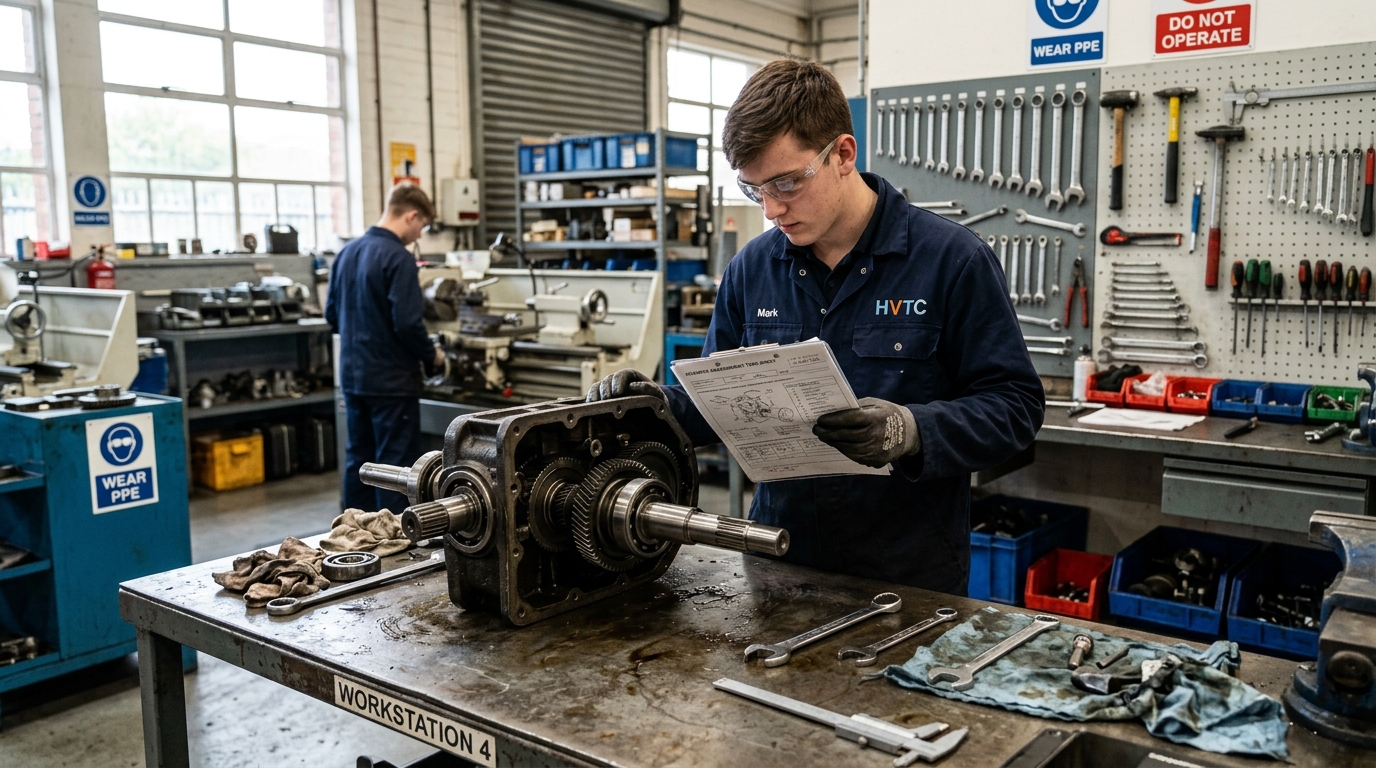
Assessment Task Sheet & Gearbox Study
Trainee reviewing mechanical task specifications and component arrangement before starting practical work.
Important Mechanical Fitter Skills Tested in Practice
Mechanical fitting encompasses several interrelated technical disciplines evaluated during practical assessments.
Mechanical Drawing Interpretation
Understanding technical blueprints, orthographic views, cross-sections, Bill of Materials (BOM), and dimensional notes is foundational for translating engineering intent into physical mechanical assemblies.
Mechanical Component Identification
Rapid and accurate identification of shafts, bearing types (deep groove, taper roller, spherical), gears, flexible couplings, circlips, keys, and specialized fasteners used in rotating machinery.
Assembly Understanding
Understanding the precise sequence in which components fit together. Proper fits (clearance, transition, interference), keyway orientation, and avoiding forced assembly that could damage machined parts.
Alignment Concepts
Awareness of collinear alignment principles between driving and driven shafts. Recognizing angular and parallel misalignment to prevent excessive bearing load, shaft fatigue, and coupling destruction.
Measurement and Inspection
Accurate handling of vernier calipers, outside/inside micrometers, depth gauges, and feeler gauges to verify part dimensions, backlash, and clearances against engineering specifications.
Workshop Safety & PPE
Wearing required personal protective equipment (safety goggles, boots, cut-resistant gloves), maintaining a clean workstation, securing workpieces properly, and working under instructor supervision.
Mechanical Drawing Preparation for Trade Tests
During a trade test, an examiner typically hands the candidate an engineering drawing before any physical work begins. Candidates who cannot interpret mechanical drawings quickly become confused about part orientations, tolerances, and assembly sequences.
Recognizing Drawing Symbols and Labels
Understanding surface finish symbols, centerlines, section lines, chamfer callouts, and thread designations (metric and imperial).
Dimensions and Component Relationships
Reading nominal dimensions, allowable deviations (+/-), fit designations, and calculating component stack-up dimensions accurately.
Connecting Technical Drawings with Workshop Tasks
Translating blueprint numbers directly into practical workshop actions: setting stops, verifying clearances, and tightening fasteners according to specified torques.
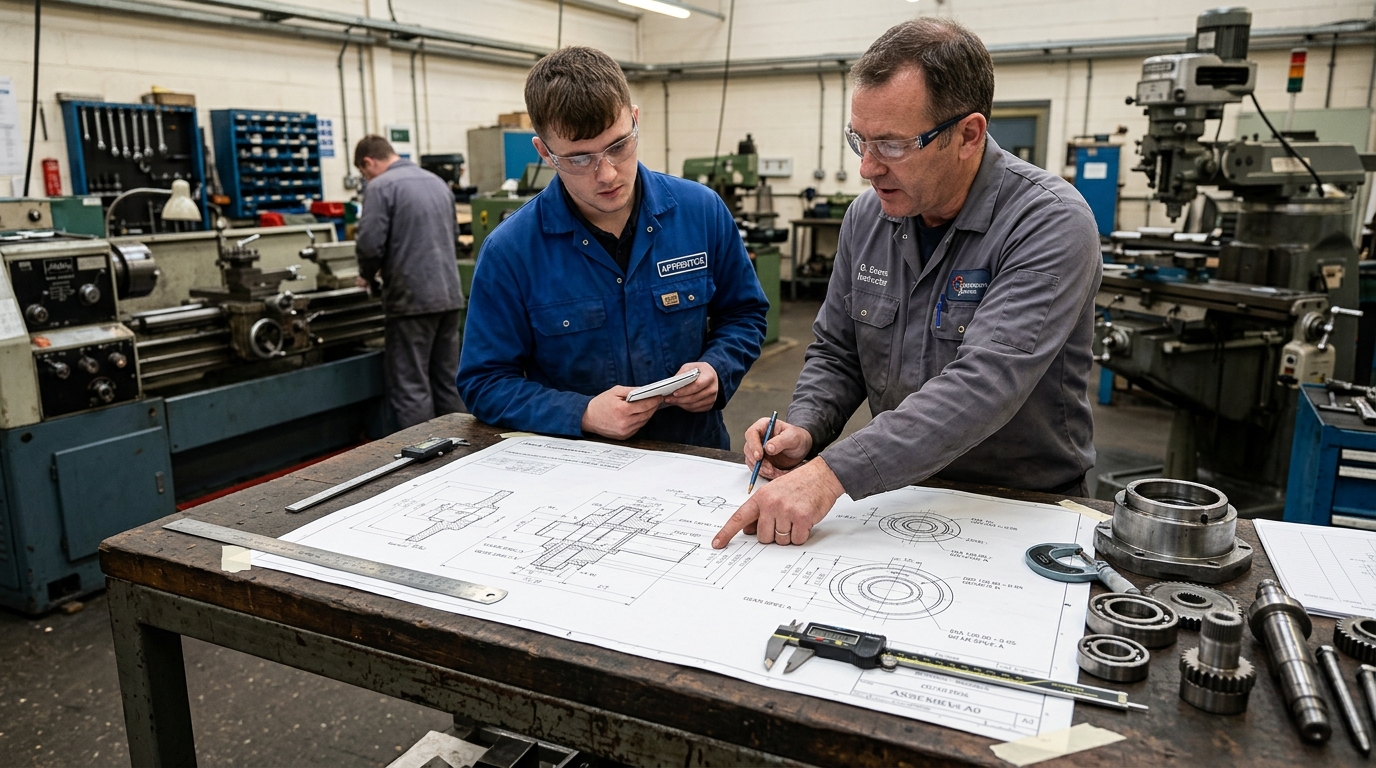
Mechanical Blueprint Review & Dimensional Study
Instructor demonstrating how to read sectional assembly views and Bill of Materials.
Mechanical Component Identification & Practical Roles
Examiners frequently test whether candidates know the proper names, functions, and handling procedures for industrial machine parts.
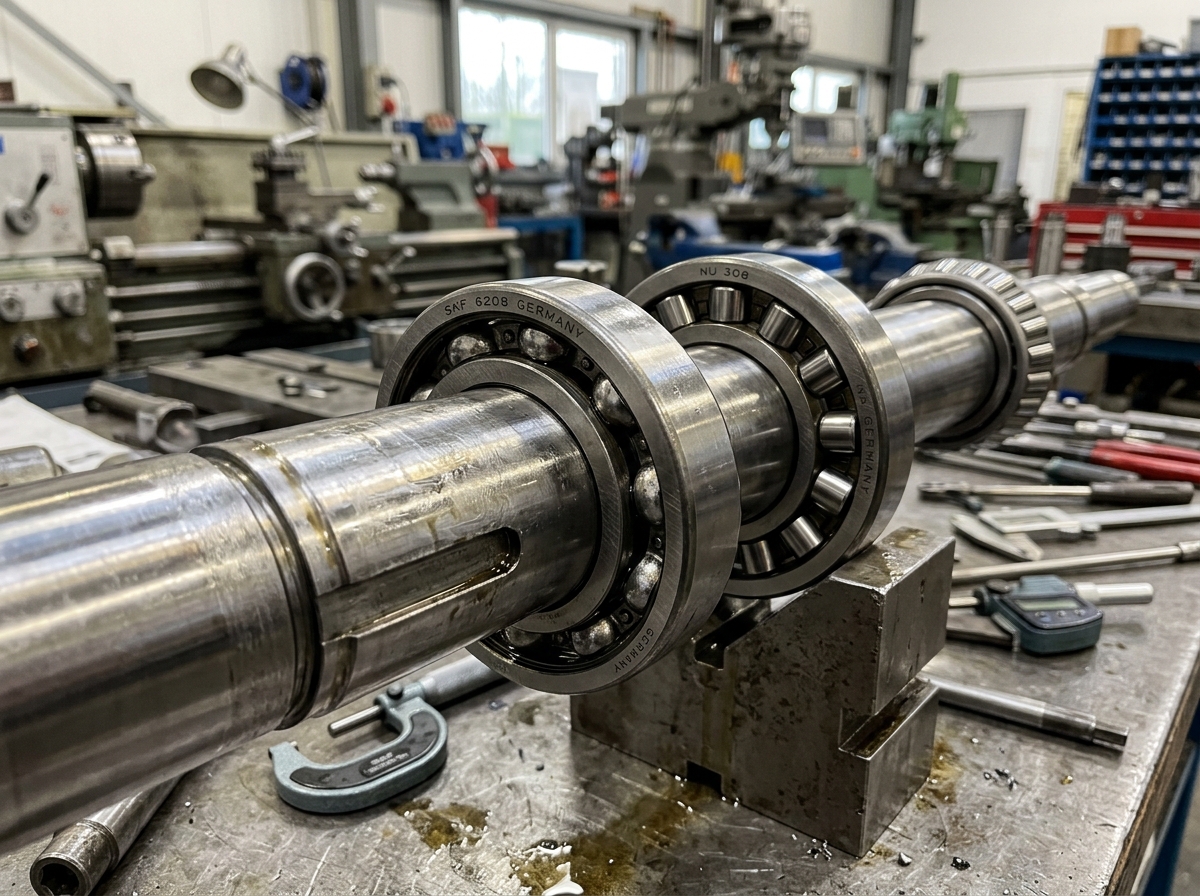 BEARINGS & SHAFTS
Bearings and Transmission Shafts
Function & Role: Transmission shafts transfer rotational power, while bearings support the shaft and reduce rotational friction. Fitters learn to differentiate between radial ball bearings, cylindrical rollers, and spherical roller bearings, checking shaft seat tolerances and lubrication.
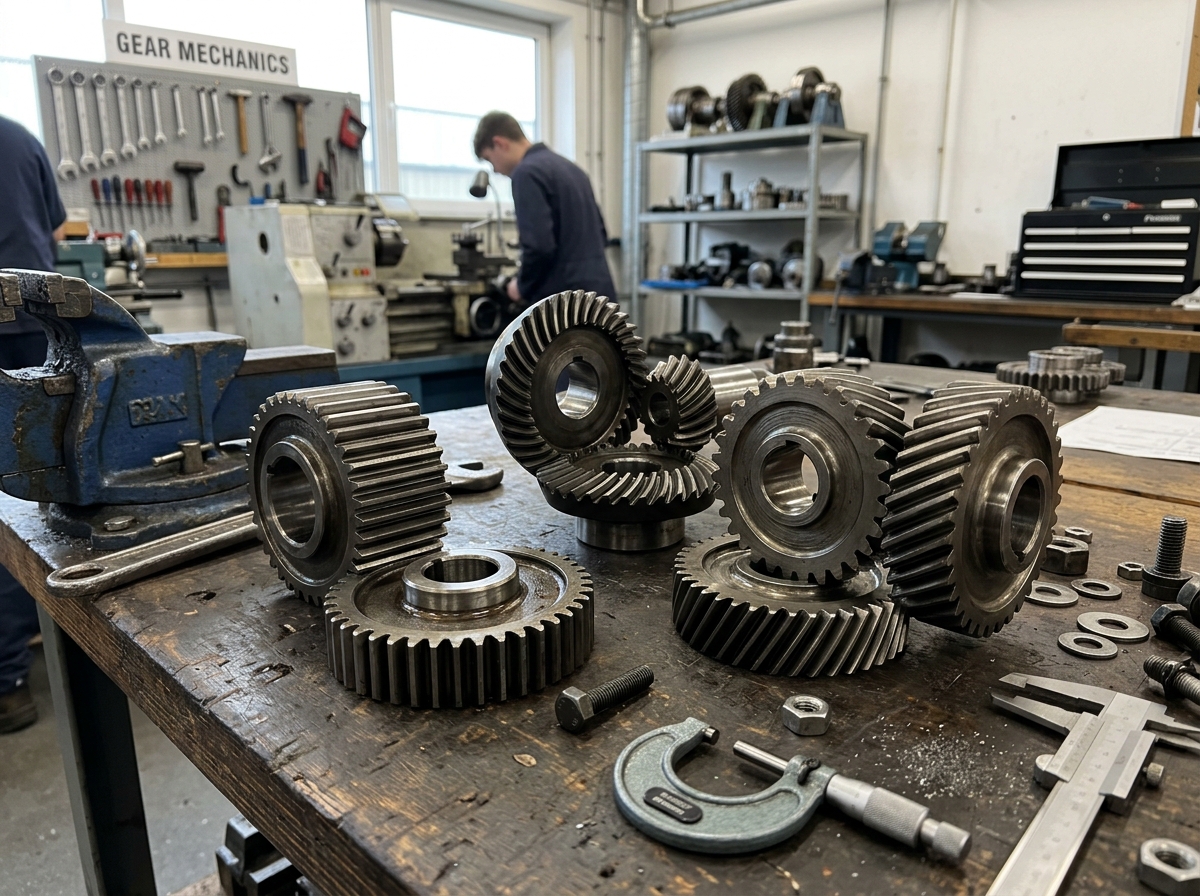 GEARS & TRANSMISSION
Industrial Gears (Spur, Helical, Bevel)
Function & Role: Gears change torque, rotational speed, and direction. Fitters learn to identify tooth profiles, check gear backlash with feeler gauges, inspect tooth contact patterns, and ensure proper keyway fit-up on shafts.
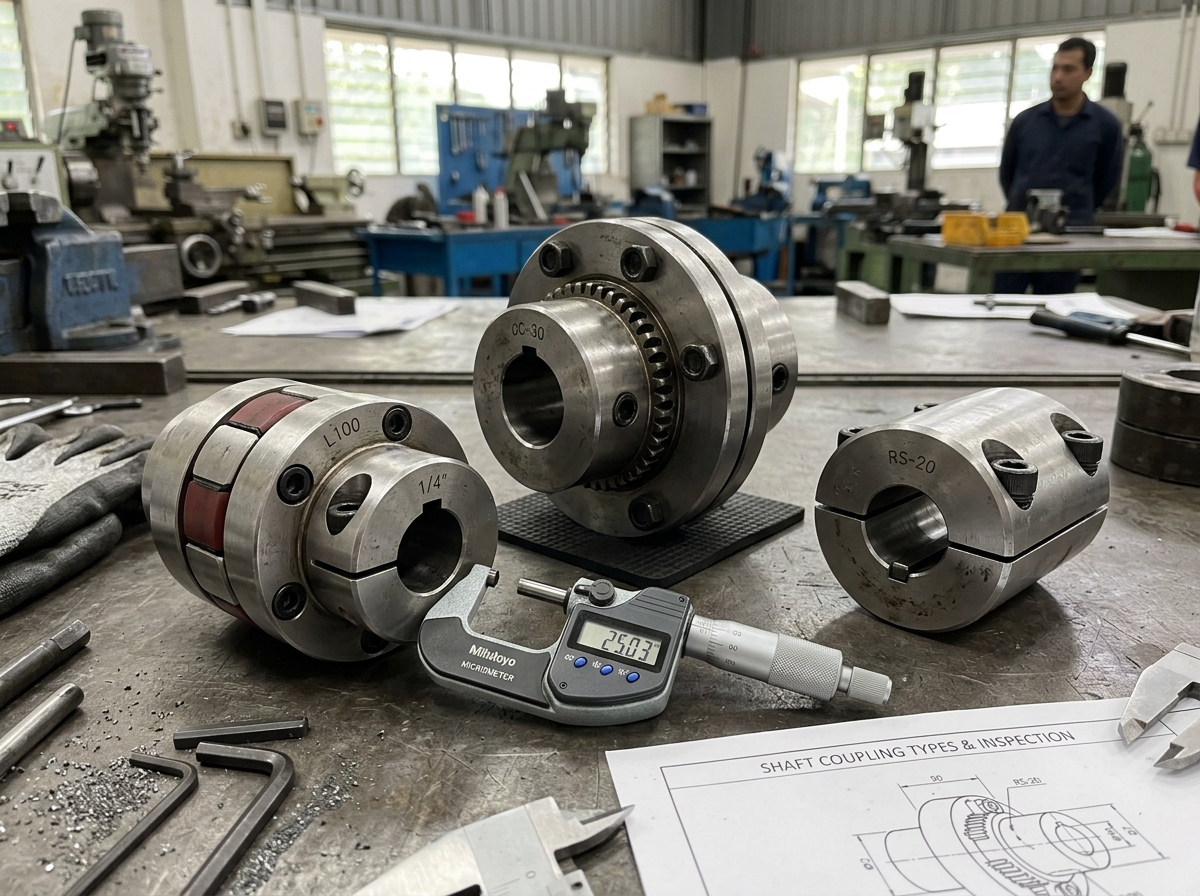 SHAFT COUPLINGS
Flexible and Rigid Shaft Couplings
Function & Role: Couplings connect two rotating shafts (such as a motor to a centrifugal pump or gearbox). Fitters must identify flexible spider couplings, grid couplings, and rigid flanges, checking bore diameters and axial gaps.
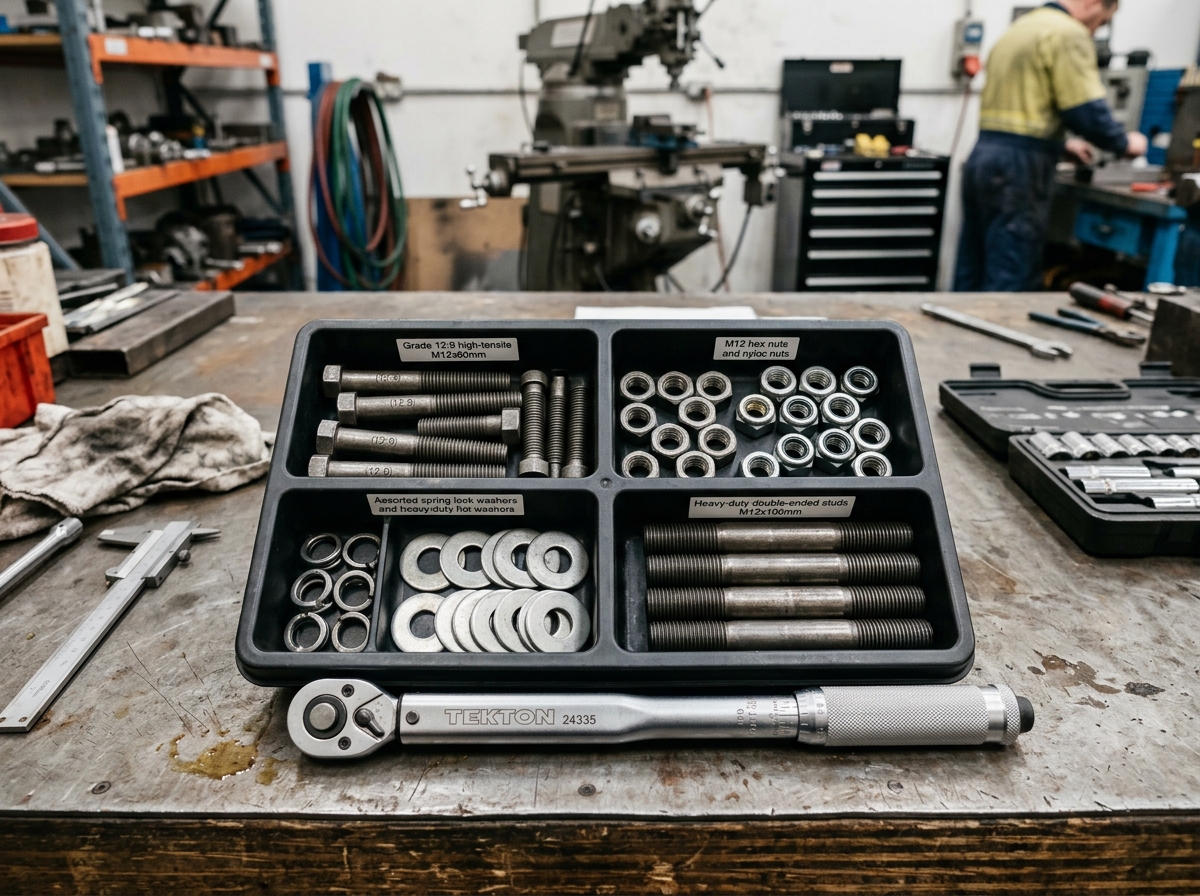 FASTENERS & TORQUE
Industrial Fasteners & Torque Management
Function & Role: High-tensile bolts (Grade 8.8, 10.9, 12.9), studs, nyloc nuts, and lock washers secure machine housings. Fitters must know thread sizes, pitch gauges, star-pattern tightening sequences, and torque wrench calibration.
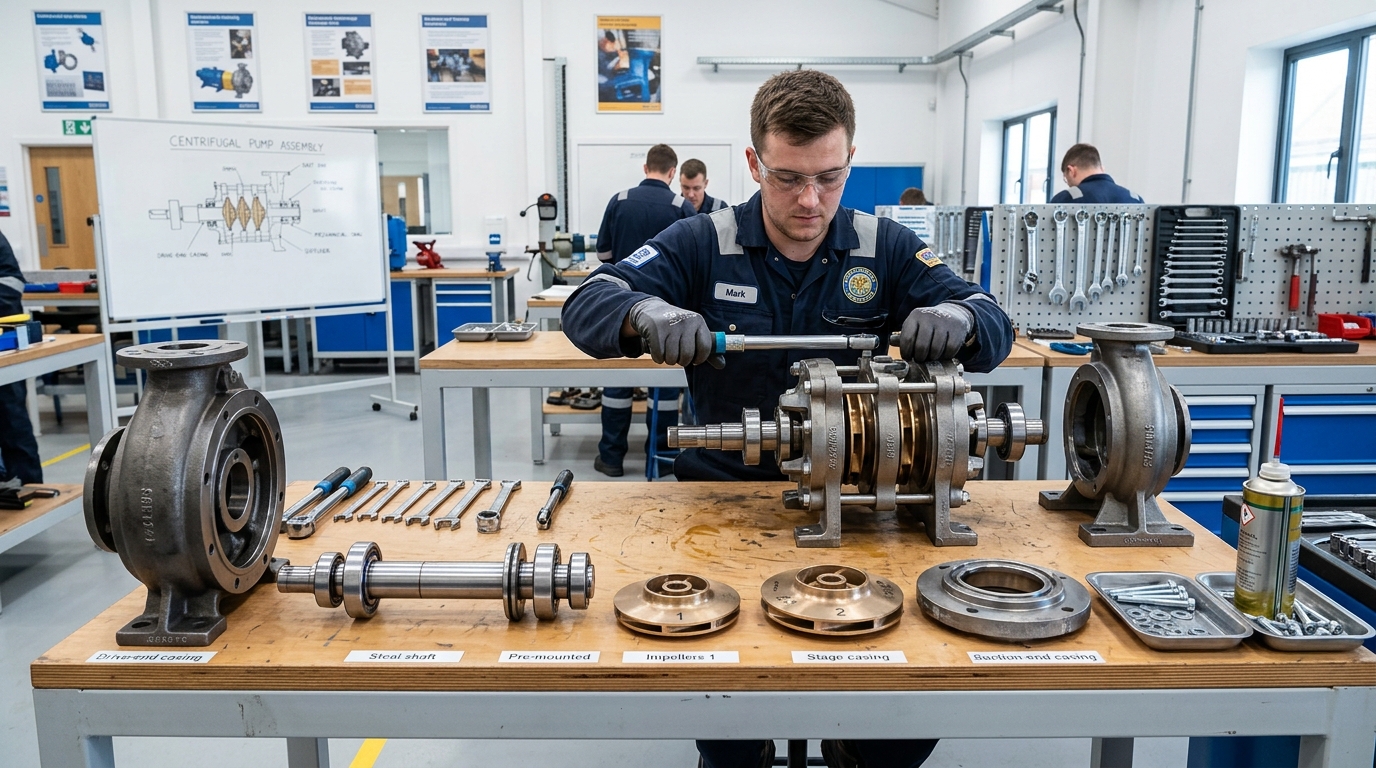
Systematic Machine Assembly Practice
Trainee assembling multi-stage pump casing and shaft components according to diagram.
Mechanical Assembly and Alignment Assessment Preparation
During mechanical trade tests, candidates are commonly asked to dismantle, inspect, and reassemble a mechanical sub-assembly—such as a pump unit, gearbox casing, or bearing pedestal—under timed observation.
Successful candidates demonstrate careful work habits: laying out parts on clean rags, marking orientation indicators before disassembly, checking component relationships, ensuring dowel pins seat without excessive force, and verifying free shaft rotation by hand after final tightening.
Shaft Alignment Awareness & Runout Verification
Improper alignment is a primary cause of premature bearing destruction, seal leaks, and severe vibration in heavy plant equipment. Trade test assessors frequently evaluate whether a mechanical fitter understands the basics of shaft alignment.
Angular Misalignment
Occurs when the centerlines of two shafts meet at an angle. Assessed using feeler gauges or dial test indicators across coupling faces at 90-degree intervals.
Parallel (Radial) Offset
Occurs when shaft centerlines are parallel but offset in elevation or lateral position. Checked using straightedges or rim dial indicators.
Note: Candidates learn the principles of shimming baseplates, soft-foot checks, and dial indicator mounting under instructor supervision.
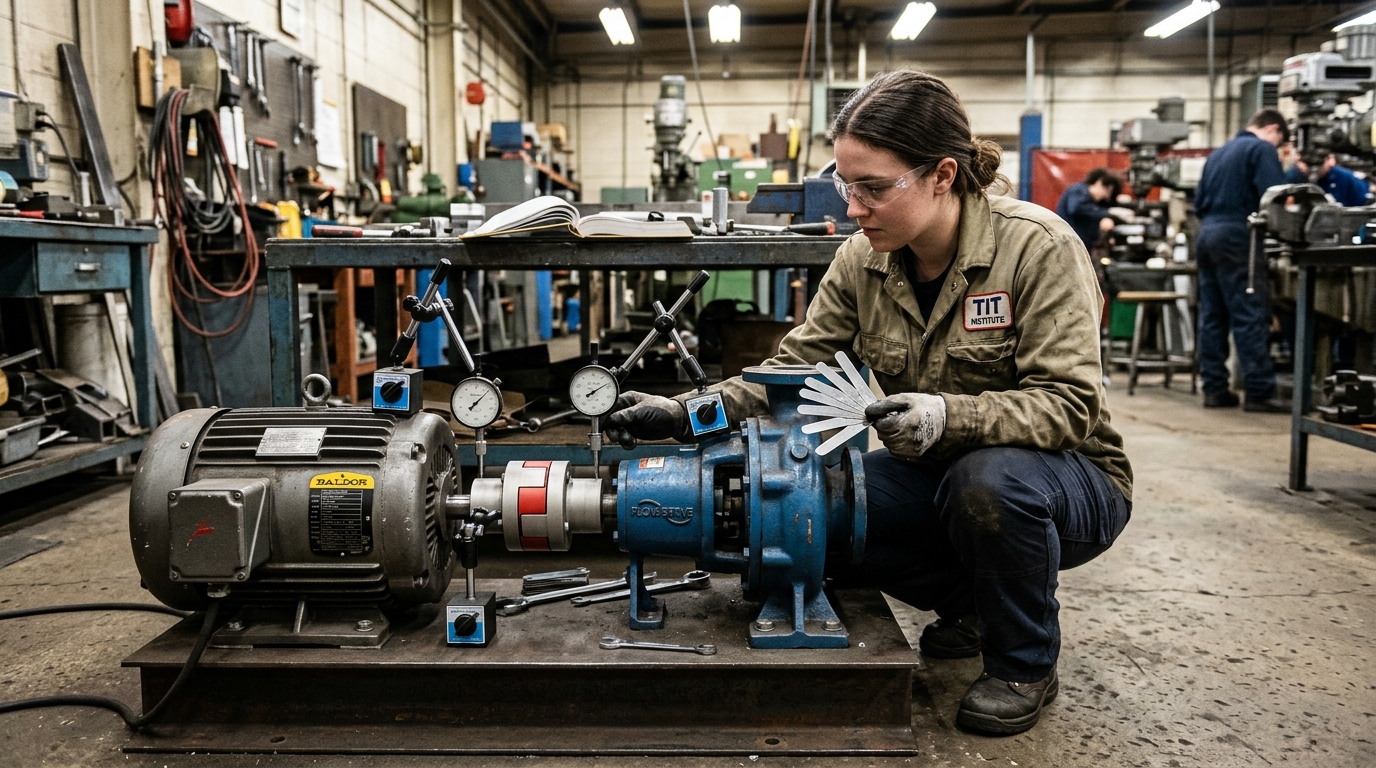
Shaft Alignment & Dial Gauge Setup
Trainee observing dial indicator deflection and checking coupling gap with precision feeler blades.
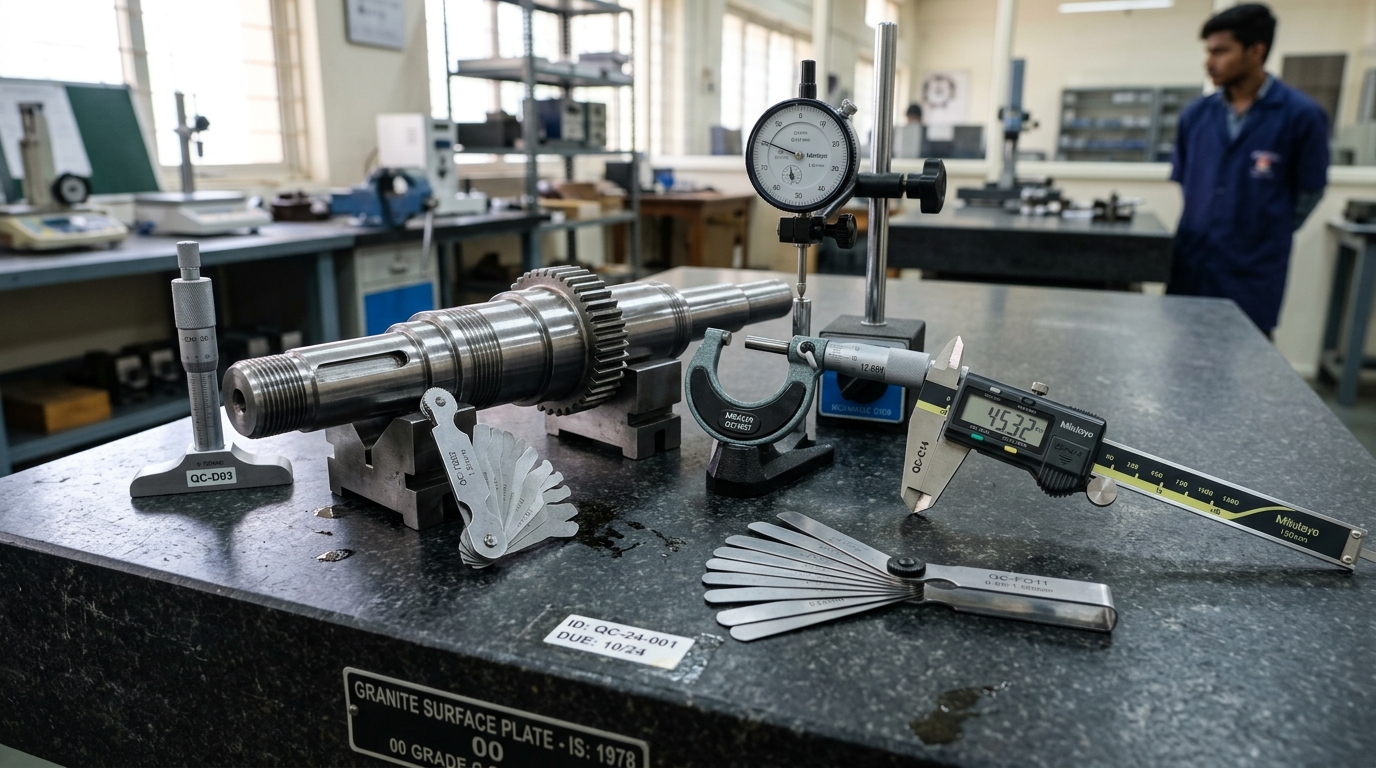
Precision Metrology & Inspection Instruments
Vernier calipers, outside micrometers, depth gauges, and thread pitch blades on inspection surface.
Measurement and Inspection in Mechanical Trade Tests
Precision measurement is where many self-taught or informal technicians struggle during formal trade test assessments. Examiners do not accept rough guesswork; they require exact readings to within hundredths of a millimeter (0.01 mm).
Vernier Calipers & Micrometer Reading
Practicing both metric and imperial scale reading, zero-error calibration, proper ratchet stop touch to avoid distorting readings.
Conceptual Tolerance Verification
Understanding clearance tolerances between bearings and shaft journals, verifying bore ovality, and detecting shaft bend runout.
Visual Inspection Awareness
Inspecting machined surfaces for burrs, scoring, fretting corrosion, stripped threads, or keyway elongation before assembling parts.
Practical Mechanical Fitter Trade Test Preparation at Ashtar
At Ashtar Trade Test & Technical Training Centre in Multan, preparation emphasizes realistic workshop practice under dedicated instructor supervision.
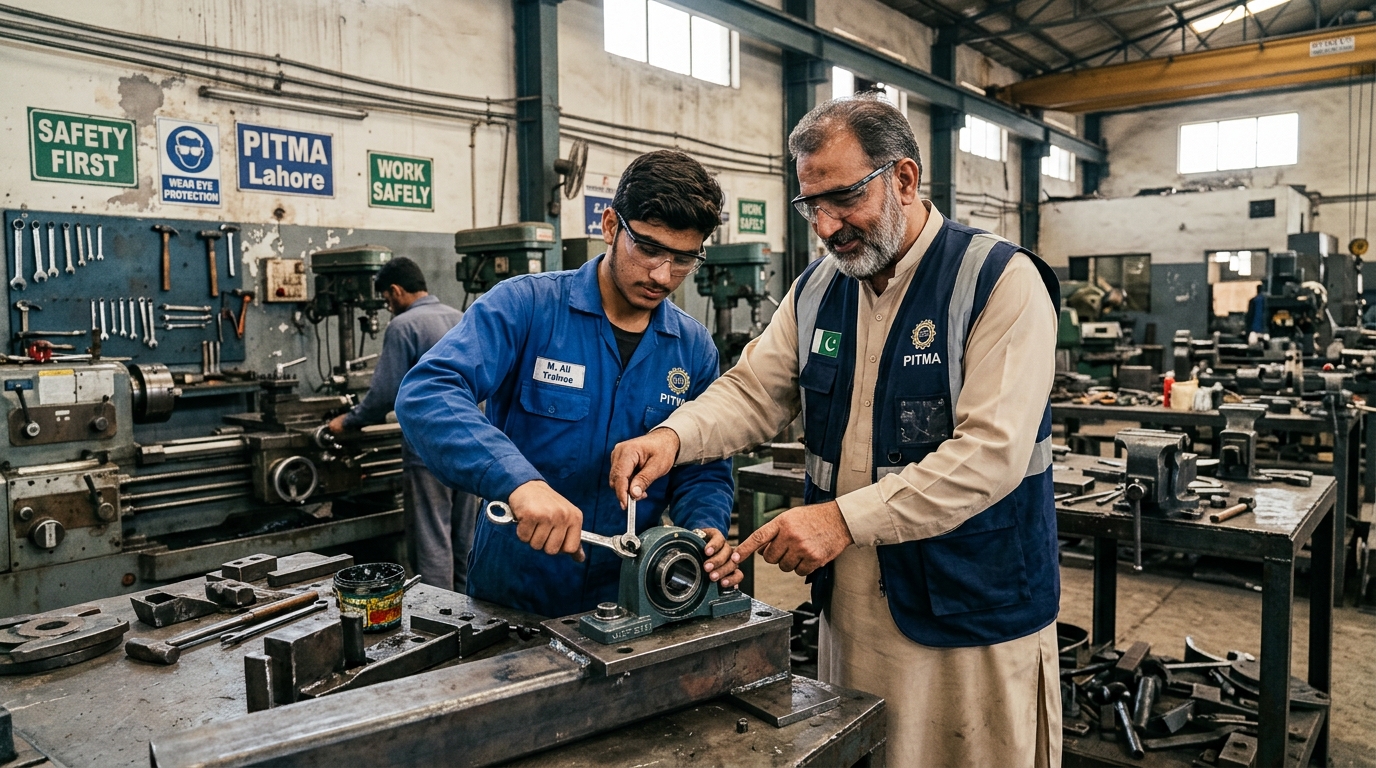
Instructor-Supervised Practical Practice
Trainees practice mounting pillow-block bearings, aligning shafts, and securing baseplates while receiving immediate feedback from experienced instructors.
Focused guidance on proper tool handling, stance, and avoiding damage to precision surfaces.
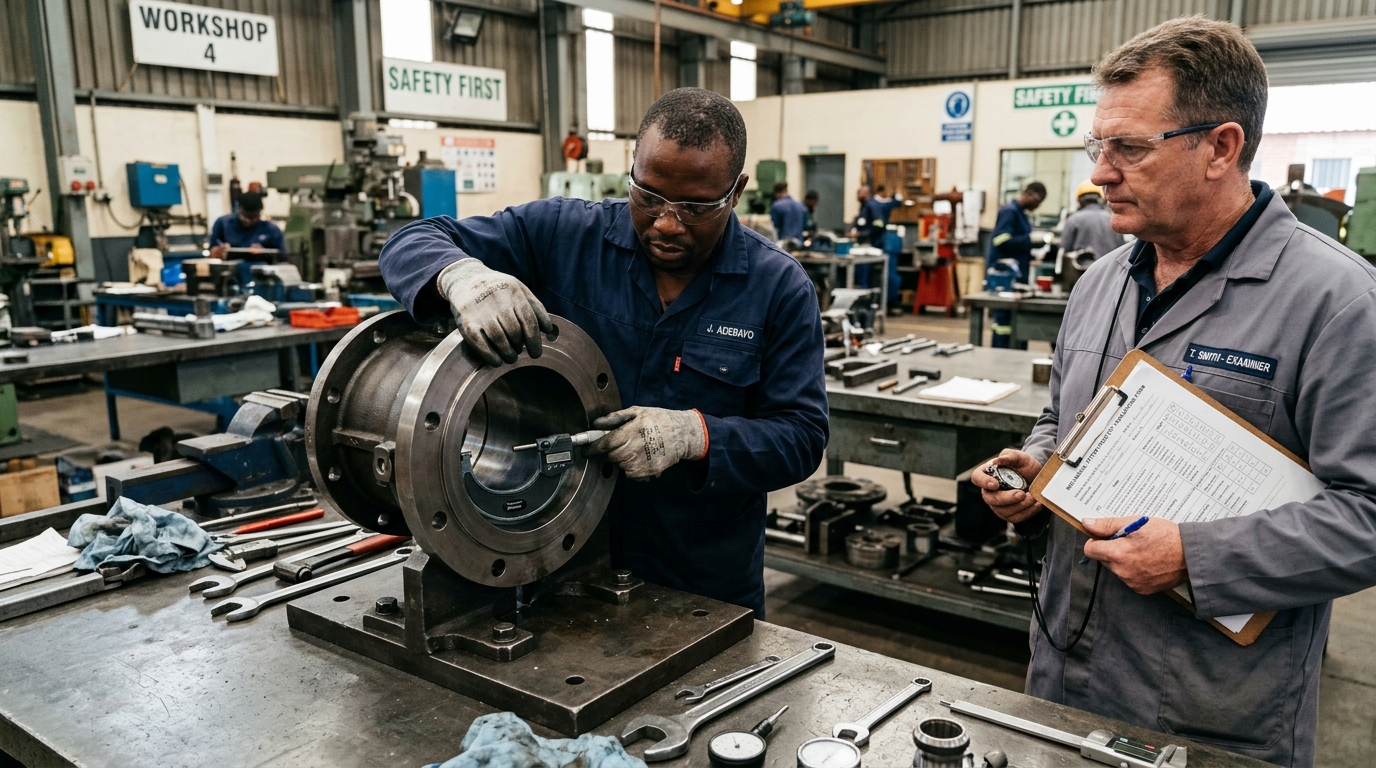
Assessment Familiarization & Timed Trials
Mock assessment drills designed to build confidence in handling bore measurements, checklist completion, and technical task organization under realistic test constraints.
Prepares candidates for diverse assessment rubrics set by industrial employers.
Ashtar Trade Test & Technical Training Centre provides practical skills coaching, assessment familiarization, and technical review. Because testing rubrics, hiring quotas, and evaluation standards are established independently by recruiting employers or government testing bodies, results depend on each candidate's genuine skill and application. We welcome prospective trainees to visit our Multan campus to discuss available preparation bays.
Workshop Safety and PPE Standards During Assessment
In every reputable trade test—especially those conducted by multinational engineering and oil & gas delegations—safety compliance is strictly monitored. Disregard for personal safety or careless handling of heavy components can result in immediate disqualification.
Eye Protection
Approved safety glasses must be worn at all times near rotating shafts, grinding, or cleaning.
Foot & Hand Protection
Steel-toed boots to prevent crush injuries and suitable gloves for handling sharp machined parts.
Housekeeping Standards
Keeping workbench clear of debris, wiping oil spills immediately, and storing hand tools safely.
Safe Lifting Habits
Using proper manual handling postures when lifting gearboxes, shafts, and heavy steel housings.
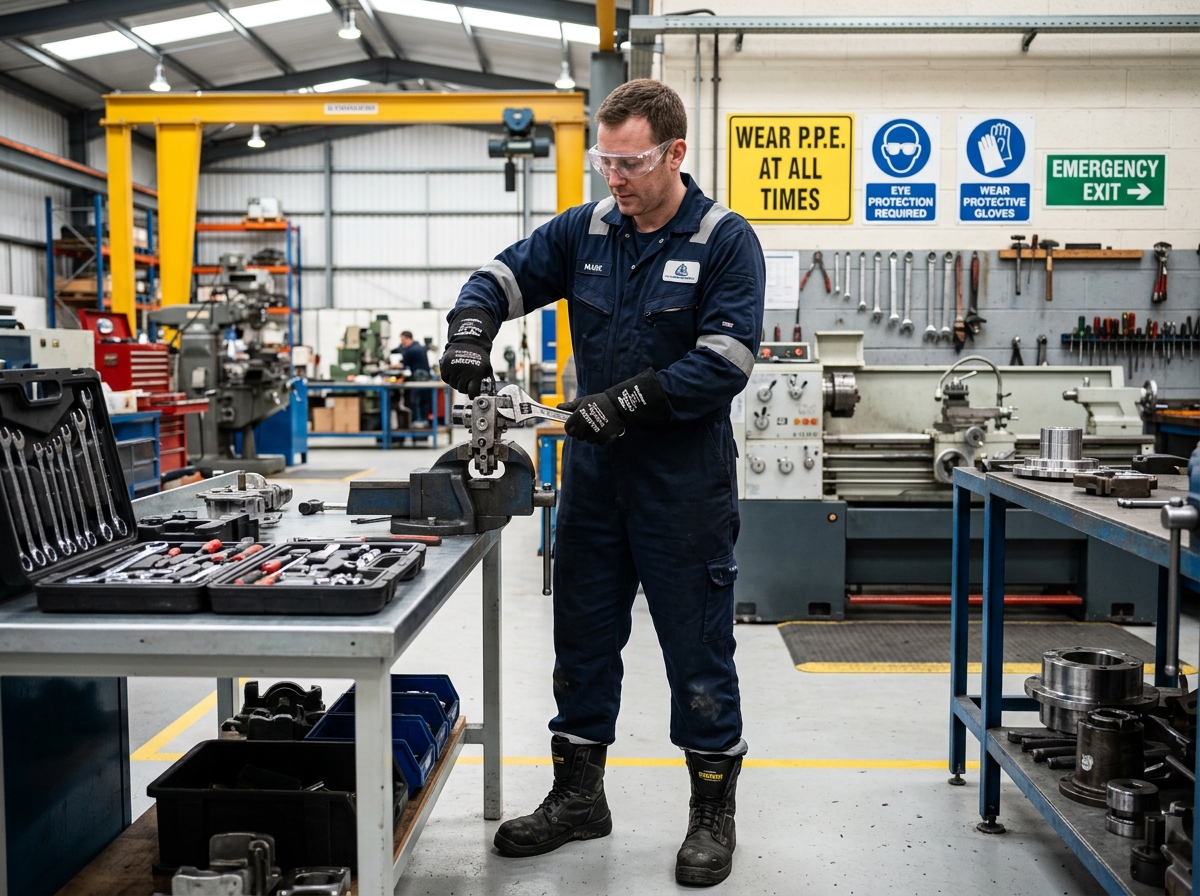
Personal Protective Equipment (PPE) Compliance
Technician equipped with safety glasses, fitted coverall, cut-resistant gloves, and safety boots.
Common Mechanical Fitter Assessment Areas
This table summarizes the core learning domains reviewed during practical trade test preparation. Note: Actual assessment requirements depend on the specific employer or testing authority.
| Assessment Area | General Learning Focus |
|---|---|
| Drawing Interpretation | Understanding technical drawings, sectional views, tolerances, and component lists. |
| Component Identification | Recognizing bearings, shafts, gears, couplings, seals, keys, and specialized fasteners. |
| Assembly Concepts | Understanding component relationships, sequential fit-up, and avoiding forced assembly. |
| Measurement | Handling vernier calipers, micrometers, and depth gauges with dimensional accuracy. |
| Inspection Awareness | Recognizing the importance of checking work for burrs, scoring, and dimensional deviations. |
| Alignment Concepts | Understanding angular and parallel alignment principles on rotating equipment couplings. |
| Workshop Safety | Awareness of safe working practices, PPE usage, proper lifting, and tool care. |
| Technical Communication | Explaining relevant mechanical concepts, tool selections, and observations to examiners. |
* Assessment rubrics vary by client delegation and industrial project requirements.
Mechanical Fitter vs. Other Technical Trades
While mechanical fitting shares workshop fundamentals with other industrial vocations, each trade maintains a distinct scope of work.
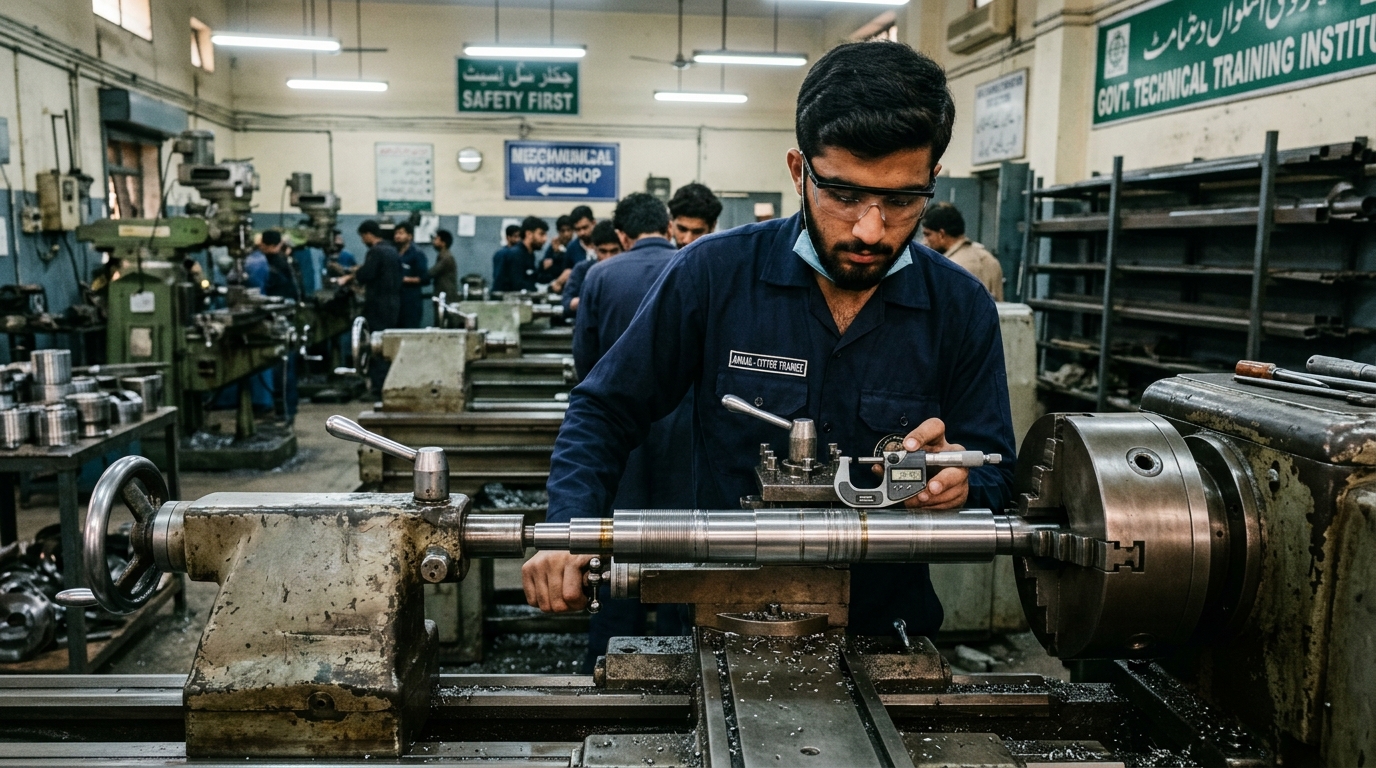
Mechanical Fitter Focus
Concentrates on machinery assembly, rotating equipment, bearings, shafts, gears, pumps, gearboxes, and precision alignments within plant facilities.
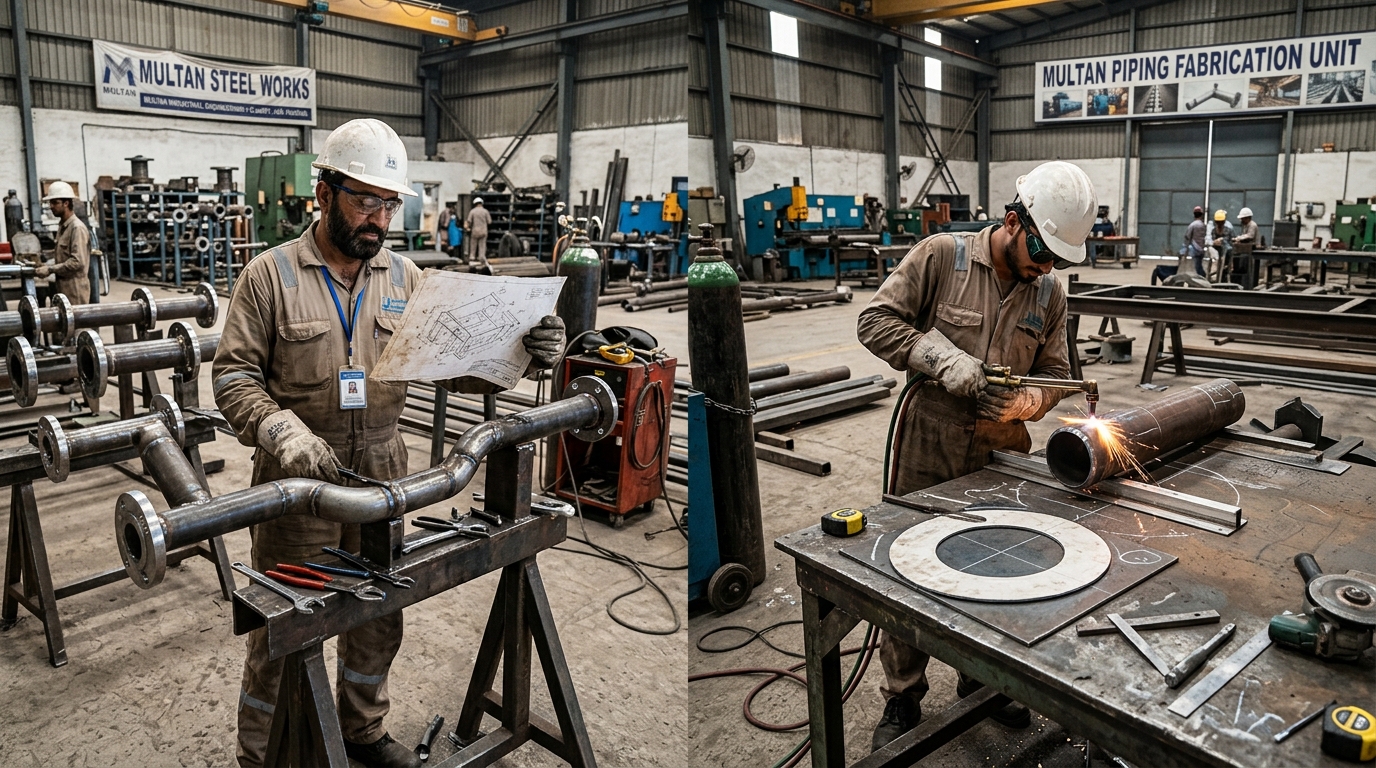
Piping & Fabrication Trades Focus
Concentrates on pipe spools, isometric takeoff calculations, bevel angles, flanges, and structural steel frames rather than rotating equipment.
Mechanical Fitter
Assembles, maintains, and aligns rotating machinery, pumps, gearboxes, shafts, bearings, and precision transmissions.
Primary: Rotating EquipmentPipe Fitter
Measures, cuts, bevels, and fits piping systems, valves, and flanges according to isometric drawings.
View Pipe Fitter TrainingPipe Fabricator
Calculates branch offsets, develops pipe templates, miter bends, and fabricates complex process piping spools.
View Pipe Fabricator CourseIndustrial Welder
Fuses metallic joints using SMAW, GTAW (TIG), or GMAW (MIG) processes subject to non-destructive testing (NDT).
View Welding Trade Test PrepMechanical Fitter Trade Test Preparation for Overseas Employment
International engineering contractors and maintenance service firms frequently conduct hands-on trade test delegations in Pakistan to evaluate candidates for overseas projects.
Gulf Region Recruitment
Companies operating in Saudi Arabia, UAE, Qatar, Oman, Kuwait, and Bahrain often require practical proof of mechanical skills before issuing project employment visas.
Assessment Variations
Assessment criteria vary significantly depending on whether the project involves petrochemical refineries, power generation, cement plants, or commercial facilities maintenance.
Ethical Information Policy
Ashtar Trade Test & Technical Training Centre provides practical technical preparation and evaluation practice. We do not promise overseas jobs, visas, test pass rates, or salary levels.
Why Contact Ashtar Trade Test & Technical Training Centre Multan?
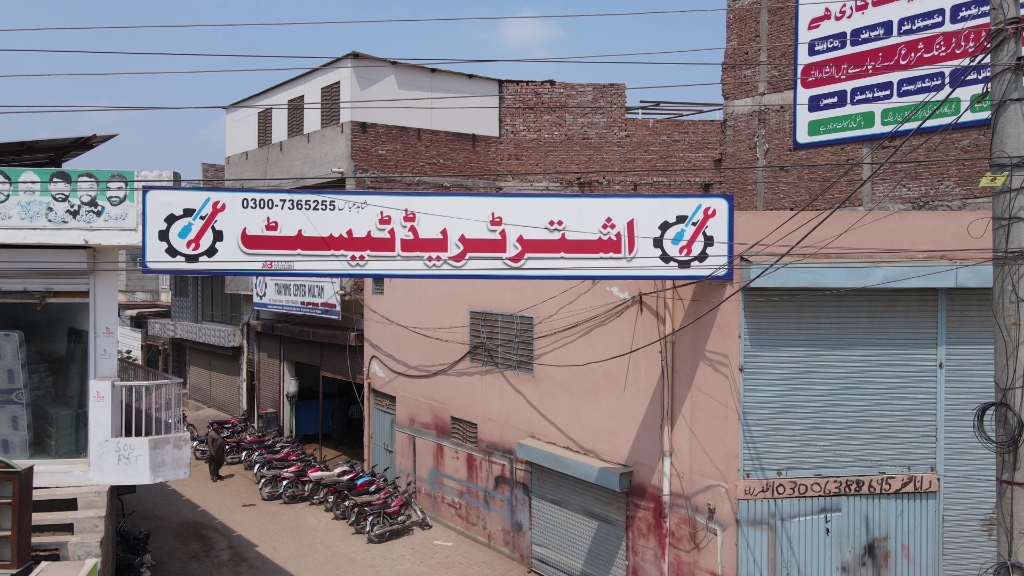
Ashtar Trade Test & Technical Training Centre is a recognized vocational training and testing facility based in Multan, Pakistan. Our center offers hands-on workshop training across various industrial vocations, including mechanical fitting, piping, and welding.
Verified Physical Campus: Usman-e-Ghani Road, near Brite Hall School, Multan, Pakistan.
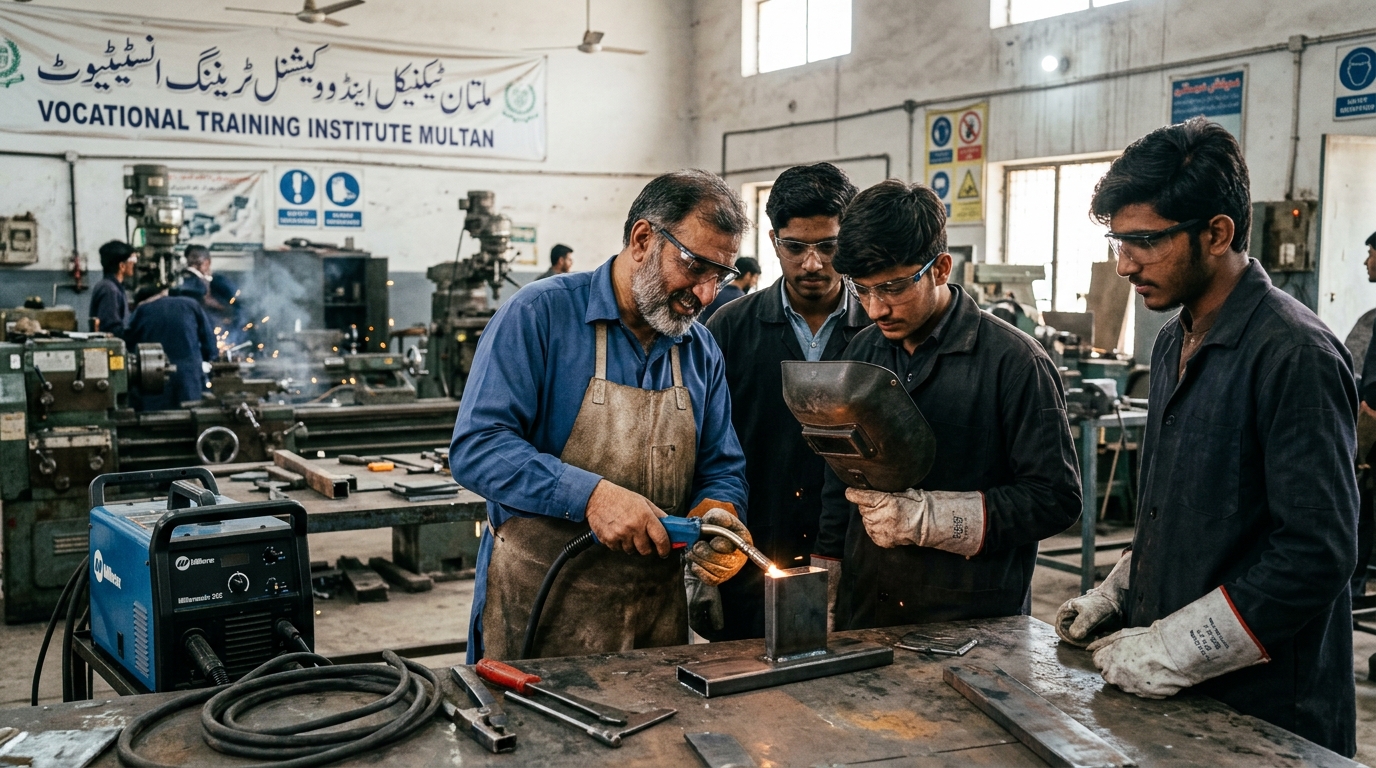
Dedicated Practical Workshops: Heavy-duty workbenches, vice stands, and precision tools.
Experienced Instructors: Supervision by trade veterans familiar with industrial testing standards.
Direct Helplines: 0300-7365255 and 0300-7322762 for admissions and workshop visits.
Mechanical Fitter Trade Test Preparation in Multan for Candidates Across Pakistan
Candidates from industrial hubs and districts across Punjab, Sindh, and Khyber Pakhtunkhwa regularly contact our Multan center for technical training and assessment preparation.
Whether you reside in Lahore, Karachi, Islamabad, Rawalpindi, Faisalabad, Bahawalpur, Dera Ghazi Khan, Sahiwal, Muzaffargarh, or nearby industrial regions, you can reach out to Ashtar Trade Test in Multan to inquire about available workshop schedules and preparation options.
Note on Facility Location: All hands-on training, workshop booths, and instructor-guided evaluations are physically conducted at our primary institute on Usman-e-Ghani Road, Multan. We do not operate separate branch campuses in other cities.
Who Should Consider Mechanical Fitter Trade Test Preparation?
Our preparation modules support individuals at various stages of their vocational and technical careers.
Aspiring Mechanical Fitters
Individuals seeking to build strong foundational knowledge of mechanical blueprints, rotating machinery, and workshop hand tools.
Experienced Technical Workers
Working technicians who want to refresh precision measurement, review alignment methods, and practice timed drills before an upcoming assessment.
Technical Training Graduates
Recent vocational diploma holders who have theoretical knowledge but require concentrated hands-on practice with industrial components.
Overseas Job Applicants
Candidates preparing for international client trade testing delegations, seeking familiarization with common foreign evaluation criteria.
Mechanical Fitter Trade Test FAQs
Helpful answers regarding mechanical assessments, blueprint preparation, and training in Multan.
What is a Mechanical Fitter Trade Test?
A practical evaluation conducted by engineering employers and recruitment delegations to verify a candidate\'s hands-on mechanical skills—such as drawing interpretation, component assembly, alignment, and precision measurement.
How can I prepare for a Mechanical Fitter Trade Test in Multan?
Contact Ashtar Trade Test & Technical Training Centre in Multan. Trainees review blueprints, practice component identification, and practice assembly and measurement under instructor supervision.
What mechanical skills may be assessed?
Common areas include drawing reading, component identification (bearings, gears, couplings), dimensional measurement, shaft alignment checks, correct bolt torquing, and workshop safety awareness.
Is mechanical drawing interpretation important?
Yes. Drawings communicate assembly relationships, tolerances, and dimensions. Employers require fitters who can read drawings independently before starting assembly.
Which mechanical components should a trainee understand?
Trainees should understand ball and roller bearings, transmission shafts, spur/helical gears, flexible couplings, fasteners, oil seals, and housings.
Why are measurement and inspection concepts important?
Precision tolerances prevent machinery failure and vibration. Understanding vernier calipers, micrometers, and feeler gauges ensures parts fit within allowable engineering limits.
Is Trade Test Preparation different from a regular course?
Yes. General courses teach broad introductory concepts, while Trade Test Preparation focuses intensely on employer assessment criteria, timed performance, and practical test simulation.
Can experienced workers inquire about preparation?
Yes. Experienced technicians frequently attend refresher sessions to practice blueprint reading, precision alignment, and become familiar with client evaluation standards.
Is preparation relevant to Gulf job applicants?
Yes. Middle Eastern engineering employers commonly conduct hands-on tests. Practicing under simulated test conditions helps candidates demonstrate their skills confidently.
How long does preparation take?
Durations depend on the candidate\'s existing experience and needed modules. Please contact the institute directly at 0300-7365255 or 0300-7322762 for verified scheduling details.
What is the fee for preparation in Multan?
Fees vary according to required workshop practice hours and individual needs. Contact the admissions office directly at 0300-7365255 or 0300-7322762 for exact fee information.
Where is Ashtar Trade Test located?
We are located at Usman-e-Ghani Road, near Brite Hall School, Multan, Punjab, Pakistan.
How can I contact the institute?
Call 0300-7365255 or 0300-7322762, reach out through WhatsApp, or visit our Multan campus during standard working hours.
Prepare for Your Mechanical Fitter Trade Test
Contact Ashtar Trade Test & Technical Training Centre, Multan, to learn about current mechanical fitting training options, practical preparation, admission requirements, and schedules.
Ashtar Trade Test & Technical Training Centre